























Ensuring that sugarcane stalks remain upright in the field during their peak growth phase is one of the most critical challenges facing farmers. According to Dr. Sanjeev Kumar Pathak, Extension Officer at the Sugarcane Research Institute, systematic crop binding forms a vital component of sugarcane management. As stalks reach their full potential height of 12 to 14 feet, the accumulated weight makes them increasingly susceptible to lodging caused by strong winds, especially following field irrigation. Failing to secure the crop in a timely manner can lead to severe financial losses for growers.
Importance and Timing of Sugarcane Crop Binding
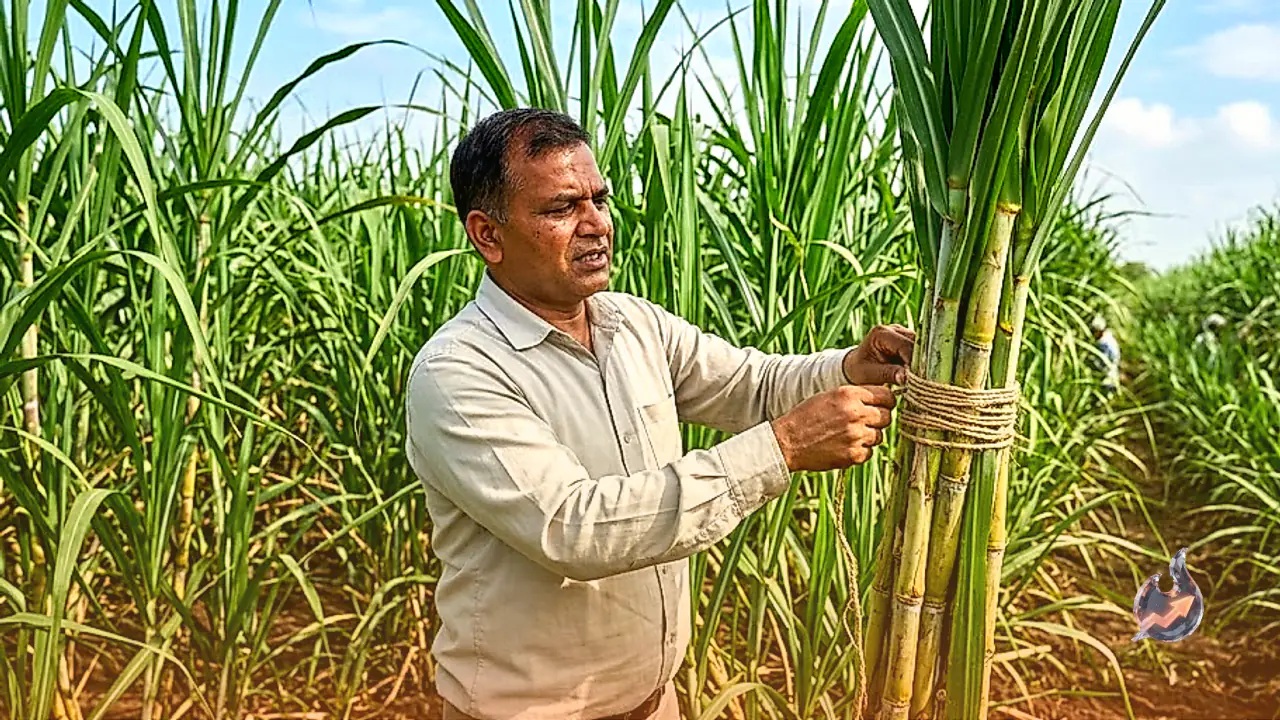
Agricultural experts emphasize that the schedule for tying sugarcane should be determined by physical crop height rather than fixed calendar dates. The initial binding operation must commence as soon as the sugarcane reaches a height of approximately 5 feet. During this primary stage, farmers remove the dry leaves present along the lower 1 to 1.5 feet of the stalk near the soil line. Using these dry leaves, adjacent clumps within the same planting row are bound together, providing essential foundational stability to the root system.
Crop Lodging Risks and Impact on Photosynthesis
When sugarcane stalks collapse onto the ground, their foliage loses direct exposure to sunlight and open air circulation. Contact with wet soil causes the leaves to decay rapidly, disrupting the plant's essential photosynthetic process. "If sugarcane falls after good growth, the process of photosynthesis in the leaves gets severely disrupted," explained Dr. Sanjeev Kumar Pathak. Deprived of normal food production, the plant relies on its stored energy reserves, resulting in stunted stalk development, reduced cane girth, and lower juice content.
Step-by-Step Three Stage Crop Binding Technique
To keep tall sugarcane standing firm throughout its growth cycle, binding is executed across three distinct stages. The second binding takes place roughly 15 to 20 days after the initial operation. This second tier is fastened approximately 50 centimeters above the first binding mark. Farmers again utilize lower dry leaves to wrap and bundle the upper stalks tightly. As the crop continues to grow taller and heavier, this multi-tiered support system prevents the stalks from bending or snapping under strong wind pressure.
Cross Binding Method for Maximum Field Protection
The final and most decisive phase of crop binding occurs in the last week of August or the first week of September. Known in agricultural practice as 'cross binding' or scissor binding, this technique creates an interconnected structural grid across rows. In this method, two clumps from one row are tied together with one clump from an adjacent row in a scissor-like cross pattern. The sequence is then mirrored by binding two clumps from the second row to one clump from the first. This interconnected network fortifies the entire field against severe storms.
streamPositive Direct Impact on Yield and Sugar Recovery
Properly bound fields remain well-ventilated and exposed to adequate sunlight, preserving crop health until harvest. Crop lodging can cause devastating losses, reducing total yield and sugar recovery rates by 18 to 38 percent. Furthermore, fallen stalks become unsuitable for seed production because their nodes rot or sprout prematurely upon touching moist earth. Adhering to structured binding guidelines safeguards the harvest, maintains high sugar content, and ensures premium seed quality for future planting seasons.