


















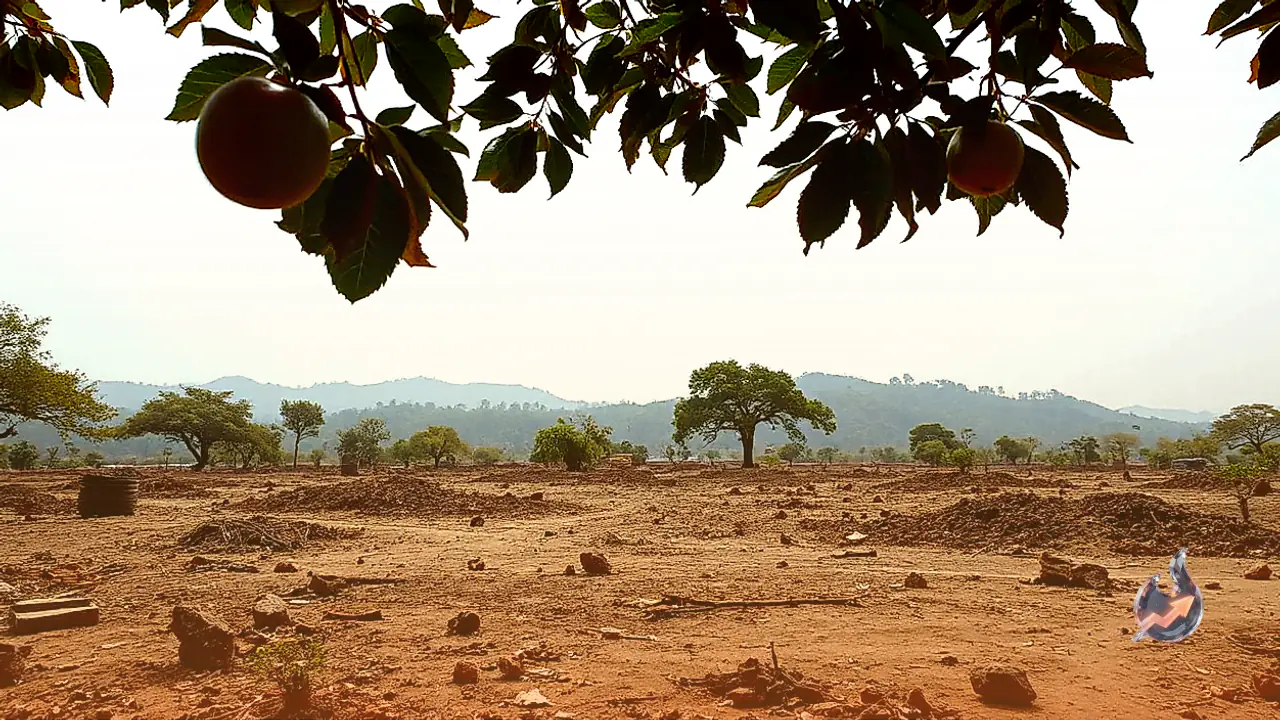

The wild custard apple that grows naturally across the rugged hills and dense forests of Rajasthan's Mewar region is no longer just a seasonal delicacy, but a growing engine of rural enterprise. Historically, tribal families gathered the fruit from forest tracts to sell in modest roadside bazaars for quick, minimal returns. Today, that narrative has completely transformed as the fruit garners widespread acclaim not only across domestic urban centres but also in overseas destinations such as Dubai, the United States, and Saudi Arabia. Crucially, this burgeoning international demand has unlocked sustainable livelihoods and financial independence for tribal women in the region.
Value Addition Elevates a Traditional Woodland Produce
Mewar's climate and topography have long sustained custard apple trees in abundance along hill slopes, forest margins, and agricultural borders. In earlier years, local harvesters were entirely dependent on selling the fresh, highly perishable fruit directly to local buyers, leaving them vulnerable to spoilage and depressed seasonal prices.
Rising consumer appetite has prompted a major shift toward food processing and product diversification. Instead of marketing only the raw fruit, entrepreneurs and cooperatives are creating value-added culinary items that significantly boost commercial margins. Custard apple ice cream, rich rabri, and fresh cream preparations have become major culinary hits among urban consumers. Furthermore, bakery operators have integrated custard apple pulp into their product lines, crafting cakes, biscuits, and a variety of confectioneries. This processing revolution has turned a short-lived seasonal harvest into an extended, high-value supply chain.
Processing Units Deliver Economic Security to Women
The deepest socioeconomic transformation is unfolding among the tribal women who form the backbone of the harvest. Previously, women bore the brunt of collecting fruit in rough terrain and walking long distances to deliver them to local markets with little bargaining power. With the establishment of local processing units, they have transitioned into skilled roles within a structured agro-processing ecosystem.
These dedicated facilities engage women across every stage of the operation, including fruit collection, sorting, hygienic pulp extraction, cold storage, and final packaging. Having steady work close to their villages has eliminated the need for distressing seasonal migration, while regular earnings empower them to contribute significantly to family welfare, children's education, and household stability.
Organised Cultivation and Expansion in Chittorgarh
Recognising the immense export and commercial prospects, stakeholders are now steering custard apple production from sporadic wild foraging toward systematic orchard farming. In the rural belts surrounding Udaipur, concerted efforts are underway to integrate traditionally grown fruit into well-regulated distribution networks and cold chains.
Expanding this footprint further, a newly established processing facility has commenced operations in Chittorgarh. The initiative focuses on employing local women and innovating new consumer products directly from the regional yield. What was once dismissed as a simple forest fruit gathered during fleeting seasonal windows has evolved into an export commodity, giving Mewar's natural heritage a proud global identity while instilling durable confidence in the women who harvest it.