






















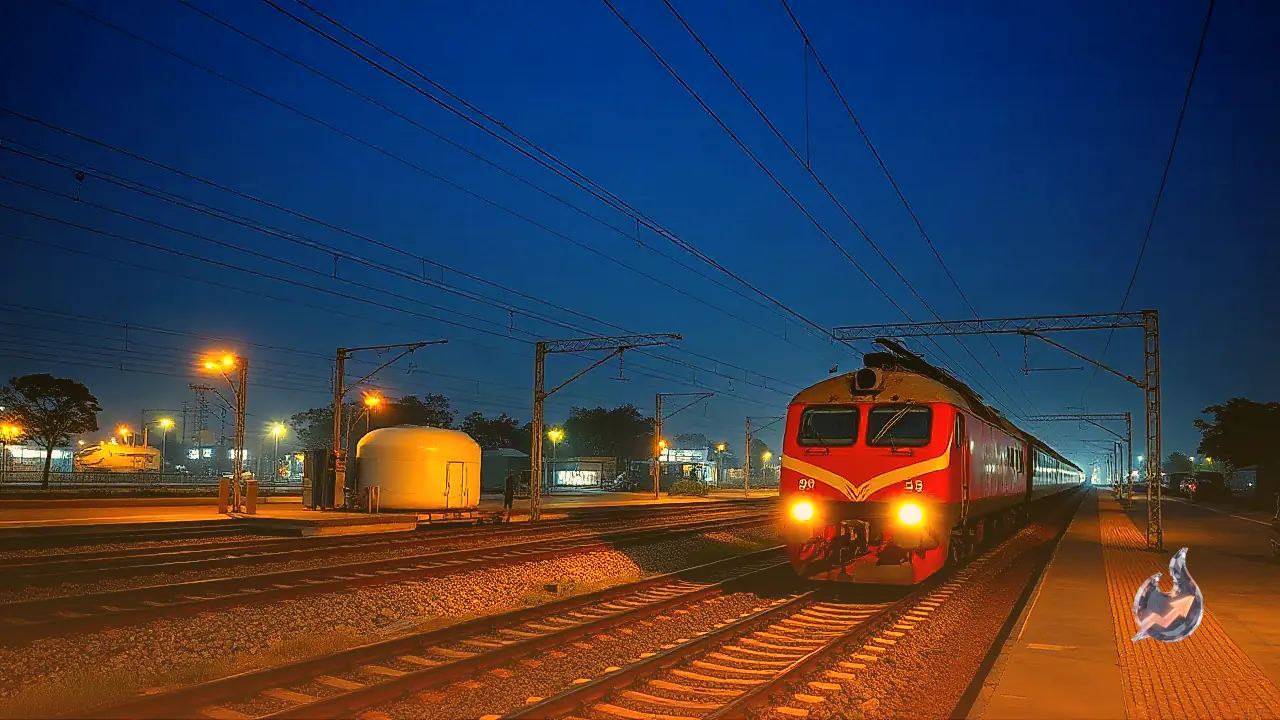

Union Home Minister Amit Shah flagged off India's first Liquefied Natural Gas (LNG) train from the Sabarmati Railway Station in Ahmedabad, marking a major milestone in the country's push for green and cost-effective public transport. This newly launched service is expected to significantly reduce both environmental pollution and operational expenses for Indian Railways. Alongside this launch, the Home Minister also inaugurated the redeveloped Sabarmati Railway Station and a state-of-the-art maintenance shed.
Key Features and Major Cost Savings of the LNG Train
The introduction of this LNG-diesel dual-fuel DEMU train is set to bring substantial financial benefits to Indian Railways. According to estimates, each DEMU power car (DPC) will save approximately Rs 12 lakh annually, translating to an overall savings of around Rs 24 lakh per train every year. Compared to conventional diesel, LNG is a much cheaper and cleaner alternative. One of the most remarkable features of this train is its fuel capacity, allowing it to travel up to 2200 kilometers on a single full tank, ensuring efficient long-distance journeys with minimal stops for refueling and a significant reduction in carbon emissions.
Upgrading Railway Infrastructure
Along with the historic train launch, the redeveloped layout of the Sabarmati Railway Station was officially dedicated to the public. Furthermore, a new WAG 12 maintenance shed was inaugurated to service heavy-duty electric locomotives. This advanced facility will play a crucial role in maintaining high-capacity freight engines, thereby improving the overall efficiency of railway logistics in the region. This combined infrastructure push is part of a larger national vision to modernize India's transport network.
What Amit Shah Said
Sharing the live stream of the event on social media, Union Home Minister Amit Shah expressed his enthusiasm for these major developments. He posted that the launch of India's first LNG train, the unveiling of the redeveloped Sabarmati Railway Station, and the opening of the WAG 12 maintenance shed represent a transformative step forward. He emphasized that these initiatives reflect the nation's progress toward self-reliance and sustainable energy.
About Ahmedabad
Ahmedabad is the largest city in the state of Gujarat, situated along the banks of the Sabarmati River. Founded in 1411 by Sultan Ahmed Shah, this historic city serves as a major economic and cultural hub. Before the capital was relocated to Gandhinagar in 1970, Ahmedabad served as the administrative capital of Gujarat.
Public Reaction
The announcements drew widespread attention online, with users sharing diverse opinions. While many praised the technological advancement and environmental benefits of the LNG train, others used the platform to discuss broader political developments and regional development issues.