















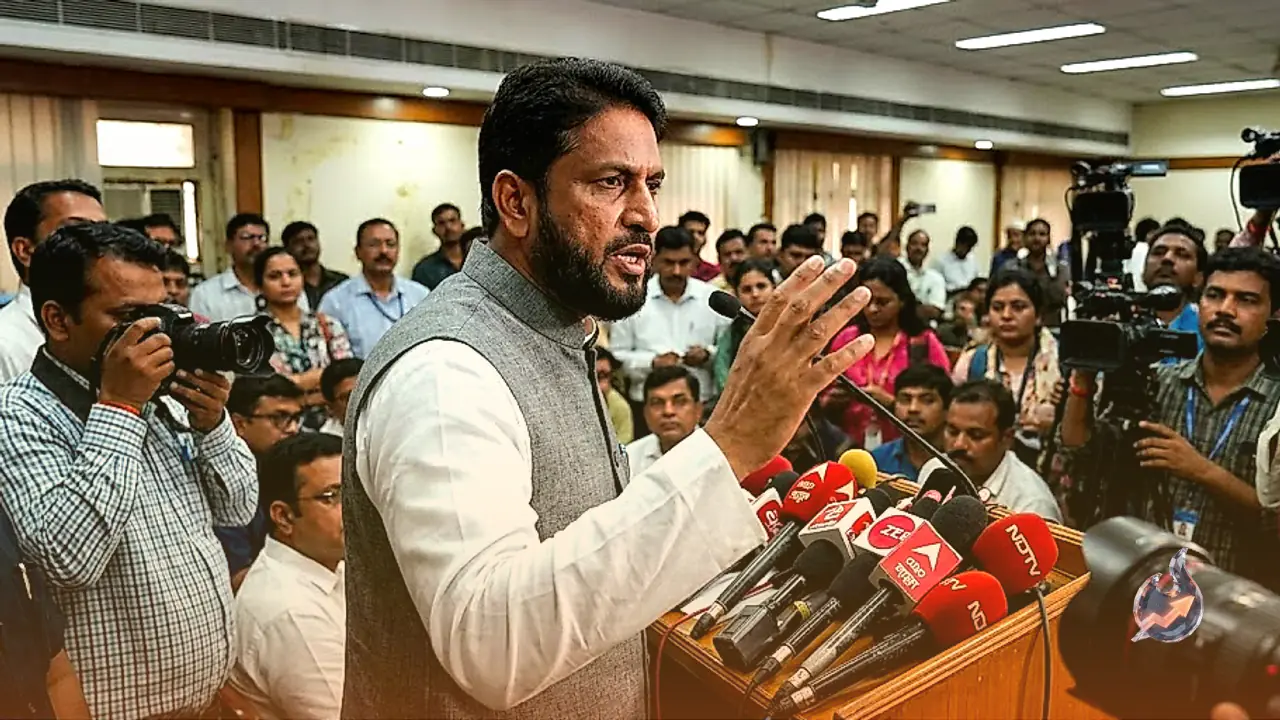

Amid intensifying political debates surrounding the recent legislative status granted to the national song, AIMIM leader Waris Pathan has issued a strong declaration stating that he will not recite Vande Mataram even if subjected to the gallows. While emphasizing that he maintains respect for the song, Pathan asserted that no national symbol should be forcibly imposed upon citizens. Beyond the song controversy, the leader also voiced strict objections to Maharashtra's regional language policies, called for a liquor ban during Eid-e-Milad, and cautioned political figures against exploiting student movements for electoral gain.
Legislative Background and Controversies Surrounding Red Fort Performance
Marking 80 years of independence, the parliament officially passed the Vande Mataram Bill on July 30 to provide formal legislative recognition to the national song. Following its passage, the song was formally rendered inside Parliament for the first time in history on August 13. Two days later, during the Independence Day celebrations on August 15, the national song was performed at the historic Red Fort in Delhi. However, political friction escalated sharply on the very same day when the complete version of Vande Mataram was reportedly not recited during an event at the Congress headquarters, sparking nationwide debates among political factions.
Waris Pathan Rejects Compulsory Recitation
Responding to the ongoing debate, AIMIM leader Waris Pathan reiterated his firm opposition to any mandate forcing individuals to recite the national song. Pathan clarified that while he personally respects Vande Mataram, patriotism cannot be coerced through state orders or societal pressure. He asserted that even if he were to face execution, he would refuse to recite the song under compulsion. His remarks have added significant fuel to the national discourse regarding civil liberties, constitutional rights, and symbolic national mandates.
Union Minister Jitan Ram Manjhi Issues Stern Warning
Countering the opposition to the national song, Union Minister Jitan Ram Manjhi publicly delivered a scathing critique against critics of the parliamentary legislation. Manjhi expressed through a social media post that elements opposing the song belong to disruptive factions trying to undermine national unity. He warned that those seeking to disrespect or fragment the national song passed by Parliament would face public retaliation, stating that if such individuals do not reform their attitude over time, the public will firmly reject and dismantle their narrative.
Student Protests and Indirect Criticism of Rahul Gandhi
Shifting focus to youth movements across the country, Waris Pathan addressed the recent student demonstrations and indirectly targeted Rahul Gandhi without explicitly naming him. Pathan argued that political leaders must refrain from using students and GenZ activists as political tools. He commended the strength of student protests, noting that public pressure successfully forced the administration to concede to their legitimate demands. While reiterating his unwavering support for student rights, Pathan condemned opportunistic politics built on academic and youth struggles.
Objections to Language Coercion and Call for Eid-e-Milad Liquor Ban
Turning his attention to regional administration in Maharashtra, Waris Pathan criticized the state government for its method of promoting the Marathi language. Although acknowledging that learning Marathi is beneficial and respectful, he argued that issuing notices, threatening residents, or using intimidation to enforce language compliance is unacceptable. He challenged authorities to apply these mandatory language requirements equally to prominent Bollywood celebrities and major industrial tycoons in Mumbai. Furthermore, invoking principles of constitutional equality, Pathan demanded a complete one-day ban on liquor sales across Maharashtra on August 26 for Eid-e-Milad, pointing out that similar restrictions on alcohol and meat sales are routinely enforced during major Hindu festivals.