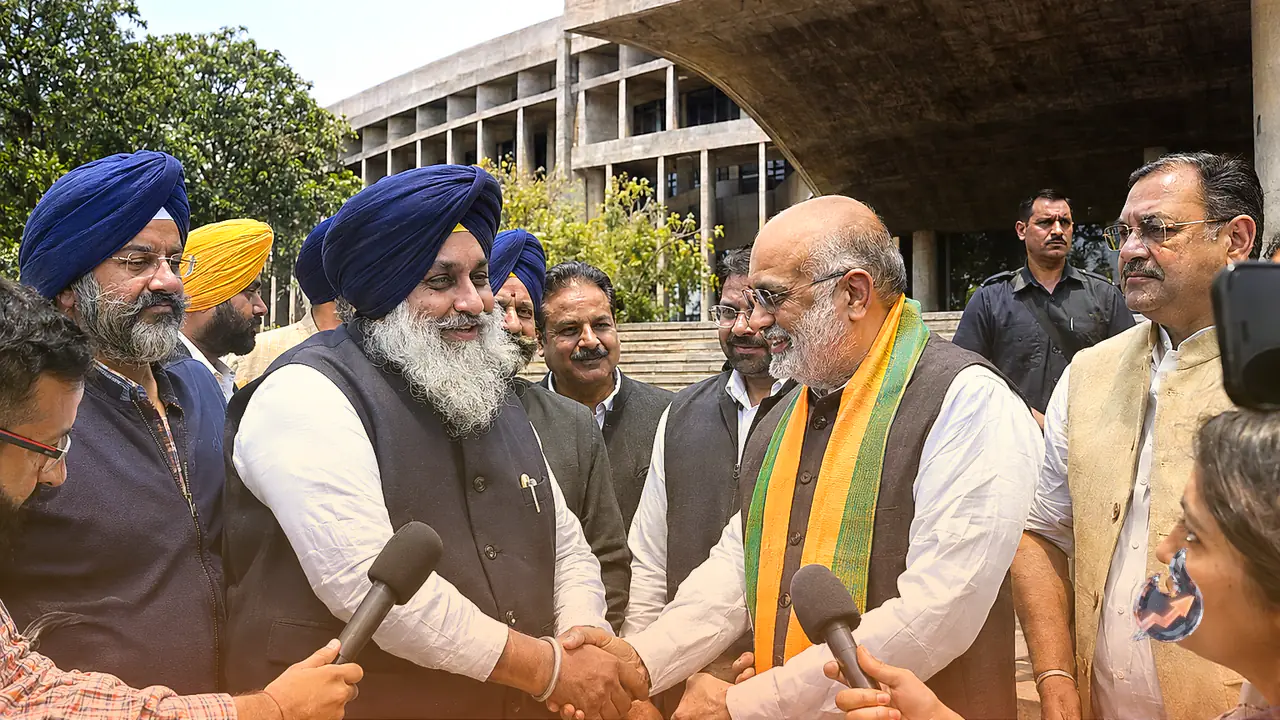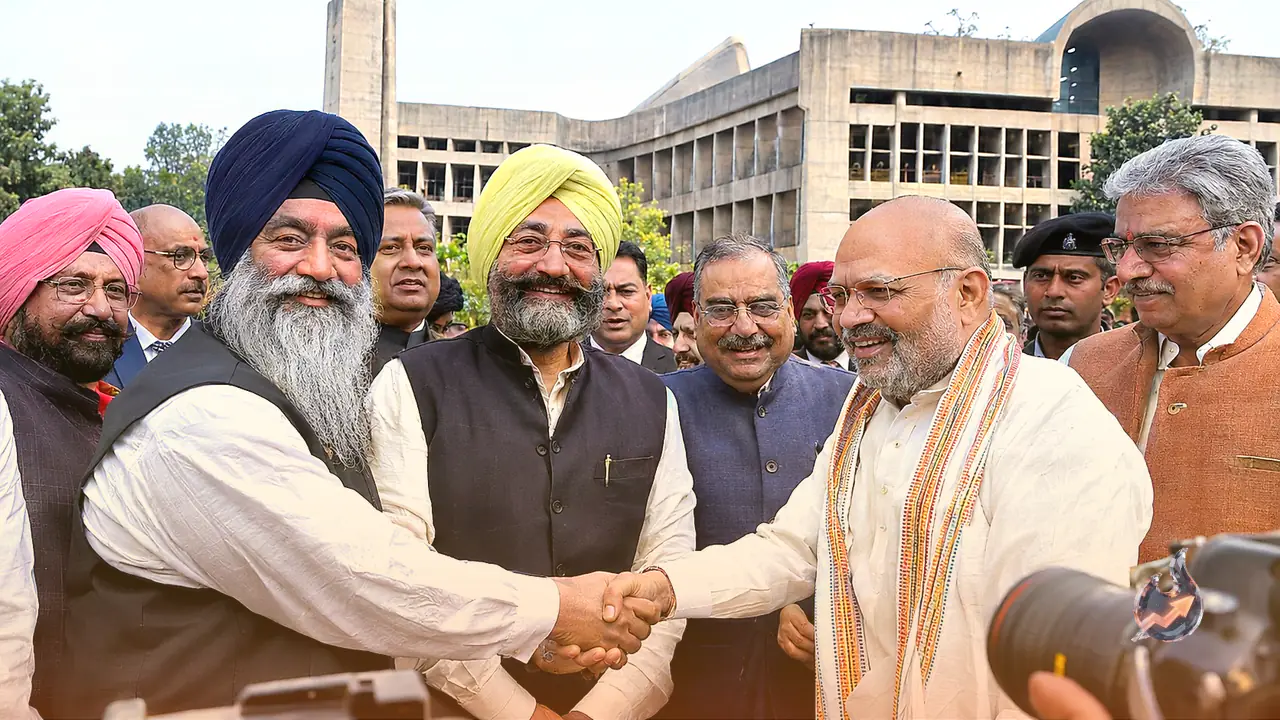

Punjab politics is witnessing a major realignment as the Bharatiya Janata Party (BJP) and the Shiromani Akali Dal (SAD) have officially tied up ahead of the upcoming 2027 Punjab assembly elections. This political reunion comes nearly six years after the Akali Dal severed ties with the National Democratic Alliance over the contentious farmers' agitation. With this fresh alliance now in place, discussions surrounding Punjab's past electoral history and the historical performance of both political outfits have gained significant momentum across the state.
Alliance last formed government back in 2012
According to data compiled by the Election Commission of India (ECI), the joint government of the BJP and the Shiromani Akali Dal was last formed in the state back in the year 2012. During the 2012 assembly elections, this formidable alliance scripted history by retaining power for a consecutive second term. However, the political landscape shifted in the subsequent 2017 elections when the Congress party secured power, followed by the Aam Aadmi Party (AAP) forming the government in 2022. Prior to 2017, the Akali-BJP alliance had successfully governed Punjab with a decisive absolute majority on three separate occasions in 1997, 2007, and 2012, with Parkash Singh Badal serving as the Chief Minister every single time.
Past electoral performance of the coalition
Election Commission records reveal distinct performance patterns for both parties across these milestone assembly contests. During the 2012 assembly polls, while the Congress party managed to secure the highest overall vote percentage, the Akali-BJP coalition successfully crossed the majority mark by securing 68 seats. In that election, the Shiromani Akali Dal contested 94 seats and emerged victorious in 56 constituencies, registering a vote share of 34.73 percent with a total of 4,828,612 votes. Meanwhile, the Bharatiya Janata Party contested 23 seats and won 12, securing a vote share of 7.18 percent and a total of 998,098 votes. On the other side, the Congress party contested all 117 seats and managed to win 46, drawing a vote share of 40.09 percent with 5,572,640 total votes.
Electoral outcomes of 2007 and 1997 polls
Earlier, in the assembly elections held on February 12, 2007, the coalition made a triumphant return to power by bagging a combined total of 67 seats. In this election as well, the total vote percentage of the Congress party surpassed the combined vote share of both coalition partners, yet seat conversion favored the alliance. That year, the Shiromani Akali Dal secured victories in 48 out of 93 contested seats with a 37.09 percent vote share (4,689,018 total votes), while the Bharatiya Janata Party won 19 out of 23 seats with an 8.28 percent vote share (1,046,451 total votes). In comparison, the Congress party won 44 out of 116 seats, registering a 40.90 percent vote share and 5,170,548 total votes.
Taking a look further back at the 1997 assembly elections held on February 7, 1997, the Akali-BJP alliance delivered a historic performance by securing a landslide victory in 93 out of the total 117 seats. The Shiromani Akali Dal contested 92 seats and won an overwhelming 75, backed by a 37.64 percent vote share and 3,873,099 total votes. The Bharatiya Janata Party contested 22 seats and won 18, securing an 8.33 percent vote share and 857,219 total votes. Conversely, the Congress party was reduced to a meager 14 seats after contesting 105 constituencies, finishing with a 26.59 percent vote share and 2,736,346 total votes.
Shifting political dynamics and regional strengths
A careful analysis of historical voting data demonstrates that the Akali Dal has traditionally maintained deep-rooted influence across rural and Sikh-majority constituencies in Punjab. On the other hand, the Bharatiya Janata Party has consistently performed with a high strike rate across urban and Hindu-majority segments within its allotted quota of 22 to 23 seats. Bringing these two prominent forces back onto a single platform ahead of the 2027 electoral battle is being viewed as a calculated strategic maneuver designed to reshape the state's traditional voter base and political equations.