
























Concerns over data integrity and institutional independence have surfaced at the United States Census Bureau following revelations that multiple researchers associated with a conservative think tank have been detailed to the agency. Staff members affiliated with the America First Policy Institute, an organization deeply aligned with the political platform of Donald Trump, have been granted access to sensitive demographic and population records. The bureau is responsible for collecting data that dictates the redrawing of congressional districts and the distribution of hundreds of billions of dollars in federal funds, making the neutrality of its statistical operations a central issue for policy experts and career civil servants.
Controversial Noncitizen Voting Report and the IPA Process
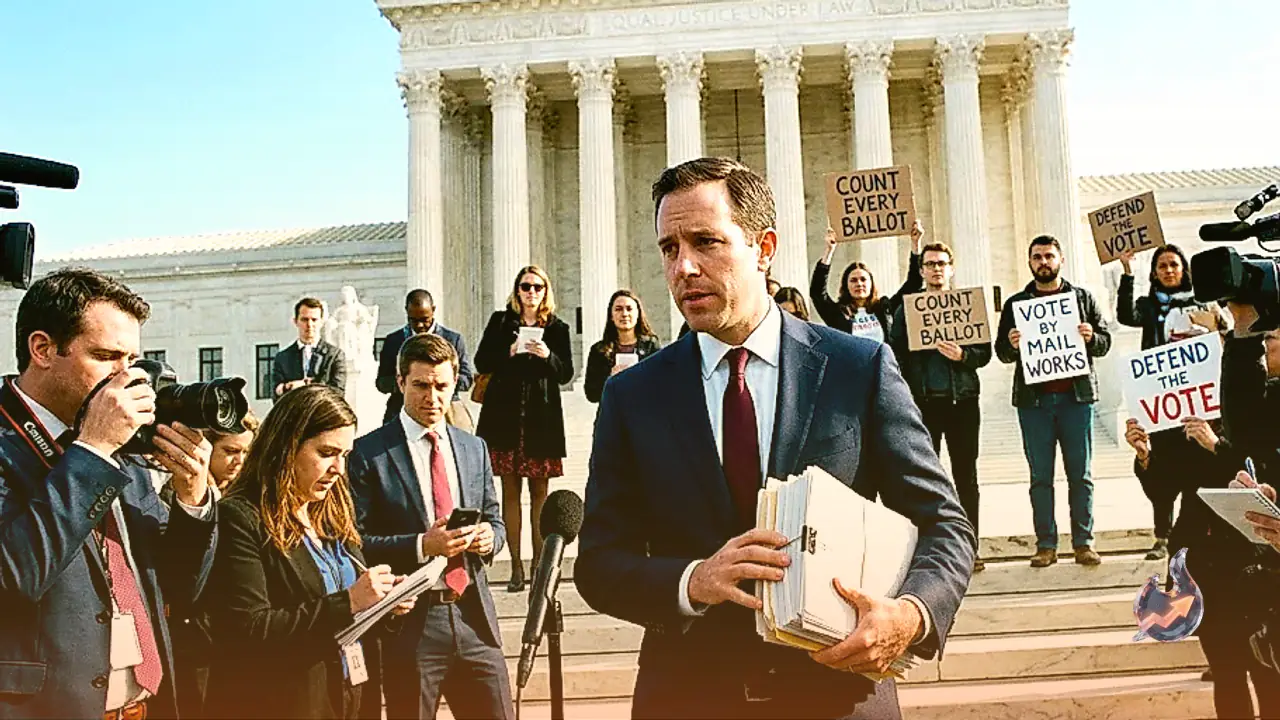
The influx of think tank personnel came to light following the publication of an anonymously authored August report titled 'Noncitizen Voting in the 2020 Election: A Beginning Analysis.' The report claimed that thousands of noncitizens participated in the 2020 presidential election. However, independent research experts quickly criticized the paper's methodology, arguing that its analytical flaws rendered its conclusions unreliable. Subsequent disclosures established that two of the report's main authors were affiliated with AFPI. Records now indicate that a broader contingent of researchers from the same organization has been assigned to work inside the Census Bureau.
These temporary positions were facilitated through the Intergovernmental Personnel Act, a federal framework that permits qualified personnel from non-profit institutions, universities, and state governments to serve inside federal agencies for up to two years. While the IPA mechanism is traditionally used to bring specialized academic or technical expertise into government, former Census Bureau chief scientist John Abowd noted that placing such a high concentration of individuals from a single outside entity inside a federal statistical agency is highly unusual.
Roster of Detailees and Their Backgrounds
The individuals detailed to the bureau include Max Kossek, a researcher focused on fiscal policy at AFPI, and Ryan Montgomery, a research engineer with the organization. Also detailed is Thomas Lane, who serves as AFPI's director for secure elections policy. Lane previously worked on the Trump campaign and was subpoenaed by the Department of Justice in 2022 during its investigation into efforts to challenge the 2020 election results, though he was never charged with any wrongdoing. Lane has also been associated with post-election documents in Arizona and helped draft preliminary versions of voting legislation, including the Save America Act, which proposes requiring proof of citizenship to register to vote.
Other detailees include David Peterson, a software and machine learning engineer, and Jackson Mejia, an assistant professor at the University of Texas at Austin who holds a doctorate in economics from MIT. Another researcher, Michael Corey, has also been identified as part of the group. All of these individuals are assigned to a single project focused on conducting ad hoc data analyses to answer queries generated by senior leadership at the Census Bureau and the Department of Commerce.
Policy Charter Revisions and Oversight Warnings
The ad hoc analysis project is overseen by Michael Lachanski, the bureau's deputy director for data, policy, and science. Lachanski is a political appointee who previously held a fellowship at the Claremont Institute, another conservative think tank. All detailed researchers have been granted 'special sworn status,' giving them authorized access to confidential census microdata. The appointments follow a July revision to the Census Bureau's Data Stewardship Executive Policy charter, which eliminated internal provisions that previously prohibited political appointees from interfering with statistical data management.
Danah Boyd, a professor at Cornell University who studies census methodology, emphasized that using agency resources to serve the specific requests of political appointees marks a departure from standard statistical norms. She observed that the bureau's mandate is to produce objective statistics for the public good rather than customized datasets for partisan agendas. Career employees at the bureau have similarly noted that the lack of standard civil servant oversight on this specific project represents an irregularity in typical agency protocol.
Historical Context and Districting Implications
The Census Bureau has faced political scrutiny in the past regarding how population counts are conducted and published. In early 2021, former Census Bureau Director Steven Dillingham resigned prior to the end of his term after an inspector general investigation revealed whistleblower reports that staff had been pressured by political appointees to produce estimates on the citizenship status of all US residents. Recent administrative proposals from the Department of Commerce have also explored excluding noncitizens from the population totals used for congressional apportionment, a measure that could alter the distribution of legislative seats across states.
With prominent former AFPI leadership now holding key cabinet positions in the administration, including Agriculture Secretary Brooke Rollins, Education Secretary Linda McMahon, Attorney General Pam Bondi, HUD Secretary Scott Turner, and EPA Administrator Lee Zeldin, the presence of AFPI staff inside the Census Bureau has drawn heightened focus. Policy analysts warn that changes to data interpretation protocols could influence upcoming midterm elections and the 2028 presidential redistricting cycle.