




















Preparations for the 2027 assembly elections in Uttar Pradesh have begun gathering political momentum across party lines. While Samajwadi Party chief Akhilesh Yadav continues to consolidate his backward classes, Dalit, and minority alliance known as PDA, the Bharatiya Janata Party has formulated an elaborate ten-point counter-strategy. The governing party aims to shift the core electoral debate away from caste-driven calculations, focusing instead on governance, law enforcement, economic infrastructure, and organizational strength. Within political circles, observers are scrutinizing the primary formula within this blueprint that poses the steepest hurdle for the opposition.
The Ten Core Pillars of the Strategy
The ten-point plan focuses on restructuring the electoral conversation. It seeks to counteract identity politics by placing transparent governance and administrative achievements at the forefront. To bring past governance records into sharp relief, issues concerning past mafia influence, the Muzaffarnagar communal clashes, and the state guest house incident will be reintroduced into public debates. Alongside these discussions, massive regional rallies will be mobilized across all six organizational divisions of the state.
The joint administrative pitch of the central and state governments will highlight extensive infrastructure initiatives and firm law enforcement. Campaign outreach will feature a direct comparative analysis evaluating conditions before 2017 against progress made since, examining power supply continuity, highway expansion, and street-level security under Samajwadi Party and BJP administrations.
To counter the opposition's social engineering pitch, the party plans to spotlight the broad delivery of developmental programs. A dedicated constituency comprising farmers, women, youths, and beneficiaries from Dalit and backward communities is being organized. At the ground level, booth management will be reinforced through the panna pramukh voter network to ensure direct contact with individual households. Internal party discipline is also being prioritized by resolving friction among ministers, members of parliament, and legislators. Transparent public sector recruitments, new employment avenues, timely payments for sugarcane harvests, and financial disbursements under the PM-Kisan initiative will anchor economic messaging.
Ground Mobilization from Rallies to Booth Units
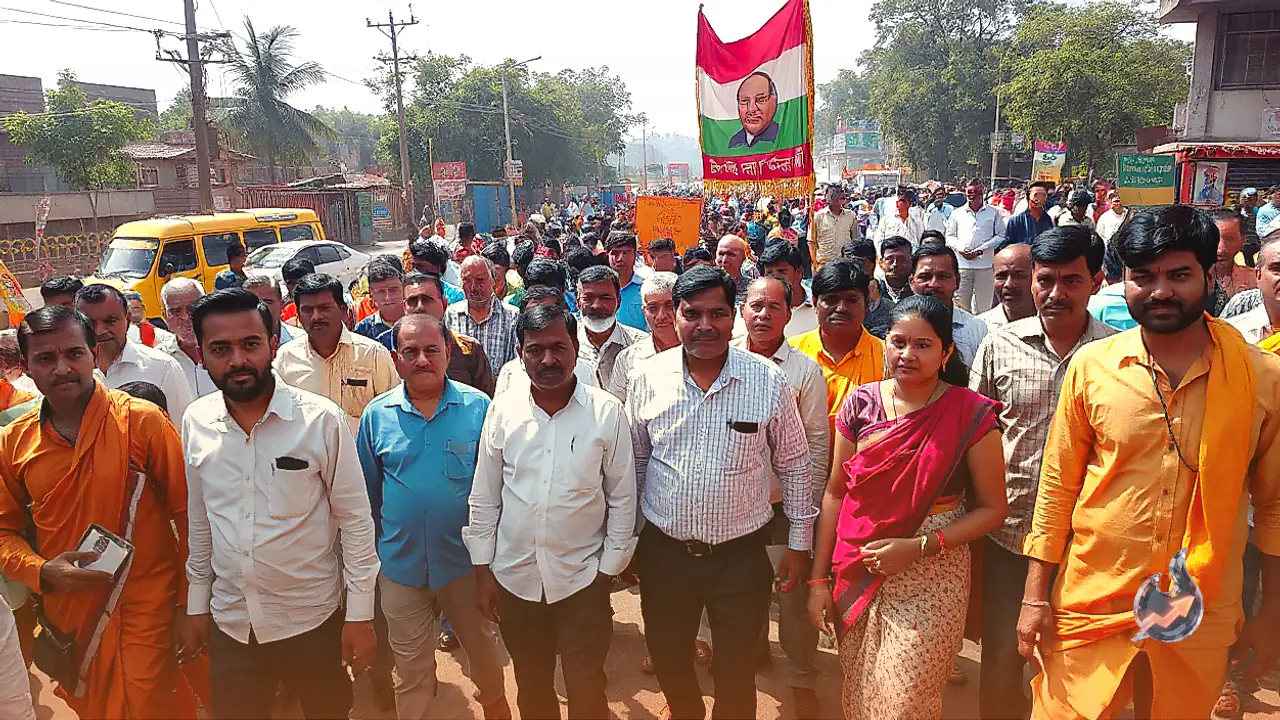
Implementing this operational plan involves parallel activities across multiple organizational tiers. Grand rallies and mass contact drives are scheduled across all six regional zones of Uttar Pradesh, including Western UP, Braj, Rohilkhand, Awadh, Bundelkhand, and Purvanchal. These regional gatherings will present newly built expressways, international aviation hubs, and rising industrial investments as concrete evidence of the state's progress model.
The campaign aims to prevent the political discourse from revolving solely around quota dynamics and community mobilization. A systematic then-versus-now informational push will directly compare governance standards prior to 2017 with the tenure of the current government led by Yogi Adityanath.
Specific outreach plans are tailored for rural workers and young citizens, emphasizing merit-based, clear public job recruitment drives. In agricultural belts, consistent settlement of sugarcane dues alongside direct electronic cash deposits under the PM-Kisan Samman Nidhi will form the centerpiece of grassroots interaction.
Beyond major regional rallies, organizational leaders are concentrating heavily on micro-level booth management. Ground coordinators and panna pramukhs are being reactivated to retain continuous touch with voters in every neighborhood. Simultaneously, leadership teams are addressing internal differences and factional disputes to present a unified front among elected representatives.
The Core Weapon: The Welfare Beneficiary Base
Amid these varied campaign initiatives, political attention remains locked on the single mechanism considered most dependable by the party leadership: the extensive network of government welfare recipients. While Akhilesh Yadav relies on identity-based mobilization across backward, Dalit, and minority segments, the counter-strategy rests on the conviction that state assistance cuts cleanly across social divisions.
Efforts are directed toward organizing the millions of citizens within Dalit and backward communities who have received direct benefits, ranging from subsidized food rations and concrete housing to sanitation units and medical coverage under the Ayushman health plan. By engaging this quiet demographic base, the party aims to build a durable barrier against caste-based campaign rhetoric. Even so, establishing effective outreach among minority voters within this broader matrix remains an ongoing political challenge.