






















American democracy stands before a defining test as the 2026 midterm elections approach, caught in an intensifying friction between public governance and institutional stability. For generations, national perception treated political violence as the exclusive province of radical networks, underground militias, and alienated subcultures operating far beyond polite society. Yet rigorous empirical scrutiny into contemporary unrest demonstrates that this comforting premise is wholly divorced from reality. Radicalization is no longer confined to isolated fringes; it has crossed into the heart of the electorate, converting conventional professionals into willing participants in political hostility.
The Phenomenon of Violent Populism Ahead of the Midterms
This structural transformation forms the foundational warning of Robert A. Pape's book, Our Own Worst Enemies: America in the Age of Violent Populism. As the founding director of the Chicago Project on Security and Threats (CPOST), Pape diagnoses a critical fracture across the civic landscape. Heading into the 2026 midterms, national elections are entering a volatile space where government authority, public demonstrations, and basic political legitimacy collide directly. While standard political commentary treats violent episodes as fleeting shocks destined to fade on their own, Pape argues that treating these eruptions as temporary anomalies is dangerous complacency.
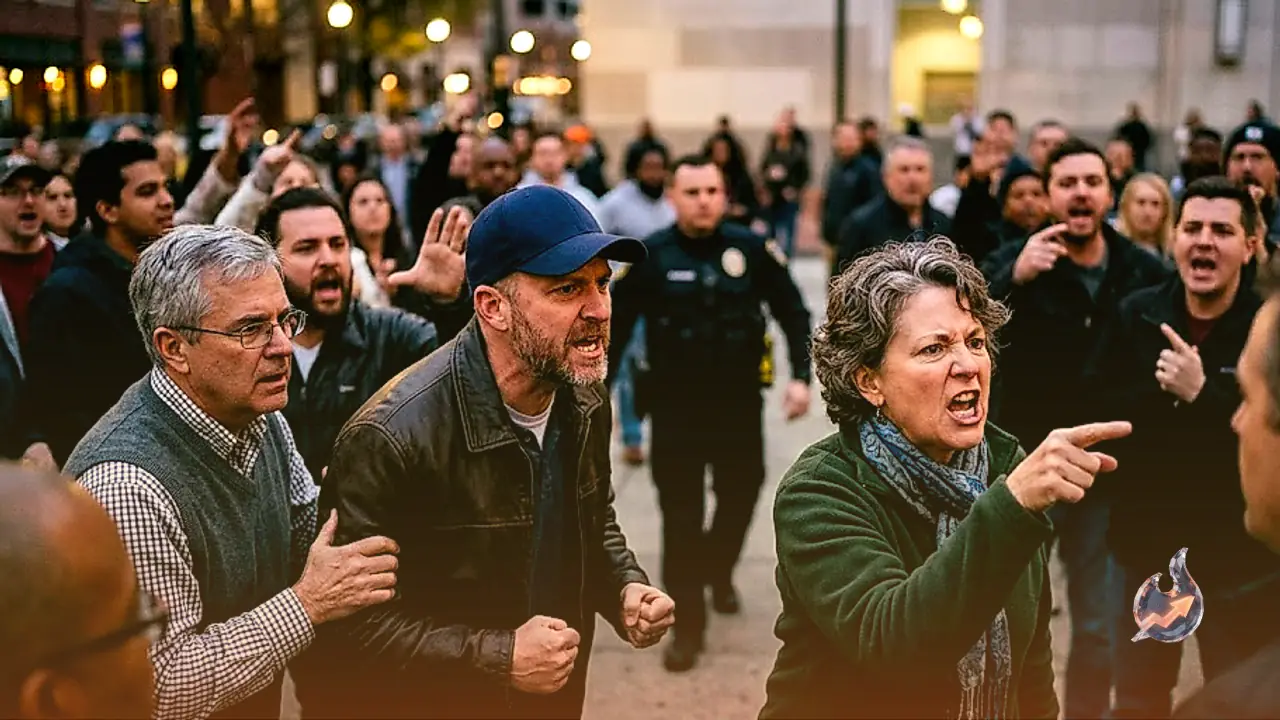
Violent populism describes an environment where sizable portions of the general public adopt physical coercion as an acceptable mechanism to attain, maintain, or defend governing power. This shift is accelerated by fundamental cultural disputes regarding national identity and legal citizenship, layered beneath inflammatory political rhetoric that reinterprets civic disagreement as existential warfare. When institutional leadership portrays adversaries as mortal threats, regular community members absorb the logic and normalize aggression within daily life.
The upcoming midterms represent an acute stress test of whether competitive politics in the United States can continue without descending into physical confrontation. Anxieties surrounding this election cycle have climbed to heights not witnessed since the deep civil turmoil of the 1960s. The domestic environment is rendered far more combustible by external shocks, including the ongoing war with Iran. Under these combined pressures, the electoral process risks serving as a direct catalyst for unrest, testing whether foundational civic systems can still guarantee the peaceful transfer of power.
Capitol Riot Arrest Data Shatters the Fringe Militia Thesis
Popular coverage has persistently pointed to organized paramilitaries like the Proud Boys and Oath Keepers as the driving engine behind democratic subversion. However, data assembled by CPOST on individuals arrested and charged in connection with the January 6, 2021 Capitol attack disproves that reading. A striking 90 percent of all defendants possessed no ties whatsoever to armed militias or militant groups.
Rather than an army of fringe radicals, the demographic composition of the defendants mirrored mainstream middle-class society. The analysis found that 22 percent owned their own businesses, nearly 30 percent held a university degree, and almost 40 percent were employed in professional white-collar occupations. Among the individuals charged were medical doctors, engineers, corporate chief executive officers, and civil service employees. Only 8 percent were unemployed at the time of the event.
In concrete terms, merely one in ten participants belonged to an established militia. Roughly half the crowd was composed of corporate executives, licensed attorneys, healthcare professionals, business operators, and former political appointees from the US State Department, with certain attendees having attended the official White House Christmas party only weeks before. These were regular citizens who held steady jobs, family residences, and 401(k) retirement funds, unified not by marginal fringe subcultures but by a widespread, mainstream conviction that existing democratic institutions lacked legitimacy.
Overlooked Warning Signs and Normalized Aggression
The persistence of the fringe narrative stems from systemic shortcomings within institutional reporting. Early public accounts and news coverage drew heavily upon initial law enforcement tracking records, which by their nature focused on the most organized, outwardly aggressive actors. As comprehensive court filings and broader survey datasets emerged, public institutions failed to adjust their conclusions. By prioritizing eccentric, visual agitators, analysts overlooked the massive foundation of passive, middle-class sympathy that enabled the incident.
In his historical evaluation, Pape describes the January 6 assault as an irreversible boundary crossed between routine political argument and civil conflict. The attack dismantled the foundational democratic standard ensuring that governing authority changes hands strictly through balloting rather than physical intimidation. The spectacle of thousands of regular citizens storming their own federal legislature demonstrated that internal policy conflicts were no longer bounded by a shared, universal commitment to nonviolence.
The critical warning sign confronting the country today is the pervasive normalization of belligerence within routine civic discourse. Hostile political symbolism has expanded throughout mass communication channels, accompanied by leadership rhetoric that seeks to strip opposing constituencies of moral standing. When regular voters view other political factions as an existential threat, the structural foundation for street conflict is firmly established, and conventional institutional safeguards cease to operate effectively.
The Ku Klux Klan Parallel and Bipartisan Exposure
Drawing historical parallels, Pape compares the current embrace of aggressive populism among middle-class white Americans to the rapid expansion of the second Ku Klux Klan during the 1920s. Popular memory often misremembers the Klan as an isolated collective of poor, rural extremists. In reality, historical records prove that the 1920s movement was a mainstream, middle-class institution powered by cultural anxieties over national identity. Examining this history illustrates how standard, established communities can drift into organized intolerance whenever their perceived dominance faces disruption.
Moreover, the appetite for political force is not confined to one wing of the political spectrum. Events from the left, including Luigi Mangione's confessed assassination of a health insurance chief executive and the actions of the accused Trump assassin at the April White House Correspondents' Dinner, underscore that ideological violence is multivariant. Original polling conducted by CPOST shows that aggressive rhetoric, adversarial symbols, and personal demonization are actively utilized by figures across the entire ideological spectrum, confirming that violent populism reflects an overarching institutional failure rather than a single partisan tendency.
Mobilizing the Decisive 70 Percent Majority
Despite these escalating structural hazards, empirical polling highlights a powerful counterweight: 70 percent of Americans outright reject political violence. This overwhelming demographic constitutes a critical civic resource that remains largely passive and underutilized.
The path forward requires this 70 percent majority to assert itself beyond the simple act of casting a ballot. Citizens across both major political traditions retain an underlying commitment to basic governance and public stability. By recognizing that neighboring voters are not existential enemies and that the normalization of political force is the true hazard, the public can choose conscious strategies of civic restraint to restore democratic integrity and halt institutional deterioration.