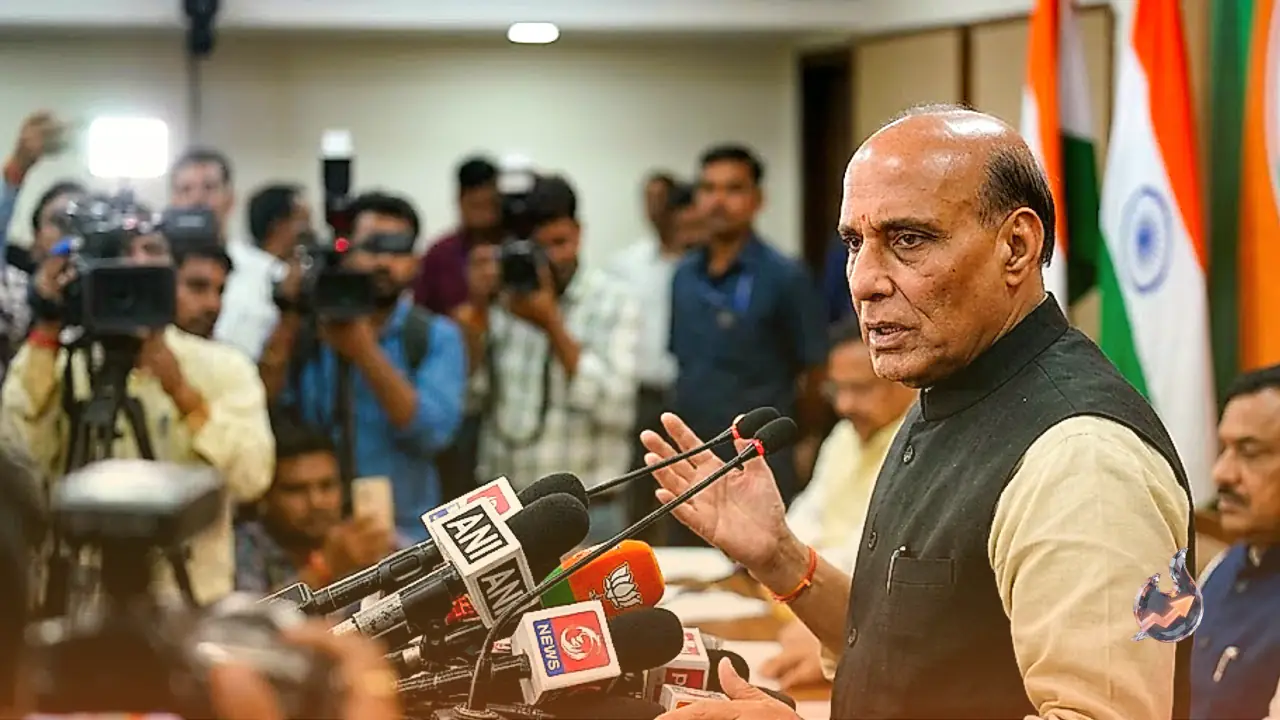





















The administrative and political standoff surrounding job and education reservations in Jammu and Kashmir has escalated significantly, placing the elected government and the Lieutenant Governor at loggerheads. Chief Minister Omar Abdullah stated that his administration formulated a proposal to streamline and cap the overall reservation limit at 50 percent. Following cabinet approval, the file was formally dispatched to the Lieutenant Governor's office in November of last year for final assent. However, the lack of any definitive clearance has triggered a severe administrative gridlock, prompting the Chief Minister to openly express his frustration and voice concerns over the stagnant process.
Stalled Approval and Warnings of Unrest
Expressing deep dismay over the prolonged delay in clearing the cabinet resolution, the Chief Minister cautioned that unresolved grievances could boil over into public agitation. He emphasized that his administration fulfilled its responsibility by processing the file and warned that if a youth-led movement similar to global protests erupts, his government will bear no responsibility for the consequences. Criticizing the hold-up, he maintained that keeping cabinet proposals pending or locked away indefinitely sends a discouraging message and deepens anxiety among aspirants across the region.
The Shifting Landscape of the Reservation Framework
Before the revocation of Jammu and Kashmir's special status on August 5, 2019, 43 percent of government jobs were reserved for various marginalized sections. This earlier framework encompassed Scheduled Castes, Scheduled Tribes, Other Backward Classes, residents living near the Actual Control Line and International Boundary, residents of backward areas, persons with disabilities, and ex-servicemen. The structure underwent a radical transformation in 2024 when, just a month prior to the general elections, Lieutenant Governor Manoj Sinha announced amendments to the Jammu and Kashmir Reservation Act of 2004, pushing the total job quota from 43 percent to 70 percent.
Gujjar-Bakkarwal Backlash and Open Merit Pressures
The steep climb in reservations was primarily driven by the inclusion of the Pahari community under the Scheduled Tribe category. This decision provoked sharp opposition from the Gujjar and Bakkarwal communities, who traditionally hold ST status and feared a dilution of their benefits. To mitigate potential backlash from Gujjar groups, the administration simultaneously hiked the ST quota share from 10 percent to 20 percent. This compounding of adjustments left open merit candidates with a mere 30 percent of government positions, triggering widespread resentment and intense criticism from individuals left outside the protective umbrella of any quota category.
Political Promises and Electoral Calculations
The contentious quota debate took center stage during the assembly elections, with major political factions making competing pledges. Omar Abdullah's National Conference and Mehbooba Mufti's Peoples Democratic Party both included promises in their manifestos to review and rationalize the existing reservation policy to address public grievances. Concurrently, the Bharatiya Pangata promised additional reservations in government jobs for Agniveers along with promotional quotas for various reserved employees, reflecting how deeply the issue resonated with voters across the region.
Disparities in Certificate Issuance and Internal Dissent
The current administration has faced friction not only from political opponents but also from within its own ranks and grassroots supporters. In February, following a query raised by Peoples Conference leader Sajzad Lone, official data presented in the assembly revealed that a significantly higher volume of reservation certificates had been issued in the Jammu division compared to Kashmir. The simmering internal dissent also spilled into public view in October 2025, when a ruling party legislator, Aga Ruhullah Mehdi, staged a protest alongside unreserved category citizens outside the Chief Minister's residence.
Cabinet Subcommittee Recommendations and Current Stalemate
In a bid to navigate the mounting political and social pressure, the government constituted a dedicated cabinet subcommittee. The panel submitted its report in October 2025, formally recommending that the total reservation ceiling be brought back down to 50 percent. The cabinet endorsed the recommendation and forwarded the file to Raj Bhavan the following month. Although the administration responded to subsequent queries raised by the Lieutenant Governor's secretariat, the Chief Minister noted that the file has seen zero movement since, leaving the policy in a state of prolonged limbo.