
















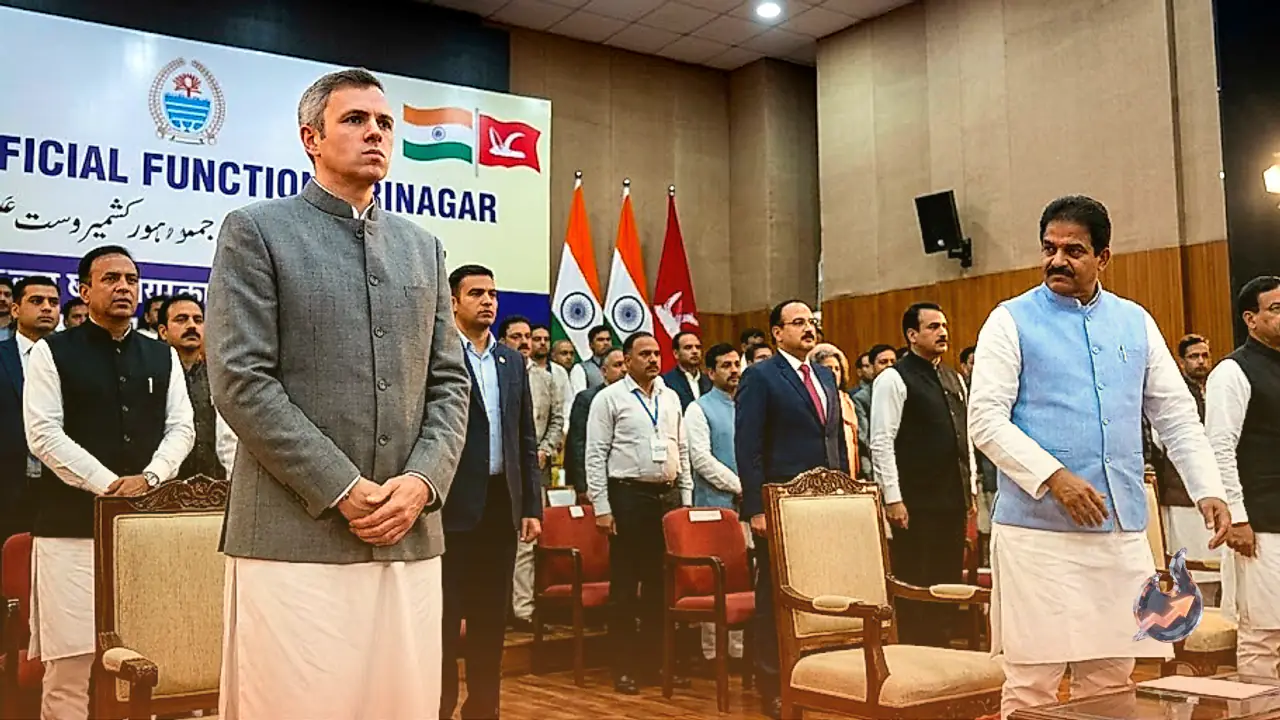

A significant political debate unfolded in Srinagar on September 7 during the ceremonial inauguration of a local film festival. As the national song Vande Mataram played for its full duration of 3 minutes and 10 seconds, Jammu and Kashmir Chief Minister Omar Abdullah remained standing in respect alongside his father and National Conference leader Farooq Abdullah, as well as other dignitaries on stage. However, the publication of the video capturing this moment triggered a sharp objection from the Indian National Congress, laying bare visible ideological differences within the opposition coalition.
Objections Raised Over Full Recitation and Historical Precedents Cited
Following the appearance of the event video, Congress General Secretary KC Venugopal took to social media to state that the full version of Vande Mataram does not align with the pluralistic and inclusive vision championed by the leaders of India's independence movement. In its statement, the party drew upon historical decisions and cited prominent figures of the freedom struggle, including Mahatma Gandhi, Jawaharlal Nehru, Sardar Vallabhbhai Patel, Subhash Chandra Bose, Rajendra Prasad, Acharya Narendra Dev, Maulana Abul Kalam Azad, Sarojini Naidu, and J.B. Kripalani.
In his declaration, KC Venugopal respectfully urged Congress's political allies to honor the wisdom and historical choices of the nation's founding figures. The party asserted that only the specific version adopted during the freedom movement should be performed at public gatherings. According to Venugopal, that particular excerpt was selected by independence leaders precisely to prevent the song from acquiring any communal overtones, thereby preserving India's secular and all-inclusive character. The Congress maintains that adhering strictly to this historical decision remains the most appropriate path to safeguard the country's diverse cultural fabric.
Ruling Party Counterattack and Allegations of Radical Influence
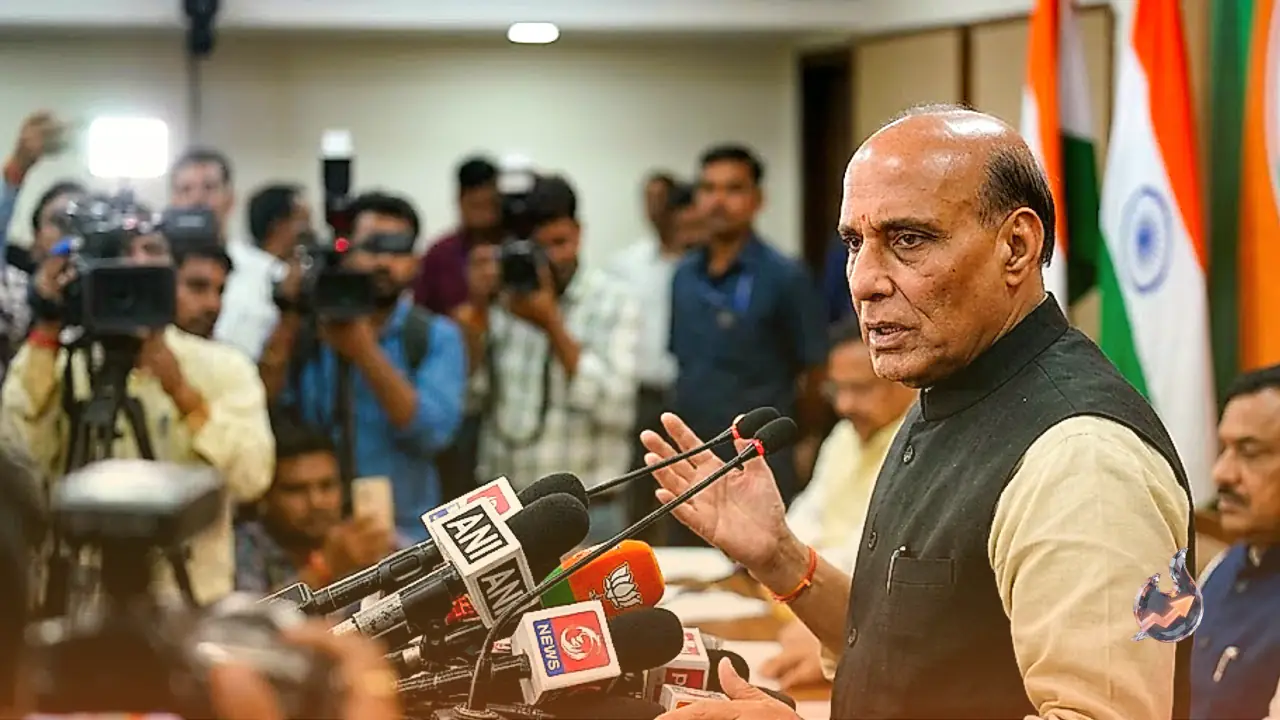
The stance taken by Congress drew a fierce reaction from the ruling Bharatiya Janata Party (BJP). BJP spokesperson Sudhanshu Trivedi launched a direct attack, alleging that the Congress leadership has allowed itself to be guided by extremist elements. Trivedi remarked, "Congress has rendered itself a mere puppet in the hands of radical elements." The spokesperson further highlighted that even key partners within the opposition bloc do not appear to share Congress's rigid posture regarding the national song.
The BJP questioned why the Congress continues to push an unyielding line on Vande Mataram when several of its own coalition partners express no discomfort with the full rendition. The ruling party reiterated its commitment to the song's heritage, noting that the BJP has previously adopted a comprehensive resolution dedicated to upholding the honor and legacy of Vande Mataram, outlining 10 key principles regarding its observance and respect.
Origins of the Controversy and Formal Party Resolutions
The ongoing friction around Vande Mataram gained public prominence following an incident on August 15 during Independence Day celebrations at Congress headquarters in New Delhi. A video surfaced showing senior leader Sonia Gandhi gesturing to stop the playing of Vande Mataram immediately after the initial stanza was completed. The clip prompted widespread criticism across political circles, leading to demands for a public apology and reported legal complaints filed in various parts of the country.
While party representatives initially offered differing explanations for the gesture, the Congress eventually formalized its official position to sing only the first two stanzas of Vande Mataram at official and party events. To codify this stance, the Congress Working Committee (CWC) passed a formal resolution, and on August 18, Congress President Mallikarjun Kharge publicly confirmed the party's decision.
In contrast, Jammu and Kashmir Chief Minister Omar Abdullah has maintained a consistent line on the matter. When questioned by reporters regarding the August 15 controversy, Omar Abdullah openly advocated for singing the song in its entirety. Consequently, his decision to stand respectfully throughout the entire 3-minute and 10-second rendition at the Srinagar film festival on September 7 reflects his pre-existing posture rather than a sudden shift in opinion.
Divergent Positions Among Opposition Partners Point to Isolation
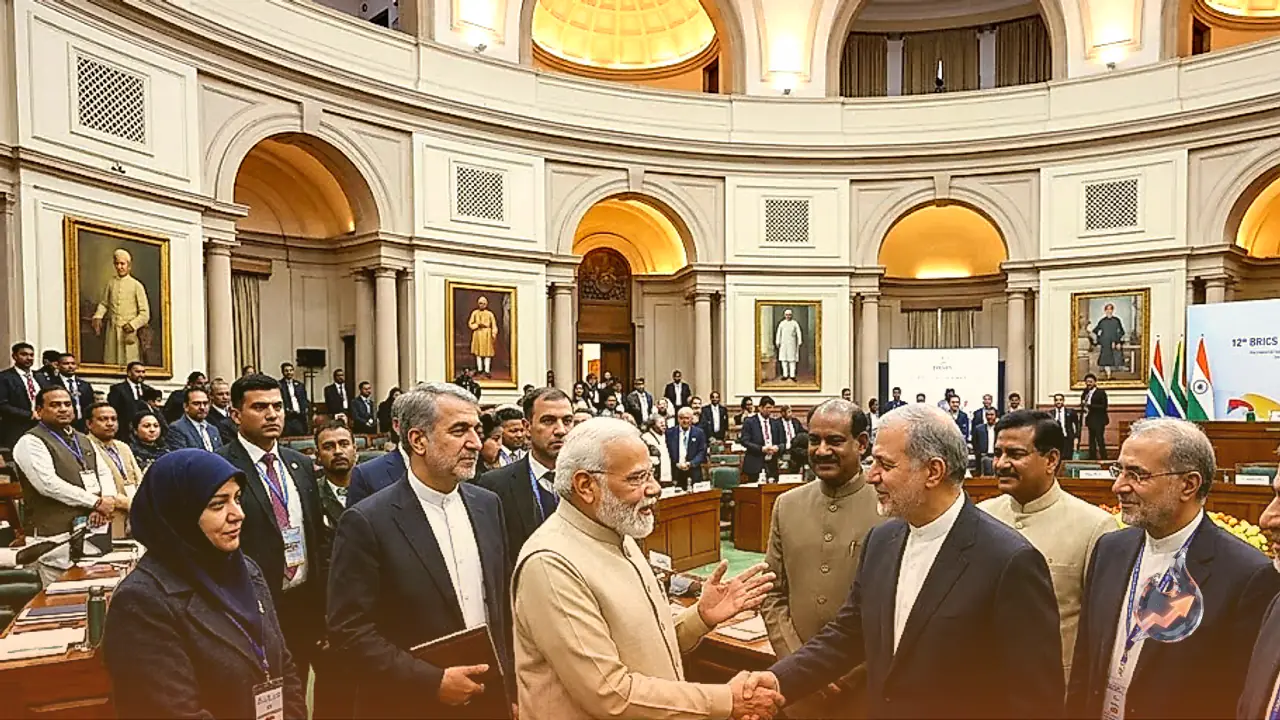
The dispute over Vande Mataram highlights a clear divergence of opinion among constituents of the INDIA opposition alliance. The varying positions held by key parties are structured as follows
- Congress: Maintains a strict policy of reciting only the first two stanzas of the song.
- National Conference: Led by Jammu and Kashmir Chief Minister Omar Abdullah, the party supports standing for and singing the entire national song.
- Trinamool Congress (TMC): Opposes making all stanzas mandatory but refrains from the intense opposition voiced by Congress against the full song.
- Samajwadi Party: Does not oppose the full rendition of the song at the national level.
- Shiv Sena (UBT): Led by Uddhav Thackeray, the party has declined to align with the Congress's posture.
- DMK: Expresses opposition to mandating all six stanzas of the song.
- Rashtriya Janata Dal (RJD): Has not issued a definitive party line on the issue.
- NCP-SP: The Sharad Pawar-led faction has not adopted a stance of opposing the complete song.
Political observers note that these contrasting approaches raise serious questions regarding Congress's strategic positioning. While the party frames its decision around the historical principles of the freedom movement, its isolation within the alliance becomes increasingly apparent as major coalition partners take a more flexible approach. Omar Abdullah's explicit endorsement and participation in the full rendition underscores how Congress's rigid posture on cultural and national symbols could risk alienating its key allies within the broader political opposition.