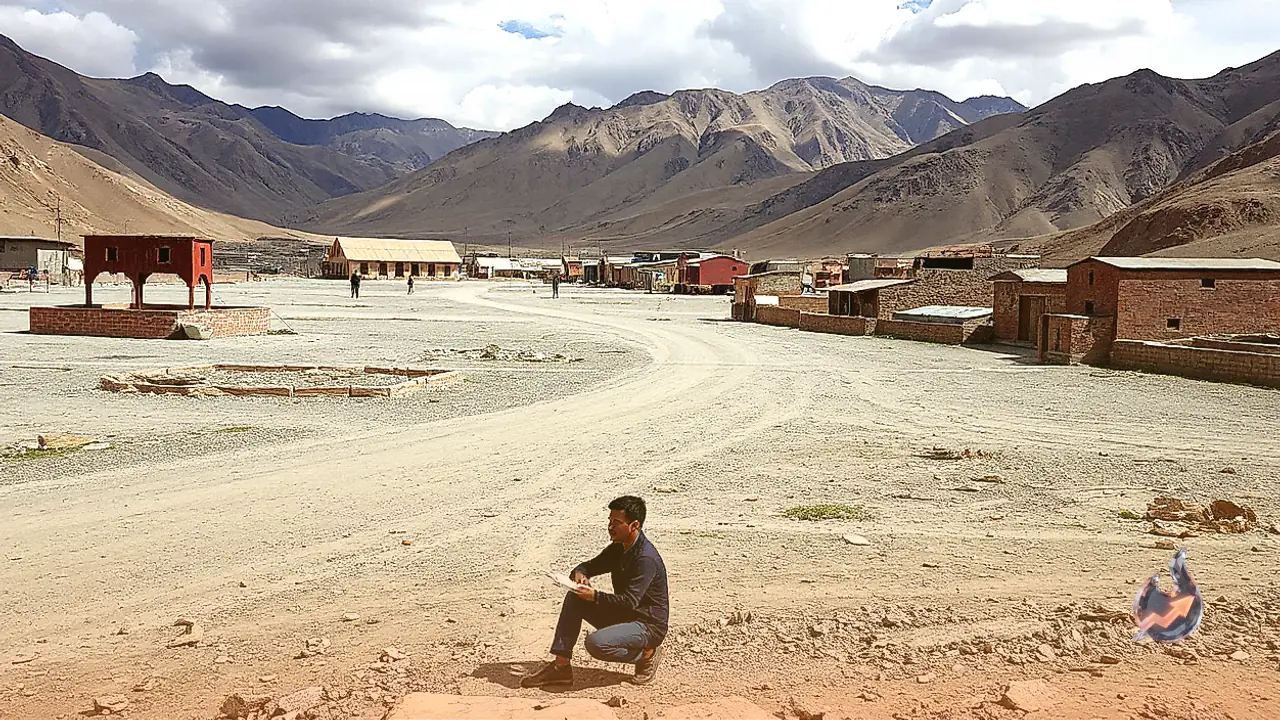

Voting is underway across the Union Territory of Ladakh on Saturday as citizens step out to elect representatives for local municipal bodies and village panchayats. This marks the very first local body electoral exercise in the region since August 5, 2019, when Article 370 was abrogated and Ladakh was carved out as a separate Union Territory. The previous local elections in this high-altitude region were conducted back in 2018, when Ladakh was still an administrative division of the erstwhile state of Jammu and Kashmir. Electoral officials are anticipating high voter participation despite harsh environmental conditions.
Political Dynamics in Municipal Contests
The municipal contests are centered around the two primary urban hubs of the region, Leh and Kargil, which constitute the only two municipal bodies in the Union Territory. In the Leh Municipality, all 21 seats across its 21 wards are being contested by a total of 42 candidates. The political contest in Leh is largely a direct head-to-head battle between the Bharatiya Janata Party (BJP) and the Indian National Congress. Meanwhile, Kargil Municipality comprises 17 wards, but polling is taking place for 13 seats because 4 councillors have already been elected unopposed. Kargil is witnessing a keen triangular contest among candidates from the Congress, National Conference, and BJP, with several influential independent candidates also posing a strong challenge.
Panchayat Election Breakdown and Administration
In the rural sector, panchayat elections are witnessing a significant number of uncontested victories. Across the 192 total panchayats in the Union Territory, 55 sarpanches have already been chosen without opposition, leaving 137 sarpanch seats open for polling. Similarly, out of 1,428 total panch seats, an overwhelming 1,186 panches were elected unopposed, reducing the active voting contest to just 242 panch seats. Administratively, municipal elections are being fought on explicit political party symbols under the management of the Chief Election Officer (CEO). Conversely, the State Election Commission (SEC) of Ladakh is conducting the panchayat elections on a non-party basis, where political affiliations are not officially assigned on ballots.
Roadmap for Autonomous Hill Development Council Polls
Following the conclusion of these civic polls, administrative attention will shift toward the upcoming elections for the Ladakh Autonomous Hill Development Councils (LAHDCs). Scheduled for December 4, 2026, with the entire electoral process slated for completion by December 8, these polls will take place across eight reconstituted districts: Leh, Kargil, Sakhi, Changthang, Nubra, Sham, Zanskar, and Drass. The exercise follows the implementation of the LAHDC Amendment Regulation 2026 and the creation of new administrative districts. The expanded councils now encompass 100 electoral constituencies, with 36 seats reserved exclusively for women candidates for the very first time.
Winter Schedule Protests, Boycotts, and Recent Developments
The electoral drive is taking place amidst some local resistance regarding the choice of season. Civil society bodies, including the Leh Apex Body (LAB) and the Kargil Democratic Alliance (KDA), raised concerns over scheduling elections during the severe winter months, citing sub-zero temperatures and seasonal migration that could reduce voter turnout. Furthermore, a local religious organization named Anjuman Al-Ghadir declared a boycott of the elections in three Kargil constituencies—Khangral, Shakar, and Chiktan—due to unresolved grievances surrounding political delimitation. These democratic exercises coincide with major developmental thrusts in the region, including Prime Minister Narendra Modi's dedication of 298 km Nimmu-Padum-Darcha road as part of a Rs 3,350 crore project package, along with approved recruitment for 103 posts at Ladakh's first medical college scheduled to open in 2027.