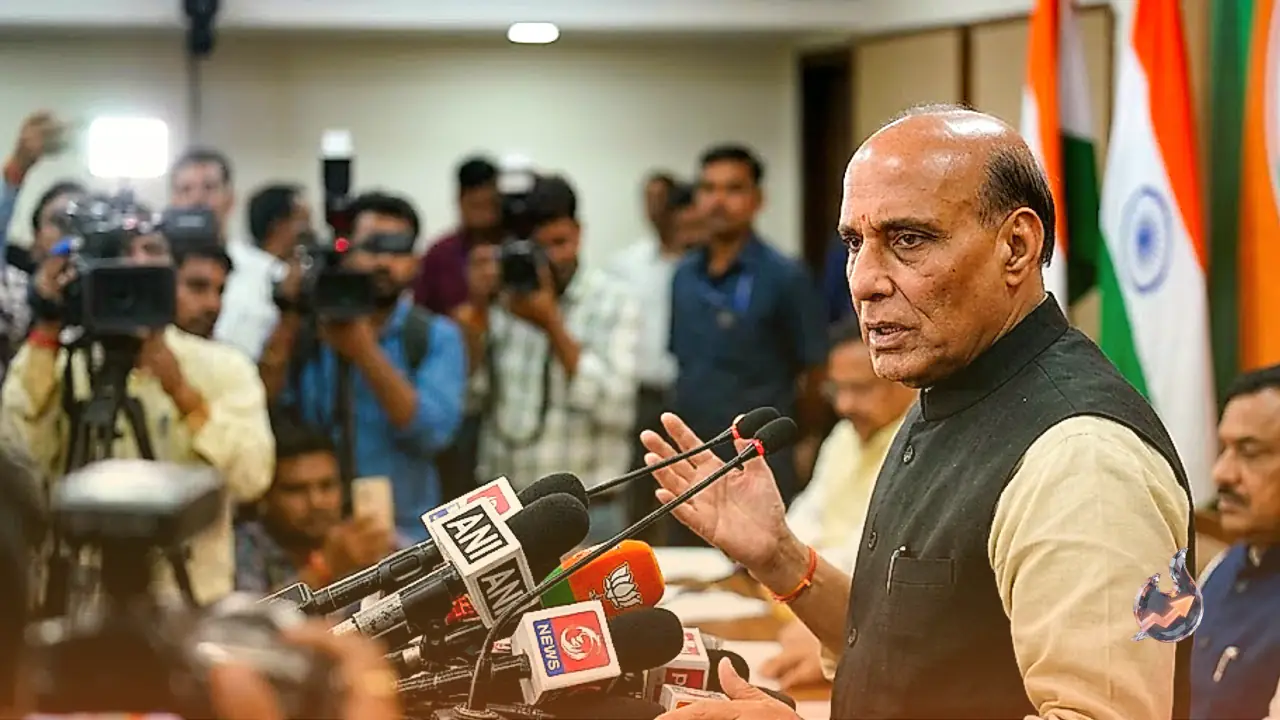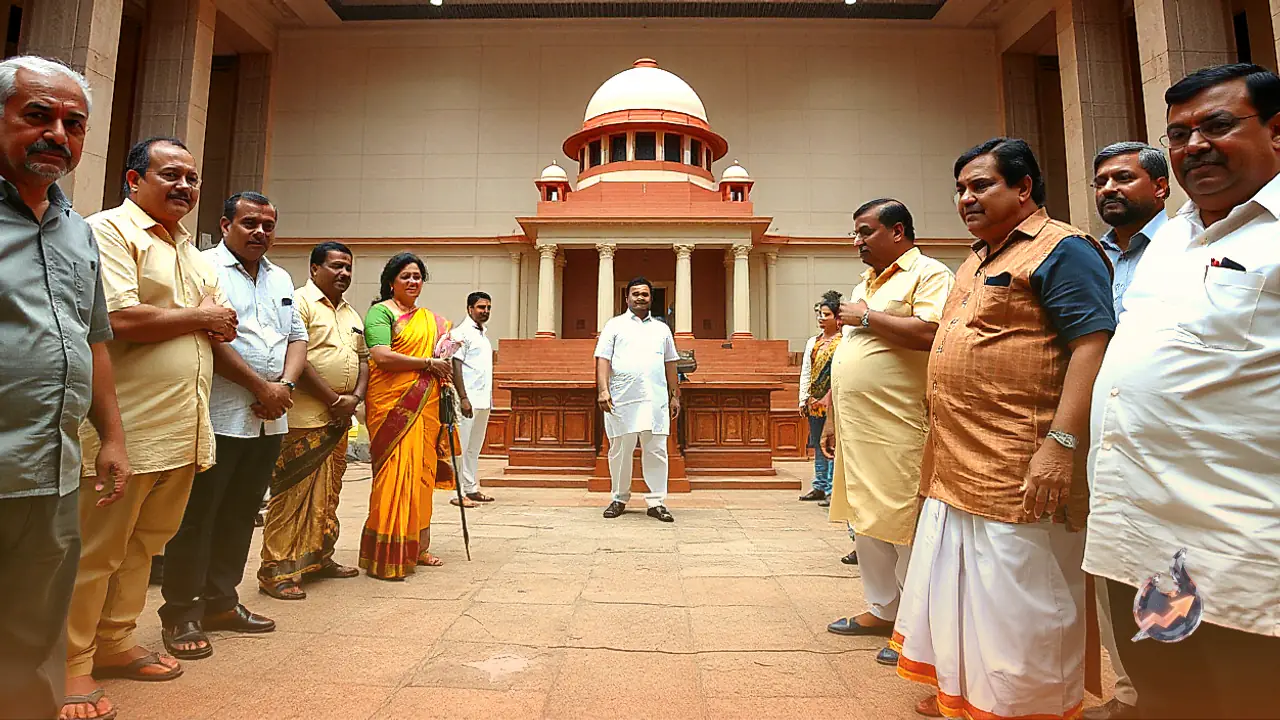






















In a major legal development within Tamil Nadu's political landscape, the Madras High Court has delivered its verdict on the petition concerning the election outcome in the Kolathur assembly constituency. A division bench comprising Chief Justice SA Dharmadhikari and Justice G Arul Murugan dismissed the petition filed by DMK chief and former Chief Minister of Tamil Nadu MK Stalin. The court ruled that the writ petition challenging the election victory of VS Babu, the candidate representing Tamil Vetri Kazhagam (TVK) in the 2026 assembly polls, was not maintainable under the law. This judicial refusal brings an end to Stalin's legal bid to contest the election result.
Background of the Kolathur Constituency Dispute
The controversy stems from the polling process and subsequent results of the 2026 Tamil Nadu assembly elections in the Kolathur seat. Following the declaration of results, DMK leader MK Stalin moved the High Court, raising questions about procedural transparency and demanding a comprehensive audit of all 286 Electronic Voting Machines (EVMs) deployed across the constituency. On August 31, the division bench had clearly indicated that it would first determine the legal maintainability and validity of the petition before deciding whether to enter into the merits of the case. Upon evaluation, the bench determined that the petition failed to meet the statutory prerequisites for maintainability.
Demands for 100 Percent VVPAT Slip Recounting
In his submission before the High Court, MK Stalin sought specific directives against the Election Commission of India (ECI). His primary prayer asked the court to order a mandatory 100 percent physical verification and tallying of Voter Verifiable Paper Audit Trail (VVPAT) paper slips across every polling booth in Kolathur. Furthermore, the petitioner called for an exhaustive technical verification of the burn memory and microcontrollers of all 286 EVMs used during the election to ascertain whether any software manipulation or tampering had taken place.
Allegations of Verification Delays and EVM Malfunctions
Outlining the sequence of events, Stalin informed the court that shortly after the election results were announced on May 7, he submitted a formal application along with the prescribed fees requesting memory verification for 14 specific EVMs. Despite lodging the application in early May, the Election Commission completed the audit process only on July 29, incurring what the petitioner characterized as an unwarranted delay.
The petition further highlighted technical irregularities during the verification exercise. Stalin stated that 2 out of the 14 selected EVMs stopped functioning as soon as they were retrieved for inspection. He argued that an independent technical audit was essential to determine the root cause of these machine failures. Stalin also pointed out custodial procedural lapses regarding another EVM, alleging that address tags attached to the carrying cases of the Ballot Unit and Control Unit were left completely blank despite seals being intact on the reverse side. Despite these highlighted deficiencies, the District Election Officer formally certified the verification procedure as successful and fully compliant with established guidelines.
Legal Arguments Presented by Senior Advocate Kapil Sibal
Addressing the bench's query regarding why a writ petition was chosen over a standard election petition, Senior Advocate Kapil Sibal, representing Stalin, explained the procedural dilemma. Sibal argued that because the ECI released its EVM memory verification report on July 29, the mandatory 45-day statutory limitation period for filing an election petition had already expired. He contended that a candidate should not be left without judicial recourse simply because administrative delays by the election body rendered the statutory timeframe unviable.
Sibal also raised technical concerns regarding the electronic signal flow during voting. He explained to the court that pressing a button on the Ballot Unit transmits a signal to the Control Unit, which subsequently routes data to the VVPAT system. Sibal argued that positioning the VVPAT intermediary to transmit signals through software introduced potential vulnerabilities for digital manipulation.
Election Commission's Defense and Supreme Court Precedent
Countering these arguments, Senior Advocate Dama Seshadri Naidu, appearing for the Election Commission of India, strongly opposed the writ petition. Naidu argued that any challenge to an election victory or voting process must strictly adhere to the Representation of the People Act via an election petition. He characterized the writ petition as clever drafting designed to bypass the statutory 45-day limitation period.
Naidu submitted that if the petitioner had genuine doubts regarding EVM operations, those objections ought to have been raised immediately rather than seeking judicial remedies after being indifferent to statutory timelines. Additionally, Naidu relied on landmark rulings by the Supreme Court of India that explicitly rejected petitions demanding 100 percent VVPAT slip verification. Granting such prayers at this stage, he warned, would establish a troubling precedent, encouraging unsuccessful candidates to routinely initiate post-election litigation outside statutory frameworks.