

















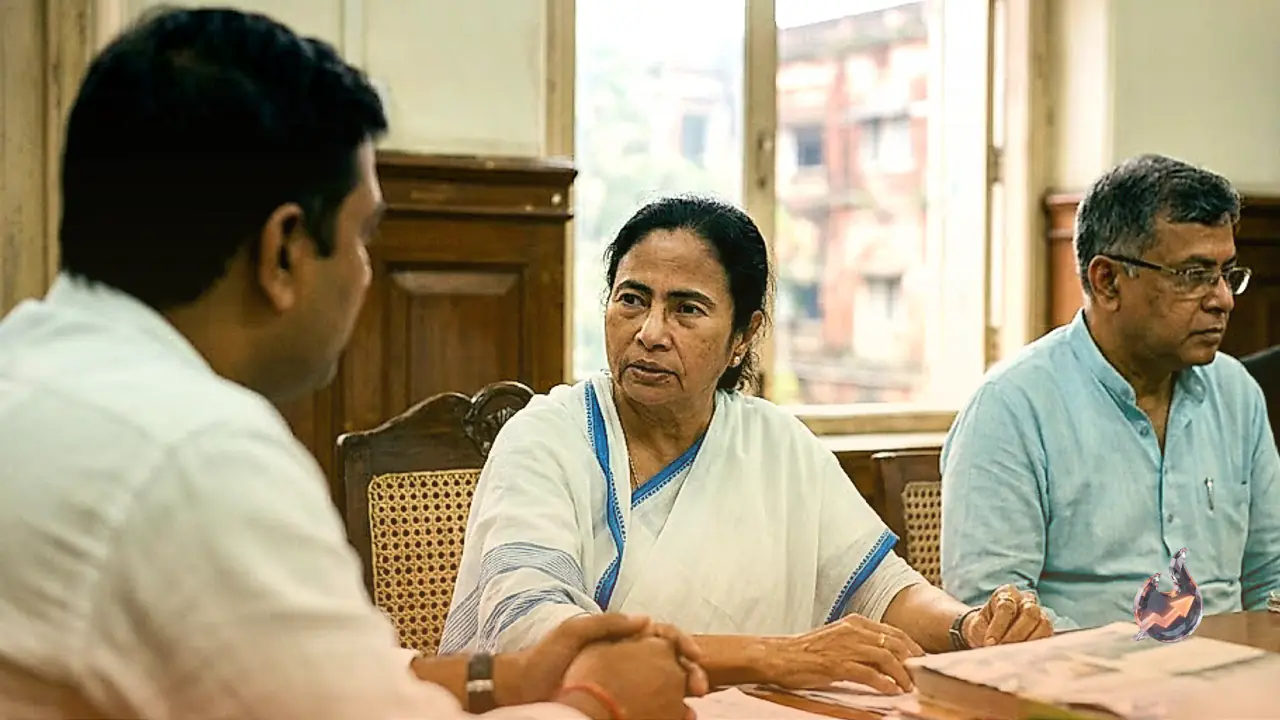

West Bengal politics is witnessing a dramatic turning point as the founder and former chief minister of the Trinamool Congress, Mamata Banerjee, has chosen not to contest the upcoming assembly bypolls despite persistent appeals from her current and former colleagues. This surprising move has reignited intense debates surrounding her overarching political ambitions. Earlier this year, a massive victory by the Bharatiya National Party brought a definitive end to her unbroken 15-year rule, paving the way for her former close aide turned fierce rival, Suvendu Adhikari, to assume the chief minister's office.
The Bypolls Battleground and Strategic Retreat
Upcoming assembly bypolls are scheduled for September 6 across the constituencies of Rejinagar and Nandigram, triggered after the respective winning candidates resigned from their positions. Humayun Kabir, who won the Rejinagar seat, had publicly invited Mamata Banerjee to contest from the constituency and even claimed he could secure a guaranteed victory for her. Meanwhile, leaders representing the rival faction led by Ritabrata Banerjee asserted that they would field no candidate in Nandigram if the veteran leader chose to run herself. Despite these offers, the 71-year-old leader decided to stay out of the electoral contest. Both Rejinagar and Nowda fall within the Murshidabad district, where the Muslim community comprises nearly 70 percent of the local population. Recent political shifts in these areas saw the national party secure second place while the regional faction slipped to third, reflecting a deep polarization.
Internal Feuds and Party Control Struggles
Ever since the major factional split within the Trinamool camp, the faction loyal to Mamata Banerjee has been locked in an intense legal and political tussle with the rival faction led by Ritabrata Banerjee over the party's official name and its iconic 'two flowers' election symbol, which she originally designed. Political observers across the state are well aware of the grassroots influence the former chief minister once wielded, which had famously toppled the long-standing Left Front government in 2011. However, heavy allegations involving fraud, embezzlement, bribery, extortion, and smuggling have now engulfed the political outfit. Although she occasionally resorted to strict measures such as openly reprimanding members and dissolving leadership committees, she was frequently seen helplessly watching as her nephew Abhishek बनर्जी took over the day-to-day organizational control.
Reaching Out to Old Rivals and National Ambitions
In a surprising twist, the veteran leader has now extended an olive branch toward her bitter communist rivals and the Congress party, both of whom she had parted ways with back in 1998. At the same time, she has repeatedly voiced her determination to rebuild her grassroots organization while simultaneously strengthening the broader opposition Indian National Developmental Inclusive Alliance, an opposition bloc whose naming is frequently credited to her supporters. Although parties like the Aam Aadmi Party led by Arvind Kejriwal and the Dravida Munnetra Kazhagam led by M.K. Stalin have distanced themselves from the platform, certain leaders believe her personal rapport could still persuade them to return ahead of the 2029 general elections. While some political experts argue her push for opposition unity is designed to project herself as a frontline national leader, others maintain she remains focused on regional dominance rather than sweeping national ambitions.
Facing Corruption Scandals and Crucial Tests
The upcoming electoral contests will serve as a definitive litmus test for her faction's organizational strength and its ability to rejuvenate the party following a crushing defeat. The administrative responsibilities of running the state for a decade and a half undoubtedly took a heavy toll on the party apparatus, a fact acknowledged privately by remaining loyalists and openly by defectors. As rival factions fight for supremacy amid a backdrop of severe corruption allegations, the road ahead remains immensely steep. Rebuilding the party from the grassroots while simultaneously navigating a complex web of opposition alliances will determine whether Mamata Banerjee can successfully script a powerful political comeback in West Bengal.