
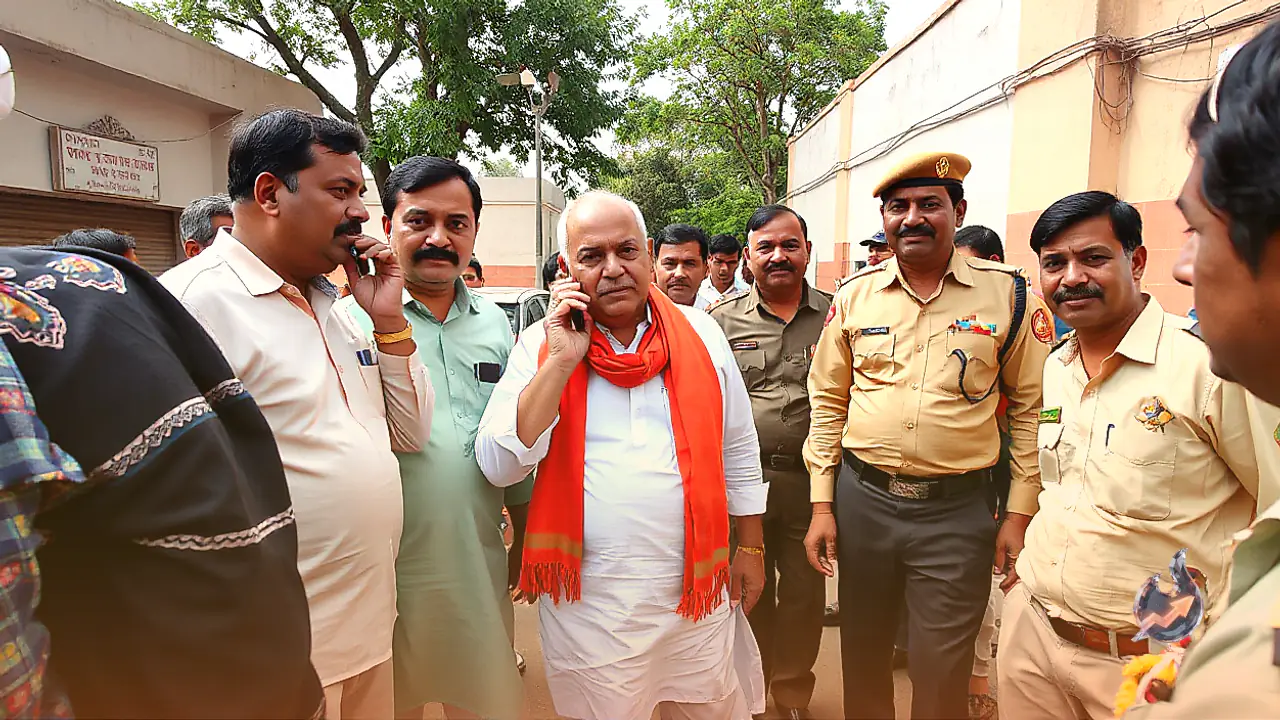
















A fresh political debate has emerged concerning historical boundaries after Bharatiya Janata Party parliamentarian Nishikant Dubey stated that the time has arrived to reclaim areas such as Chattogram, Sylhet, and Noakhali. According to him, these territories are currently under Bangladesh's occupation, and taking them back is essential for achieving the nation's comprehensive development. He linked these arguments to the decisions made during the partition of the country, raising pointed questions about the policies adopted by the leadership at that time.
Questioning Partition Decisions
The BJP leader launched a strong critique regarding the border demarcations established during the partition era, alleging that former Prime Minister Jawaharlal Nehru handed over crucial regions to Pakistan. He maintained that these actions continue to burden India's northeastern states with severe geopolitical and economic consequences. Questioning the rationale behind letting go of lands with deep historical ties, Dubey asked whether those boundaries were drawn strictly along the lines of the Radcliffe Line or governed by other administrative measures.
The Tripura Princely State and Merger
Elaborating on his historical assertions, the parliamentarian brought up the former princely state of Tripura and its integration with the Indian Union between 1948 and 1949. He noted that the entire royal family, including Maharaja Bir Bikram Deb and Maharani Kanchan Prabha, stood firmly with India. However, he alleged that certain decisions regarding parts of the principality were executed without keeping the Maharani in the loop following the Maharaja's passing, effectively sidelining the leadership when portions were allowed to fall outside Indian control.
Impact on Northeast Connectivity
Connecting geographical access to economic progress, Dubey emphasized the significance of the Chattogram port. He argued that the lack of direct access to this vital maritime hub has heavily restricted trade, logistics, and transportation in the northeast. In his view, this isolation has created persistent barriers to the region's overall financial growth, directly stemming from the border arrangements finalized decades ago.
Expanding Beyond Kashmir
The legislator concluded that the discourse surrounding territorial claims should not be confined solely to regions controlled by Pakistan. He stated that historical territories linked to northeastern principalities now fall under external administration, meaning the scope of national integration discussions needs to be broadened. Asserting that holistic progress depends on rectifying historical anomalies, he maintained that reclaiming these links remains a vital goal for the country.