















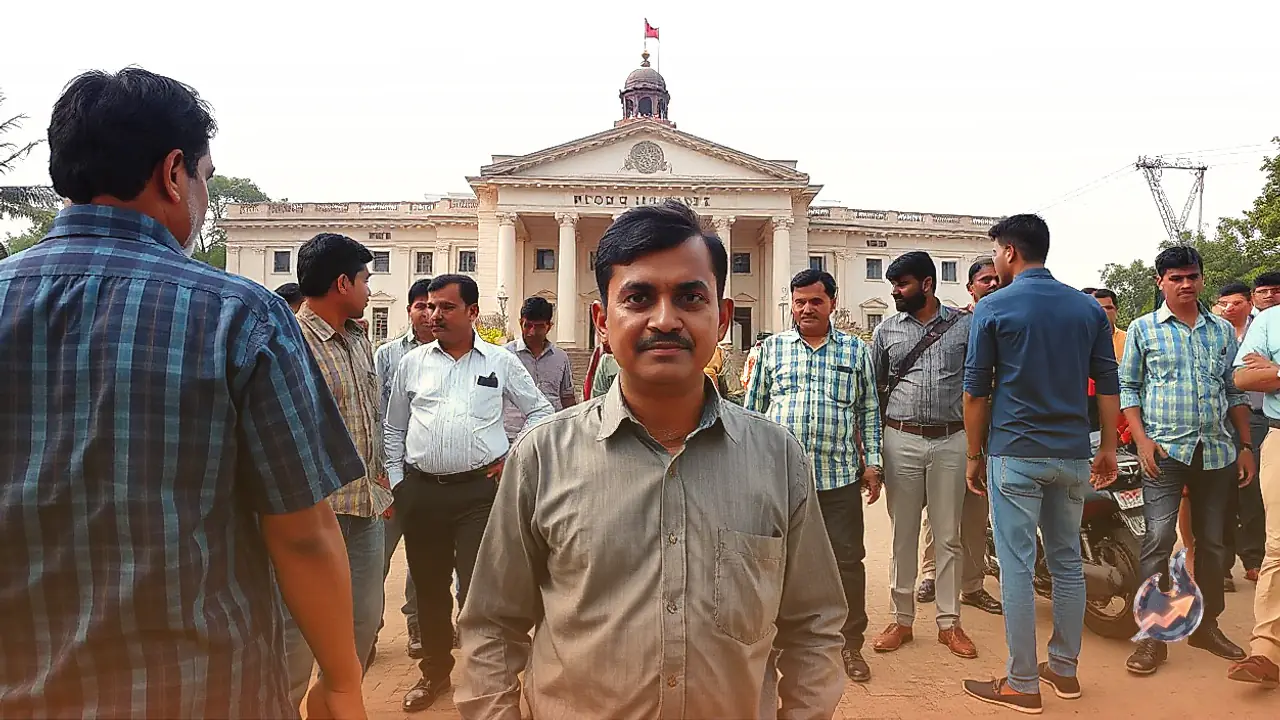

A major legal dispute has emerged over the number of wards in the Kolkata Municipal Corporation ahead of the upcoming local polls in West Bengal. The civic body's wards were increased from 144 to 209, a decision that has been strongly challenged before the judiciary. Following the conclusion of hearings, the court had reserved its judgment, and the final order is scheduled to be pronounced today, Friday, November 6. This ruling will determine the subsequent course of the election process in the region.
Division Bench Set to Deliver Crucial Verdict
A division bench of the Calcutta High Court comprising Justice Sabyasachi Bhattacharyya and Justice Arjun Roy will deliver its judgment on the ward delimitation case of the Kolkata Municipal Corporation. The hearings for this matter concluded on November 4, after which the bench reserved its order. The court had previously issued clear instructions to the West Bengal State Election Commission, mandating that the election schedule for the municipal corporation must not be announced until the high court delivers its final verdict. Consequently, today's ruling holds immense significance for the progression of the polls.
Expansion of Wards From 144 to 209
The controversy stems from the administrative decision to alter the administrative structure of the Kolkata Municipal Corporation. Previously, the civic body comprised 144 wards, but under a fresh delimitation exercise, the total count was raised to 209. This administrative maneuver faced immediate pushback from the Communist Party of India (Marxist), commonly known as the CPI (M). Party leader and former councillor Dipu Das filed a petition in the high court challenging the exercise, alleging that standard protocols and essential factors were ignored while redrawing the boundaries.
Arguments Raised Against the Delimitation Process
According to the petitioner, adequate procedures to consult local citizens before finalizing the boundaries of the new wards were entirely absent. Suggestions to conduct ground inspections and organize public hearings were reportedly disregarded during the process. The petition further highlighted that crucial metrics such as population distribution and geographical conditions of the wards were not properly evaluated. Furthermore, the petitioner alleged that the entire delimitation exercise was orchestrated to favor a specific political faction.
Legal Journey From Single Bench to Division Bench
The legal proceedings initially commenced before a single bench presided over by Justice Hiranmay Bhattacharyya. However, rather than issuing an immediate directive, the single bench instructed all involved parties to formally file their affidavits. Dissatisfied with the interim approach, the petitioner approached the division bench, arguing that if the election commission were to announce poll dates prior to a definitive judicial ruling, the core objective of the petition would be rendered ineffective.
Upcoming Elections Across Seven Urban Bodies
The elections are slated to take place across seven urban civic bodies in West Bengal, which include both the Kolkata Municipal Corporation and the Howrah Municipal Corporation. Reports indicate that polling for these municipal bodies is likely to be scheduled during the final week of December, with the counting of votes and subsequent results anticipated in the first week of January next year. The central question remains whether the high court will uphold the expansion to 209 wards or issue alternative directives, thereby clearing the path for the civic polls.