



















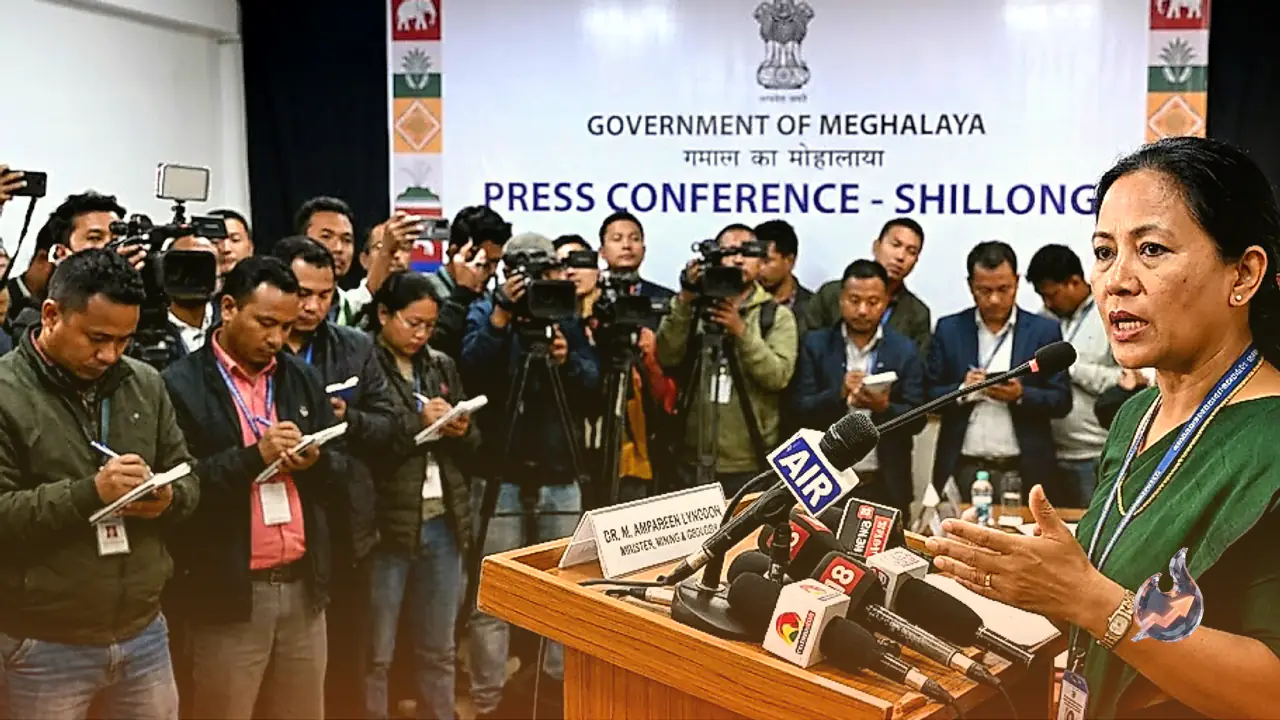

During a recent legislative session in Shillong, the Meghalaya government made it clear that the ongoing ban on coal extraction will not be revoked. Instead, the administration is focusing on guiding traditional and small-scale miners toward legally compliant, scientific, and safe extraction methods. This official stance came in response to a short-duration discussion introduced by Voice of the People Party legislator Ardent Miller Basaiawmoit, who raised concerns regarding the severe socio-economic hurdles faced by local communities.
National Green Tribunal Directives and Legal Framework
Chief Minister Conrad K Sangma addressed the house by explaining that the unregulated coal extraction ban imposed by the National Green Tribunal back in 2014 severely impacted coal-dependent livelihoods across the region. However, he stressed the critical need to address dangerous operational practices and environmental degradation. Citing the Supreme Court judgment in Civil Appeal No. 10720 of 2019, Sangma emphasized that all mineral extraction activities in Meghalaya must strictly adhere to the Mines and Minerals Development and Regulation Act of 1957, the Mines Act of 1952, and the Environment Protection Act of 1986.
Private and Community Landownership Rights
Highlighting the unique administrative structure of Meghalaya under the Sixth Schedule of the Constitution, the Chief Minister noted that private and community landowners hold distinct legal standing. Tribal landowners own not only the surface soil but also the underlying mineral deposits. Sangma stated that such landowners can lease their properties to eligible operators for mineral extraction, provided they follow all applicable statutory regulations and governing frameworks.
Facilitating Transition to Legal and Scientific Mining
To bridge the gap between unregulated extraction and legal, scientific mining, the state administration notified a Standard Operating Procedure on March 5, 2021. This framework establishes guidelines for issuing prospecting licenses and mining leases for coal. According to government figures, the Union Ministry of Coal has granted prior approvals for prospecting licenses across 30 coal blocks and operational mining leases for 12 blocks, with commercial production having officially commenced in three of those blocks.
Hurdles Faced by Small-Scale Miners
Despite these proactive steps, the government acknowledged that the minimum threshold of 100 hectares required to secure a mining lease remains a formidable hurdle for small-scale miners, many of whom lack landholdings of that magnitude. Additionally, the bureaucratic complexity and lengthy approval timelines involving central authorities present significant roadblocks. Sangma confirmed that the state administration has continuously engaged with the central government to iron out these complications and encourage wider small-miner participation in lawful operations.
Inter-Agency Committee and Proposed Reforms
To evaluate these concerns comprehensively, the Ministry of Coal constituted a special committee comprising representatives from central bodies, the Central Mine Planning and Design Institute, the Directorate General of Mines Safety from the Shillong region, and state officials. This committee convened a crucial meeting on July 31, 2026. During the session, the state delegation proposed the decentralization of certain powers under Section 26 of the MMDR Act, including prior approvals under Section 5(1) and mining plan sanctions under Section 5(2).
Furthermore, the state suggested lowering the minimum concession area requirement, establishing a dedicated Project Monitoring Unit to oversee site operations, and reviewing an alternative safety-oriented extraction technique put forward by a local coal association. The committee directed respective departments to scrutinize these recommendations, with another round of talks scheduled shortly. Consultations with miner associations and stakeholders continue to ensure solutions are built within the existing legal boundaries.
Status of Stone and Sand Quarrying
Addressing demands to ease restrictions on stone and sand extraction, the government clarified that Meghalaya has never imposed a blanket ban on these activities. Lawful quarrying remains fully permissible, provided operators possess a valid lease or permit, secure environmental clearances, and comply with forestry, pollution control, and transportation mandates. Both stone and sand are categorized as minor minerals under the MMDR Act of 1957 and are regulated locally via the Meghalaya Minor Minerals Concession Rules of 2016, alongside the Sustainable Sand Mining Management Guidelines of 2016 and Enforcement and Monitoring Guidelines of 2020.
Environmental Clearances and Sustainable Initiatives
The administration acknowledged that the current regulatory structure lacks provisions for traditional or micro-scale operations, while environmental clearance remains mandatory for all lease areas regardless of size. A ministerial committee headed by the Deputy Chief Minister previously reviewed the 2016 minor mineral rules and submitted a proposal to the Union Ministry of Environment, Forest and Climate Change seeking exemptions for traditional stone boulder extraction from prior environmental clearance mandates. However, the ministry rejected the request, citing legal precedents stemming from a Patna High Court ruling.
Reiterating his administration's commitment, Sangma stated that the government will continue striving to balance the livelihoods of small-scale operators with strict environmental compliance. He pointed to state-led ecological initiatives, including what he termed the nation's largest Payment for Ecosystem Services program alongside comprehensive springshed and water conservation efforts, aiming to harmonize environmental preservation with community sustenance.