




















Political Tensions Flare in Jharkhand Over Mineral Rights, Finance Minister Writes to Babulal MarandiPolitics
25 Aug 2026, 12:12 am (63 days ago)· 5

Political Tensions Flare in Jharkhand Over Mineral Rights, Finance Minister Writes to Babulal Marandi

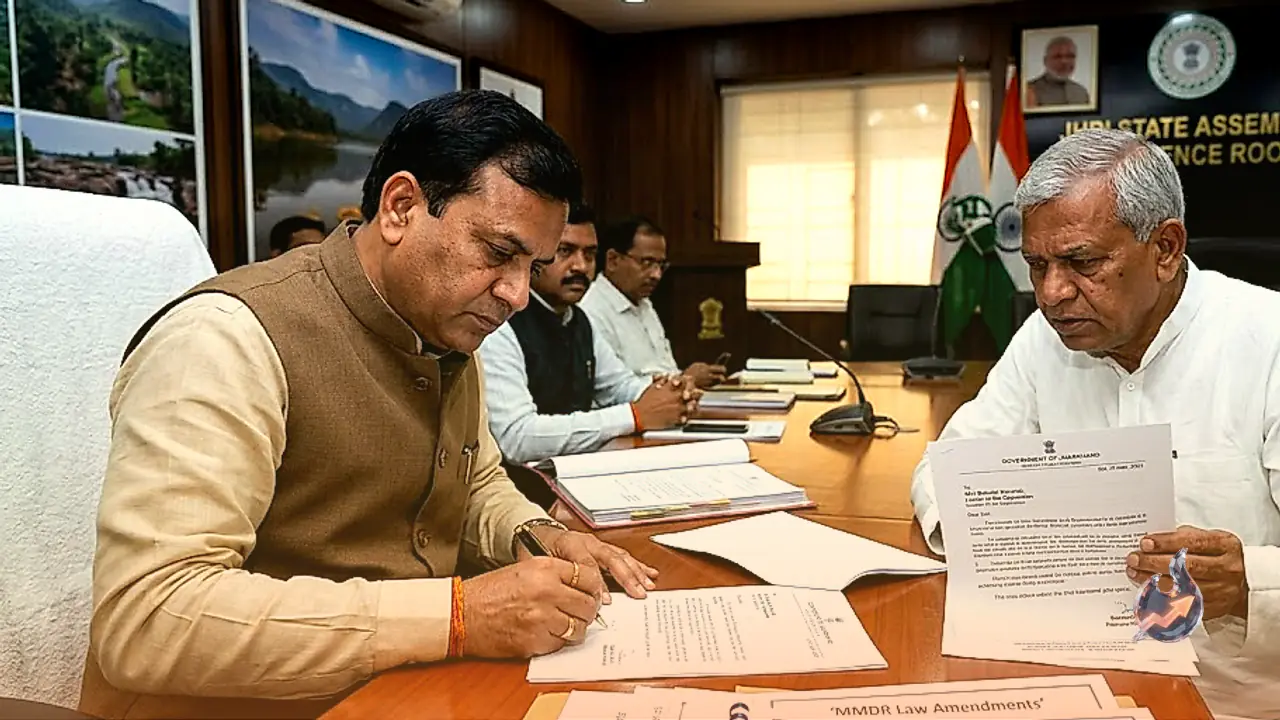
Jharkhand Finance Minister Radhakrishna Kishore has written to opposition leader Babulal Marandi expressing concern over proposed amendments to the MMDR law by the Centre, which could cost the state around Rs 14,000 crore in revenue.

Political friction surrounding mineral wealth and economic rights has intensified in Ranchi. Radhakrishna Kishore, the finance, planning, and development minister of the Jharkhand government, has addressed an important letter to leader of the opposition Babulal Marandi to safeguard the financial interests of the state. Through this communication, he has expressed deep concern regarding the amendments being introduced by the central government to the Mines and Minerals Development and Regulation or MMDR act.

Estimated Revenue Loss of Billions

The minister noted in the letter that in light of the Supreme Court's judgment, the Jharkhand government had passed a bill in the assembly to implement cess collection in mining regions. Through this cess, an estimated revenue of approximately 14,000 crore rupees was projected for the financial year 2026-27. The minister stated that the introduction of section 9D in the MMDR act by the central government will deprive Jharkhand of this massive revenue. Furthermore, apprehensions have been raised that this could adversely impact the recovery of 1,36,042 crore rupees in dues pending with various coal companies from Jharkhand.

Also read

The Pain of Displacement and Environmental Toll

Highlighting the ground realities of tribal society and the state, Minister Radhakrishna Kishore stated that while the central government reaps the financial benefits of mining, the ordinary populace of Jharkhand must endure severe hardships such as displacement, eviction from land, environmental pollution, dilapidated roads, and health complications. He urged the leader of the opposition, noting that as the state's first chief minister and an enlightened member of the tribal community, he understands this agony well.

State Interests Above Political Rivalries

The letter strongly emphasized that while political rivalry is a part of democracy, the welfare of the state must remain paramount above ideological differences and party lines. The finance minister clarified that governments come and go, but the state is a permanent entity.

Raising the Voice Before the Centre

The minister expressed confidence that under the leadership of Chief Minister Hemant Soren, the state government will forcefully present this entire matter before the central government and utilize constitutional forums if necessary. In conclusion, he appealed to the leader of the opposition that loyalty to the state must precede political loyalties, urging him to use his leadership within the state Bharatiya Janata Party to prominently advocate for the protection of Jharkhand's financial and constitutional rights before the Centre.


Questions & Answers

Who is Radhakrishna Kishore?
Radhakrishna Kishore is the Minister of Finance, Planning, and Development for the Government of Jharkhand.
To whom did he write the letter?
He wrote the letter to the leader of the opposition in the state, Babulal Marandi.
What is the estimated revenue loss?
Due to the amendment in the MMDR act, Jharkhand is estimated to face a revenue loss of approximately 14,000 crore rupees in the financial year 2026-27.
How much are the pending dues from coal companies?
Jharkhand has pending dues amounting to 1,36,042 crore rupees with various coal companies.

Comments 5

Sandeep Yadav@sandeep-yadav·63d ago

This political dispute over Jharkhand's mineral rights and the potential revenue loss of 14,000 crore rupees will directly impact the state's infrastructure and economic stability. If the central government implements amendments to the MMDR act, it will not only affect the state's financial health but also create a major crisis regarding the recovery of pending dues and the rehabilitation of displaced populations. It will be crucial to observe how political parties transcend party lines to unite and present their case to the center on this economic front.

Ravikash Gupta@ravikash·63d ago

This brewing dispute between the Jharkhand government and the Centre over the MMDR Act amendments and Section 9D highlights a critical test of fiscal federalism in India. A potential loss of Rs 14,000 crore in revenue alongside stalled recovery of over Rs 1.36 lakh crore in coal dues will directly impair the state's fiscal health, infrastructure spending, and capital expenditure. For resource-rich states, this is not merely a political flashpoint but a profound structural challenge regarding long-term economic stability and revenue-sharing, a dynamic that financial markets and corporate stakeholders will monitor closely.

Ayesha Siddiqui@ayesha-siddiqui·63d ago

This development is a clear illustration of how friction over financial control between the Centre and the states in resource-rich regions is intensifying. When policy shifts occur in high-revenue sectors like mining, the fallout extends far beyond budget calculations, directly impacting the resources needed to address local displacement and environmental degradation. If this standoff finds no constitutional or political resolution, it risks setting a precedent for other mineral-heavy states, posing a severe challenge to the framework of cooperative federalism.

Karan Malhotra@karan-malhotra·63d ago

This is an issue of economic policy and financial rights that sets the stage for potential legal and constitutional friction between the Centre and the state. The deadlock between the Supreme Court-backed cess provisions and the proposed amendments to the MMDR Act will directly impact federal structures, fiscal federalism, and public development. If this dispute escalates to judicial or higher constitutional forums, it could have far-reaching implications for the financial autonomy and resource rights of other mineral-rich states across the country in the near future.

Rohan Verma@rohan-verma·63d ago

This standoff over the MMDR act amendments and cess has significantly escalated political tensions between the ruling dispensation and the opposition in mineral-rich states. Such pressure from regional parties on issues of displacement, environmental degradation, and local development in tribal-majority states like Jharkhand could trigger a prolonged policy tussle with the Centre, inevitably shaping upcoming political equations.

Citizen journalism

Become a TrendKia journalist

Voice of the people

Share news, photos and videos from your area with TrendKia and let your voice reach the nation. Every citizen a journalist.

Join now
CH 01 LIVE
TrendKia TV ON AIR
Chamar no WhatsApp