




















The Supreme Court of India has officially agreed to hear a critical petition filed by the Uddhav Thackeray-led faction of the Shiv Sena, challenging a major parliamentary ruling. The legal dispute centers on Lok Sabha Speaker Om Birla's recent decision to formally recognize the merger of six rebel Members of Parliament from the Shiv Sena (UBT) into the rival political camp led by Maharashtra Chief Minister Eknath Shinde. This judicial intervention marks a significant escalation in the ongoing battle for control over the party's legislative representation.
Supreme Court Proceedings
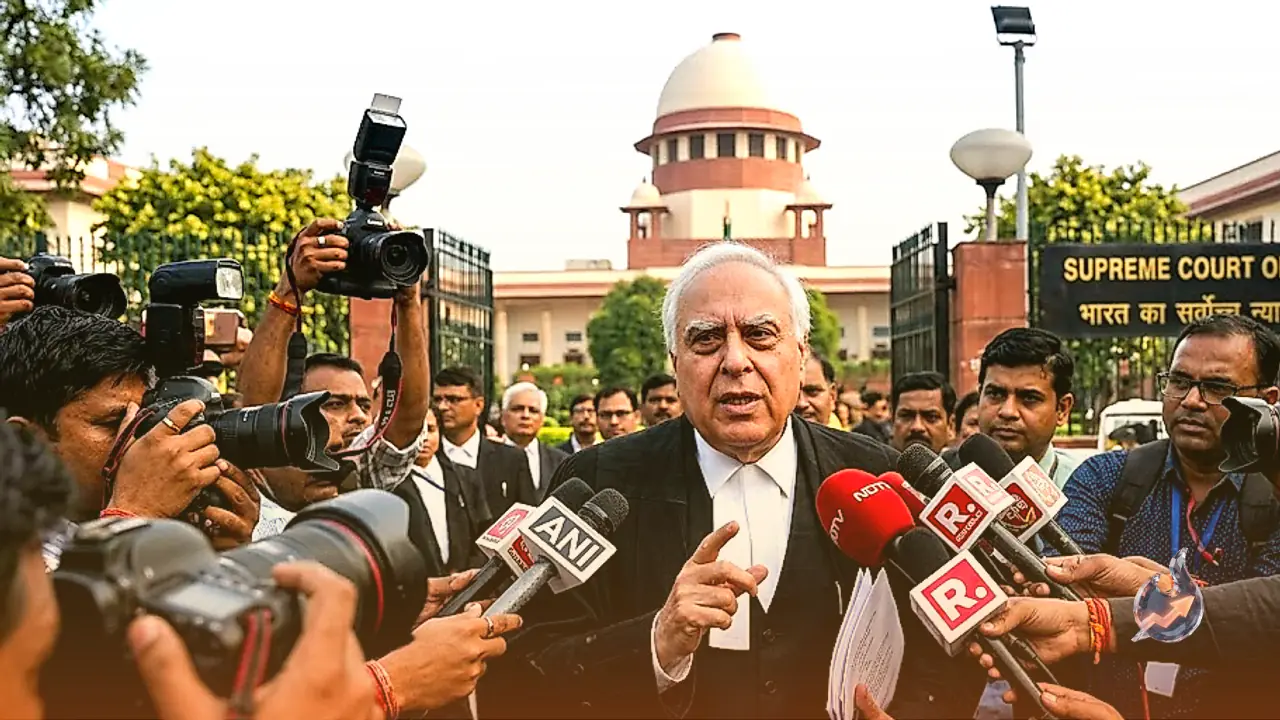
During the proceedings on Wednesday, a Supreme Court bench comprising Justice P.S. Narasimha and Justice Alok Aradhe took up the matter for initial consideration. Acknowledging the constitutional weight of the issue, the two-judge bench proceeded to issue formal notices to the office of the Lok Sabha Speaker as well as the other respondents involved in the case. The court has directed all concerned parties to file their official responses and has scheduled the next hearing to take place after a period of two weeks. This timeline gives the respondents a brief window to formulate their legal defense regarding the controversial parliamentary merger.
The Parliamentary Numbers Game
The political maneuver at the heart of this legal battle unfolded just ahead of the monsoon session of Parliament. On July 18, the Lok Sabha Speaker officially granted permission for the six defecting lawmakers to merge their parliamentary presence with the Shinde-led faction of the Shiv Sena. The move dramatically altered the balance of power within the lower house of Parliament. The Shiv Sena (UBT) had originally secured a total of nine elected Members of Parliament on its official party ticket. With six of these members switching allegiances, the Shinde faction's total strength in the Lok Sabha has now swelled to 13 members, leaving the Thackeray camp significantly weakened on the national stage.
The Anti-Defection Argument
Prior to the Speaker's July 18 ruling, the Shiv Sena (UBT) had vigorously contested the lawmakers' jump. The Thackeray camp presented strong arguments before the Lok Sabha Speaker, demanding that all the rebel parliamentarians face immediate disqualification. Their core argument was built entirely upon the framework of the anti-defection law, asserting that the lawmakers had violated the statutory provisions by abandoning the party on whose ticket they were elected by the voters. Despite these objections, the Speaker validated the shift, prompting the current Supreme Court challenge to determine the legality of the merger under constitutional anti-defection norms.
The Six Rebel Lawmakers
The mass defection involved key political figures representing various constituencies across Maharashtra. The list of the six Members of Parliament who transitioned to the Shinde camp includes Sanjay Jadhav, who represents the Parbhani constituency, and Sanjay Dina Patil from the Mumbai North-East seat. They were joined by Omraj Nimbalkar from Osmanabad, also officially known as Dharashiv, and Nagesh Patil Ashtikar, the parliamentarian representing Hingoli. The final two defectors completing the group are Sanjay Uttamrao Deshmukh representing the Yavatmal-Washim seat, and Bhausaheb Wakchaure from the Shirdi constituency.
Eknath Shinde's Stance on the Merger
Following the high-profile switch of the parliamentarians, Chief Minister Eknath Shinde issued a strong statement defending the development and characterizing it as a natural political realignment. Addressing the shift, Shinde asserted that the leaders who are aligning with his camp are doing so out of a deep-seated trust. He emphasized that whether it is the newly joined Members of Parliament or the numerous other individuals who have integrated into his faction over the past three to four years, they all harbor complete faith in him, his team, and their vision of the Shiv Sena. Shinde further stated that his political group is known for honoring its promises and standing firmly by its commitments. Rejecting any accusations of engineering splits, he claimed that his faction does not engage in the politics of breaking or dividing parties, but rather focuses on bringing people together. According to Shinde, the primary motivation for these lawmakers is to secure justice for the citizens within their respective electoral constituencies and to fulfill their developmental responsibilities toward the public, for which he has pledged his administration's unconditional support.
Uddhav Thackeray's Reaction
The departure of the six parliamentarians dealt a severe blow to the Uddhav Thackeray faction, sparking intense political frustration. The mass desertion left Thackeray visibly infuriated, leading to a fierce political counterattack. In the aftermath of the rebellion, Thackeray launched aggressive verbal assaults targeting the ruling coalition, directing his anger not only at Chief Minister Eknath Shinde but also heavily criticizing Deputy Chief Minister Devendra Fadnavis over the orchestrated political shifts.