





















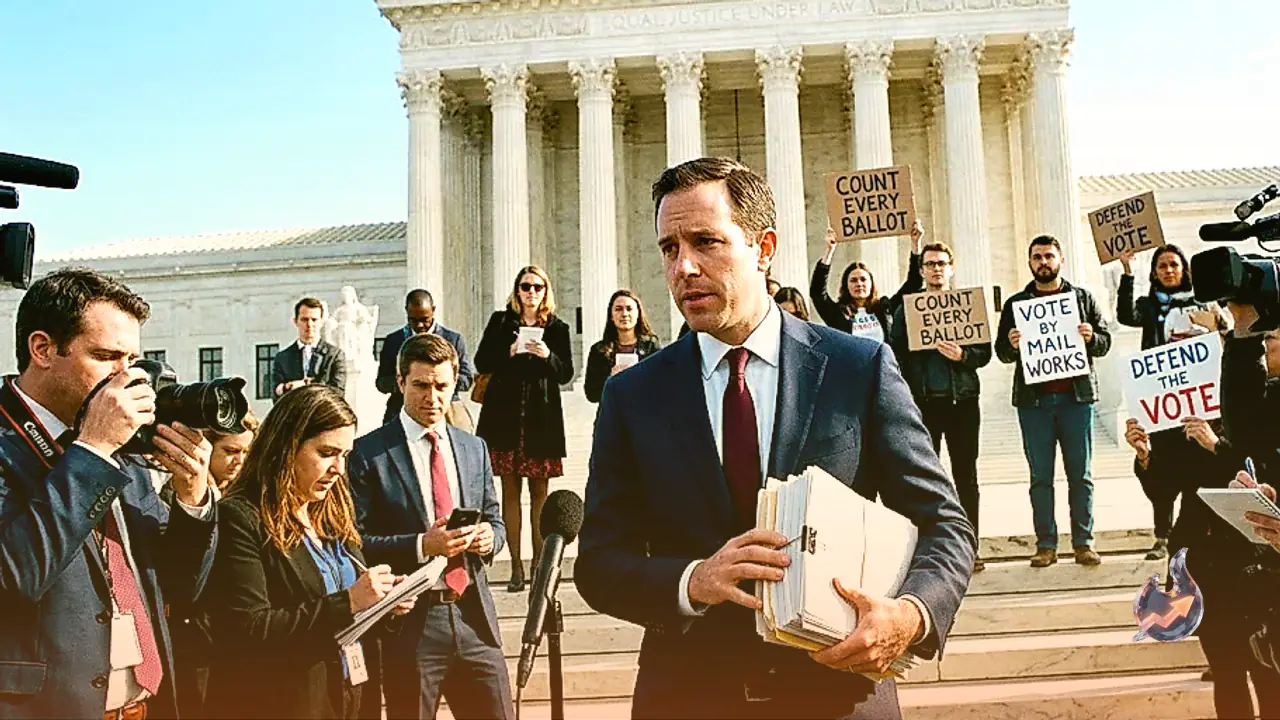

In a landmark legal ruling, the highest judicial authority in the United States has halted an attempt to alter mail-in voting procedures right before upcoming elections. By a 7-2 majority, the bench refused to allow new voting rules drafted for the Postal Service, delivering a major defeat to Donald Trump and maintaining existing voting access across the nation.
Supreme Court Halts New Mail Ballot Restrictions
The judicial decision upholds an earlier injunction issued by a lower federal court. That lower order stopped the United States Postal Service from enforcing fresh guidelines governing ballot distribution across states. Conservative justices Samuel Alito and Clarence Thomas were the sole dissenters in the 7-2 ruling.
Under the proposed framework, individual states would have been required to submit exhaustive lists of eligible voters directly to the Postal Service. Federal postal workers would then cross-reference those lists, ensuring ballots were dispatched exclusively to individuals whose names appeared on the submitted files. Such administrative verification represents an unprecedented expansion of responsibility for the postal agency, which historically does not participate in voter eligibility determination.
Judicial Rationale and Timeline Constraints
In a concurring opinion, Justice Brett Kavanaugh, writing alongside Justice Ketanji Brown Jackson, acknowledged the legal complexity surrounding federal authority over mail infrastructure. Kavanaugh observed that while there might be a fair prospect that the Postal Service holds statutory authority to establish rules, enforcing them during the 2026 elections would be arbitrary and capricious.
The core issue highlighted by the court centers on operational feasibility and timing. State and local election management agencies lack sufficient time to implement such sweeping administrative changes before voting takes place. Furthermore, mail-in voting has already commenced in several jurisdictions, making any sudden alteration to ballot delivery protocols highly disruptive for voters across the country.
The Evolution of the Federal Directive
This judicial defeat marks the latest development in a prolonged legal controversy that began earlier this year. In March, Donald Trump signed an executive order titled "Ensuring Citizenship Verification and Integrity in Federal Elections." The decree sought to mandate that state authorities transmit registered voter rosters directly to the Postal Service.
Under the terms outlined in that executive order, the Postal Service was authorized to withhold or reject ballots intended for voters missing from state rosters. Additionally, postal authorities were granted power to hold back ballots that failed to meet newly created requirements regarding specialized envelopes and tracking barcodes. However, federal courts swiftly enjoined most of these provisions shortly after they were issued.
Following those initial court setbacks, the administration appealed the injunctions to the Supreme Court in July. During the previous month, the court had initially permitted certain preliminary aspects to proceed along ideological lines, reasoning that challenging states lacked immediate standing prior to actual implementation. However, the latest ruling firmly maintains the injunction blocking implementation for the upcoming election cycle.
Whistleblower Disclosures and Technical Infrastructure Failures
As legal battles unfolded, serious concerns emerged regarding the practical execution of the digital infrastructure created for the new regulations. A whistleblower from within the Postal Service came forward, revealing that the online software platform intended to manage the voter verification process was hastily constructed without proper oversight or rigorous testing.
Addressing the Postmaster General in a formal communication, Senator Richard Blumenthal highlighted these critical security and technical flaws. Blumenthal noted that the whistleblower allegations demonstrate the Postal Service lacks the technical or operational capability needed to safeguard voting rights. He criticized the administration for pushing ahead with a flawed digital system despite clear warnings of operational disruption.
Political Fallout and State Level Reaction
The decision represents a significant setback for Donald Trump, who has consistently raised objections regarding mail-in voting and alleged widespread election fraud without providing supporting evidence. The court's intervention stops a primary effort to reshape election administration through executive decree.
Reactions from state election leaders came swiftly after the ruling was publicized. Nevada Secretary of State Cisco Aguilar issued a statement praising the court's decision, emphasizing that elections belong to the American people rather than political figures in Washington. Aguilar noted that state election officials remain committed to protecting ballot access and preventing voter confusion. Neither the White House nor representatives for the Postal Service offered immediate comments regarding the ruling.