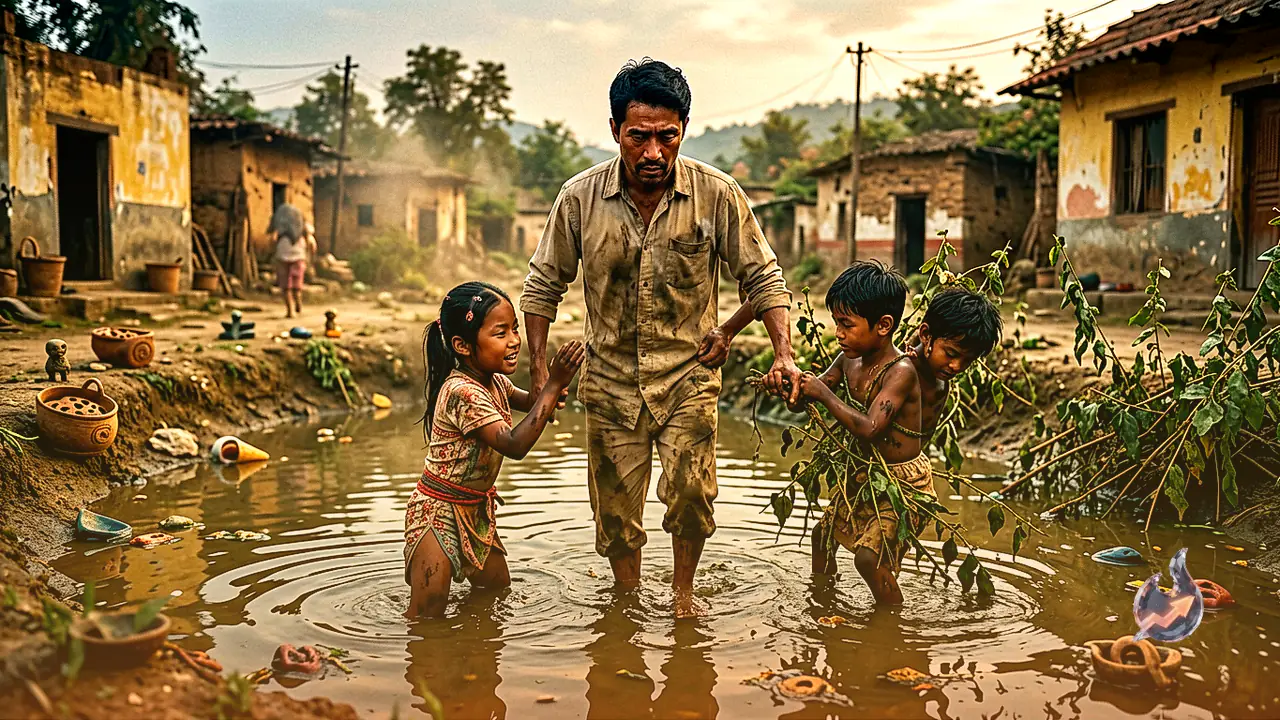




















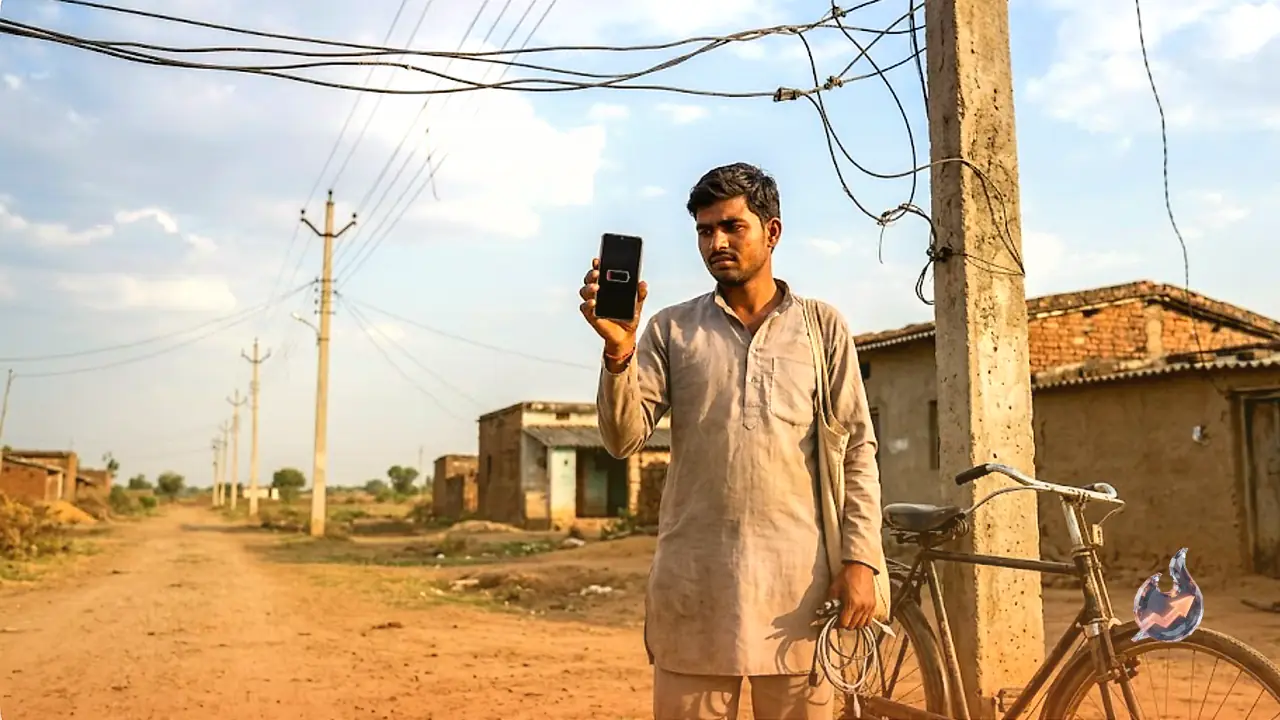

A village barely 5 kilometres from the district headquarters in Sagar, Madhya Pradesh, is still waiting for electricity, even as claims of power reaching every household across the state continue to be made. Poles have been erected and wires strung across the village, but no current flows through them. As a result, residents are forced to spend their nights relying on oil lamps, dhibris and torches for light, a stark contrast to the government's promises of universal electrification.
A daily 5 kilometre trip just to charge a phone
The biggest inconvenience for villagers is that even a basic task like charging a mobile phone requires a trip to Sagar city. Residents say they have to cover roughly 5 kilometres every single day just to get their phones charged. In an era when smartphones have become an everyday necessity, having to travel this far for something as simple as charging one exposes just how badly the electricity department and local administration have failed the village. The absence of power hasn't just affected charging, it has taken a toll on children's education, on job opportunities for the youth, and on everyday life in general.
Children study by lantern and mobile torchlight
The village falls under the Narayavali assembly constituency and has a largely tribal population, with around a thousand registered voters. According to residents, the lack of electricity hits children's education the hardest. As soon as the sun sets, darkness takes over the entire village, and children have to open their books by the light of a dhibri, a lantern, or a mobile phone's torch. On several occasions, when the mobile battery runs out, the children's studies come to a halt altogether. Getting through summer nights without a fan is extremely difficult for villagers, while during the monsoon, the darkness brings with it the constant risk of insects and pests.
No power, no work: employment opportunities blocked too
Young people in the village say they have never seen a regular power supply in their entire lives. Electricity does show up occasionally for a few hours, but it isn't of much practical use. Villagers believe that if a permanent electricity connection were established, small businesses like flour mills, welding units, and tailoring and embroidery work could be started in the village. This would not only create jobs for local youth but also reduce the pressure on them to migrate elsewhere in search of work.
Missing domestic feeder is holding up the supply
Deepak Ahirwar, an engineer with the electricity department, explained that the village does not have a separate domestic feeder, which is why a regular power supply hasn't been possible. At present, the village draws electricity from the line meant for agricultural use, which makes it impossible to provide a continuous supply to domestic connections. According to Ahirwar, a proposal to set up a new domestic feeder as a permanent fix has already been sent to the state government. He said that construction work on the feeder can only begin once approval and the budget for it come through.
Villagers still waiting for government approval
Despite having poles and wires in place, the village's residents are still forced to live in the dark, a situation that raises serious questions about administrative planning. Villagers have repeatedly raised the issue with officials and elected representatives, but no concrete solution has emerged so far. They now hope the government will approve the domestic feeder proposal soon, so that current can finally flow through poles that have stood unused for years. If that happens, residents will no longer have to make repeated trips to the city for small everyday needs, and the village itself will finally be lit up by development.