


















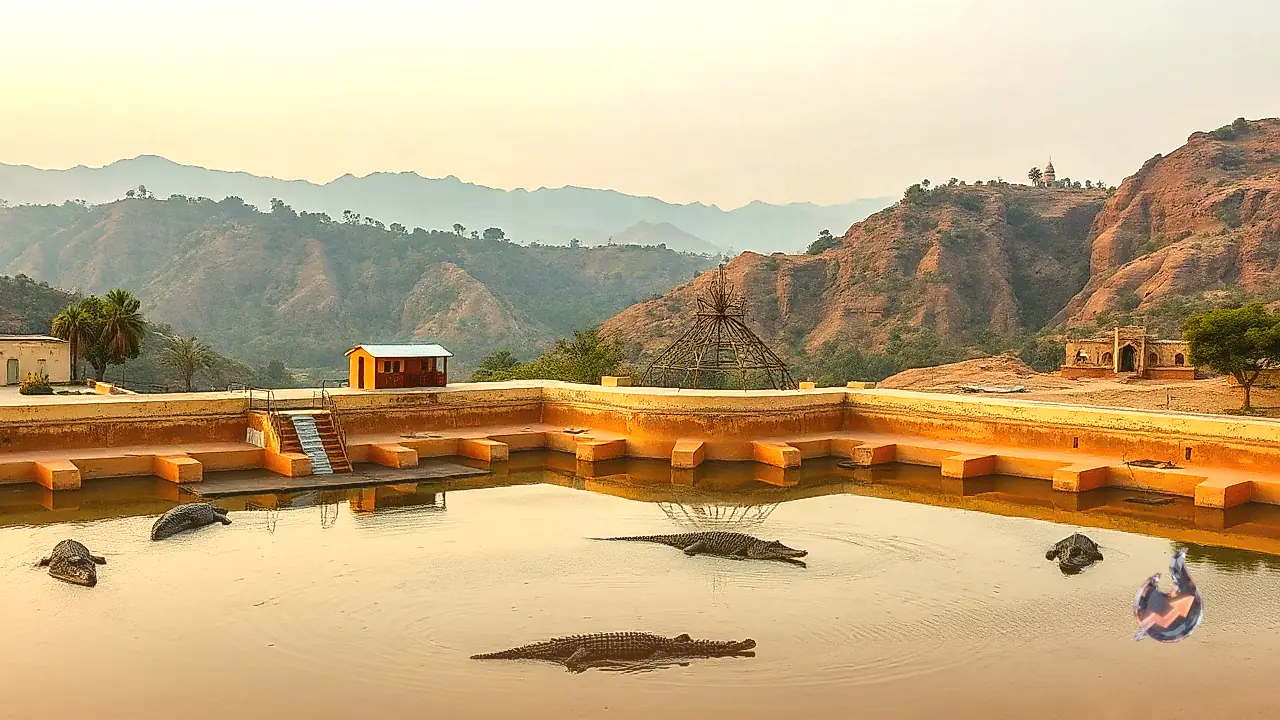

Within Rajasthan's sole hill retreat of Aburaj, the rugged terrain of the Aravali ranges harbors remarkable opportunities for travelers seeking encounters with untamed wildlife. Situated within the protected boundaries of Mount Abu Wildlife Sanctuary, Trevor's Tank Crocodile Park serves as a distinct eco-tourism destination. Resting around 5 kilometers from the urban center of Mount Abu and overseen directly by the forest department, this man-made reservoir has established a lasting reputation as an active center for crocodile breeding and wildlife conservation. Constructed during the colonial era, the water body continues to fulfill its original dual purpose of conserving surface runoff and quenching the thirst of regional animals.
The Legacy of Colonel G.H. Trevor and Historical Origins
According to local tour guide Prakash Kumar, the origins of this reservoir trace back to 1897 when British engineer Colonel G.H. Trevor directed its construction. Over more than a century, the landmark earned its popular identity under his name. Surrounded by dense woodland, the reservoir gradually evolved into the primary hydration hub for the wildlife inhabiting the Aravali wilderness. During bright daytime hours, visitors frequently observe marsh crocodiles resting motionless on rocky outcrops along the water's edge to soak in the sun. Watching these apex reptiles basking at close quarters offers a thrilling experience for tourists. Alongside the crocodile population, several indigenous freshwater fish species flourish within the tank, maintaining its aquatic food chain.
Habitat for Leopards, Sloth Bears, and Forest Avifauna
Beyond its resident aquatic fauna, the woodland enveloping Trevor's Tank draws bird watchers and landscape photographers. The wooded surroundings host active populations of peacocks, partridges, and numerous other forest bird varieties. Mammalian predators and larger wildlife, such as sloth bears and leopards, have also been spotted within the precinct. Sighting these elusive mammals during standard visiting hours remains uncertain, though wildlife commonly approaches the water's edge to drink during early dawn.
Tranquil Setting and Forest Safety Regulations
Encircled by verdant mountain ridges and serene silence, the park offers an ideal natural retreat for families and companions. The winding forest paths and untouched scenery distinguish this location from mainstream tourist viewpoints in town. Travelers arrive to spend unhurried hours surrounded by green foliage, pursue nature photography, and catch glimpses of resting reptiles. Because the area operates as a dedicated wildlife sanctuary, forest department guidelines require all guests to maintain a safe distance from wild animals and strictly adhere to officially demarcated tracks.
Route Details, Entry Charges, and Vantage Points
Accessing the park involves traveling roughly 5 kilometers out of Mount Abu city along the road heading toward Guru Shikhar. Upon reaching the forest barrier on the main highway and paying the mandated forest fee, visitors navigate approximately 1 kilometer inward to reach the reservoir. Admission is priced at 130 rupees per person, while bringing a private vehicle into the reserve requires a separate parking and vehicular fee of 300 rupees. The elevated ridges flanking the reservoir feature two primary scenic vantage spots, known as Abu View Point and Valley View Point, where guests can take in expansive panoramic vistas of the forested slopes.
Seasonal Recommendations for Travelers
The post-monsoon period serves as the optimal window to plan an excursion to the park. Following the monsoon rains, the Aravali hillsides and adjoining woodlands exhibit lush greenery and crisp air. In contrast, traveling during the height of the monsoon brings dense blankets of fog and mist across the valleys, sharply limiting visibility. Wet weather also creates slippery terrain on forest trails, posing minor navigational challenges. For dedicated nature lovers, planning a visit right after the rains guarantees an enriching experience at Mount Abu's celebrated crocodile habitat.