






















Commercial tea growers and merchant bodies across Assam have welcomed a refreshed set of policy incentives designed to sharpen the region's competitive edge in overseas markets. The updated Assam Tea Industries Special Incentives Scheme, originally framed in 2020, will now operate under its modernized guidelines through March 31, 2031. Officials and market participants anticipate that the revamped framework will significantly reduce financial friction for regional processors while channeling more business through formal trading platforms.
Export Benefits for CTC Shipments and Transit Relief
Among the core structural adjustments is the introduction of a 3-rupee payout per kilogram on exported Single Origin Assam Quality CTC consignments. Operating from a landlocked territory creates persistent logistical hurdles for northeastern producers, who routinely shoulder steep charges for container repositioning, inland cargo movement, and terminal processing before shipments reach coastal gateways. The Guwahati Tea Auction Buyers Association highlighted that the new export compensation directly counterbalances these heavy transit overheads.
A critical operational detail in the notification grants clear qualification to CTC tea transacted via the Guwahati Tea Auction Centre. Association secretary Dinesh Bihani indicated that formal recognition ensures regional auction platforms remain central to the trade flow. "The tea traders are grateful to the state government for introducing this progressive policy framework," Bihani noted, emphasizing that the transparent marketplace will draw broader engagement from both regional estates and overseas buyers.
Higher Production Grants for Orthodox and Specialty Blends
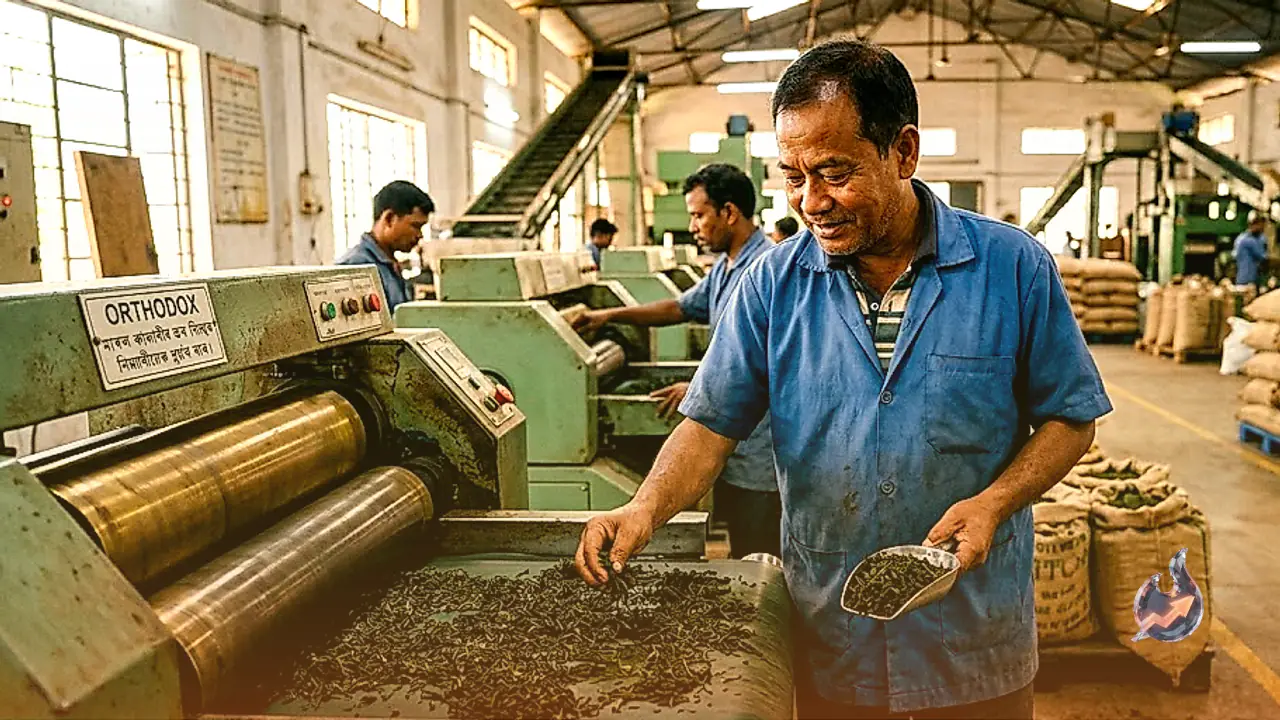
The revised blueprint also delivers a substantial upgrade to production subsidies for orthodox and specialty lines, lifting the baseline assistance from Rs 10 to Rs 15 per kilogram. Concurrently, the ceiling on total annual reimbursements has climbed to Rs 1 crore for each processing unit or garden. These adjustments offer vital financial leeway to estates shifting acreage toward premium teas sought by connoisseurs across Europe, the Middle East, and Asia.
Broadening the industrial scope further, the policy brings matcha production under the umbrella of state support for the very first time. Financial liquidity has received an additional boost through an enhanced working capital interest subvention, which has risen from Rs 15 lakh to Rs 20 lakh per eligible unit. Industry representatives maintain that these combined measures will firmly establish the Guwahati trading hub as an essential pillar in both regional cultivation economics and worldwide supply chains.