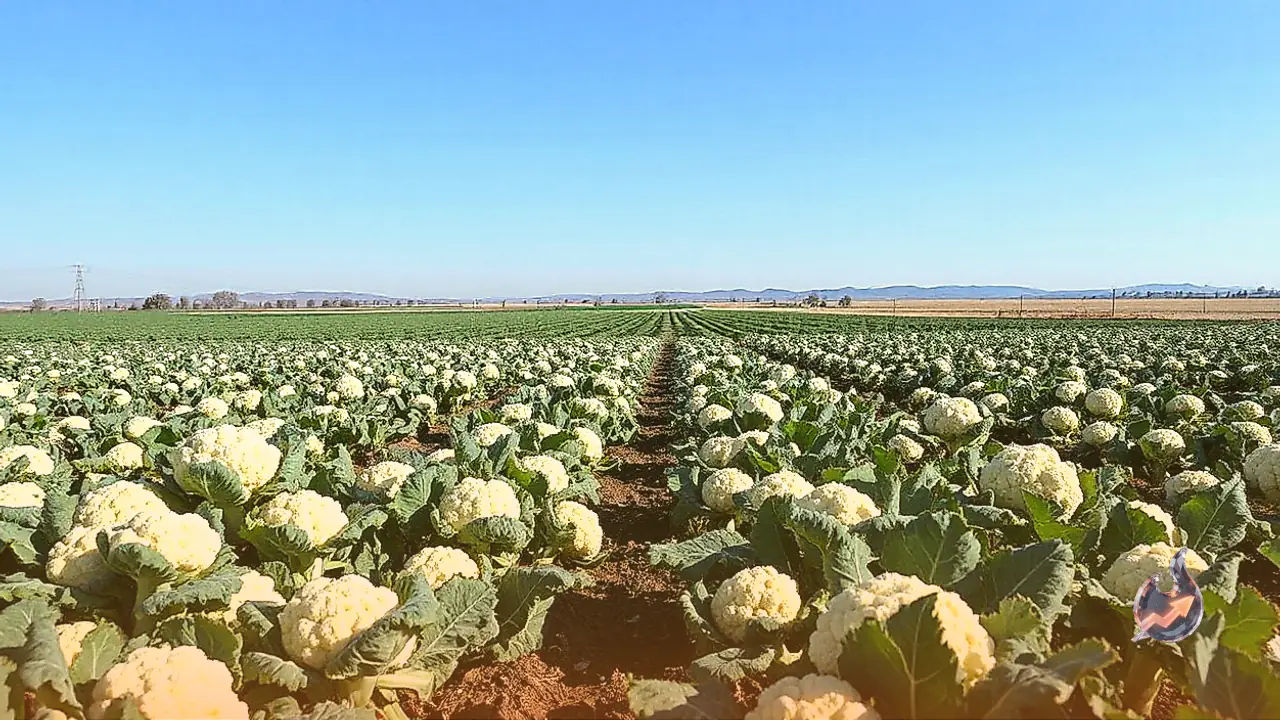

During the winter season, market demand for cauliflower experiences a notable surge, prompting cultivators to ramp up preparations for maximum yield and profitability. If you are also growing cauliflower this season, implementing precise management of fertilizers, watering, and nutrients alongside routine plant care is essential. Specifically, the window between 20 and 45 days after transplanting is considered a critical phase for the crop. The slightest negligence during this period can negatively impact both the overall quality and the head size of the cauliflower.
Agricultural experts note that deficiencies in micronutrients like boron and molybdenum often cause cauliflower heads to remain stunted and small. In many cases, a brown discoloration develops right in the center of the head while the leaves begin to curl inward. To counter this, these essential nutrients should be applied based on soil tests and crop requirements. Boron is typically applied before the head formation stage, whereas a lack of molybdenum can trigger whiptail symptoms in the leaves.
Proper Fertilizer Management Drives Head Growth
To achieve a bountiful cauliflower harvest, the first top dressing is carried out roughly 20 to 25 days after transplanting. During this stage, urea and other necessary nutrients are supplied as needed to accelerate early development. Furthermore, adequate availability of phosphorus and potassium during the head formation phase aids vigorous plant growth. This helps significantly in enhancing both the size and weight of the harvest, though fertilizer quantities must always be determined according to soil testing and the current condition of the crop.
Maintaining adequate moisture levels in the field is another critical requirement for cauliflower cultivation. A shortage of water while the heads are forming can leave them undersized, making light and regular irrigation necessary depending on weather conditions and soil type. Additionally, blanching is practiced to protect the developing head from direct sunlight. Once the head begins to resemble a small ball, it is gently covered using the plant's own large outer leaves, which preserves its pristine white color. Cauliflower crops are also vulnerable to pests like the diamondback moth caterpillar and aphids, while black rot can cause V-shaped yellow spots along leaf margins.
Whenever such symptoms arise, appropriate control measures should be implemented under the guidance of an agricultural expert. Pesticides and fungicides must always be applied using approved chemicals, correct dosages, and strict adherence to label instructions. Finally, timing the harvest correctly is vital, as leaving mature heads in the field for too long causes them to loosen, resulting in lower market prices. By managing crop care and timely harvesting properly, growers can consistently produce premium quality cauliflower.