
In the Palamu region of Jharkhand, farmers are increasingly shifting toward high-value cash crops to maximize their agricultural income. Among various options, strawberry cultivation has emerged as a particularly rewarding option that offers substantial returns in a relatively short timeframe. To secure top market prices, local growers are paying close attention to harvest timing and crop management. Fruit production typically starts roughly 50 to 60 days after planting. Once the plants begin fruiting, farmers can harvest continuously until March. However, capturing the maximum economic benefit depends largely on recognizing the exact stage of ripeness and handling the delicate harvest with extreme care.
Identifying the Ideal Harvesting Stage
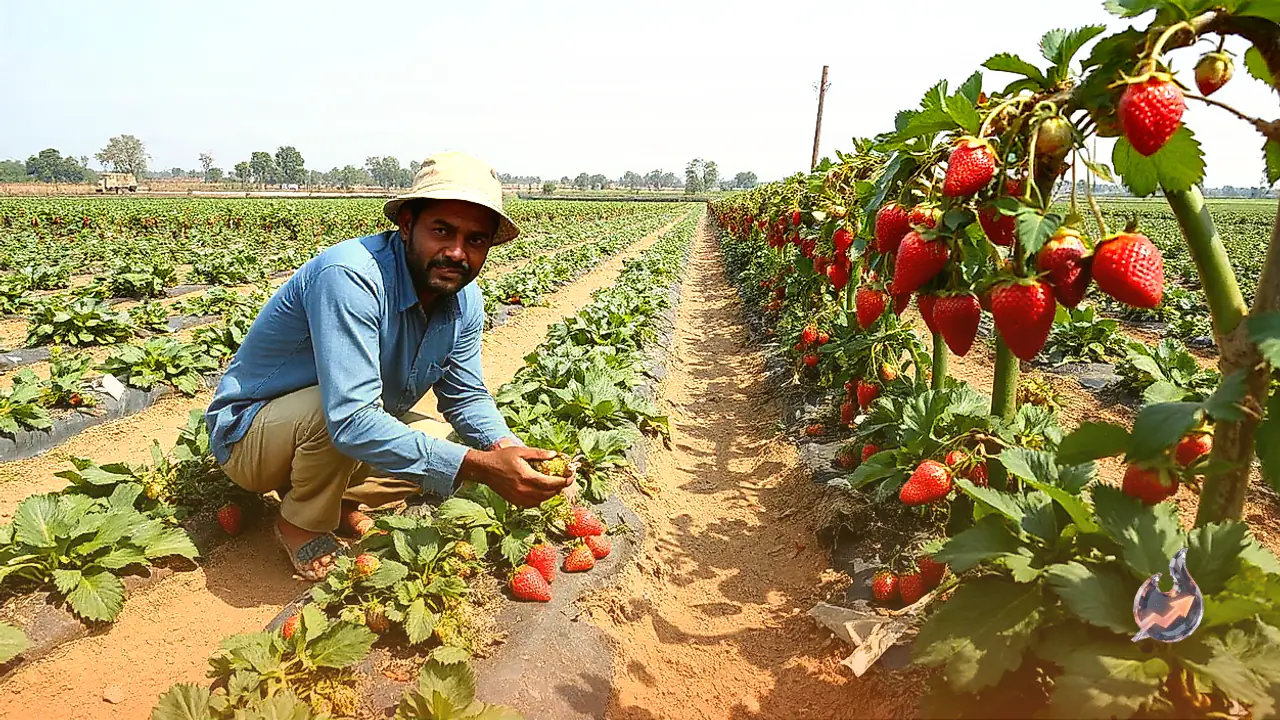
Agricultural scientist Dr. Pramod Kumar highlights that determining when a strawberry is ready for picking requires basic observation but consistent timing. The recommended stage for harvesting occurs when approximately 70 to 75 percent of the berry turns bright red, while the remaining 25 to 30 percent still displays a light green shade. Growers must adjust their picking schedule according to the distance to their destination market. When berries are intended for distant wholesale hubs, harvesting at this balanced stage prevents premature softening during transport. Allowing the fruit to over-ripen on the vine compromises its firmness and shelf life, whereas harvesting too early deprives the berry of its natural sweetness and flavor depth. Farmers are advised to inspect their fields daily and detach ripe berries carefully at the stem.
The Value of Mulching in Yield Quality
Mulching plays a fundamental role in maintaining both plant health and fruit presentation in strawberry farming. Spreading protective mulch around the plant beds retains essential soil moisture while curbing the emergence of invasive weeds. Crucially, mulch creates a clean barrier that prevents blossoms and growing berries from coming into direct contact with wet soil. Dirt contact often causes rot, fungal infection, and physical blemishes that diminish the commercial appeal of the produce. Berries cultivated over clean mulching remain spotless, bright, and visually appealing to premium buyers. Regular monitoring of the fruit sitting on the mulch beds ensures that farmers pick unblemished berries that command strong prices in competitive markets.
Packaging Standards and Regional Market Demand
Post-harvest care is critical to ensuring that harvested crops reach consumers without physical damage. Because strawberries are extremely delicate and susceptible to bruising under pressure, growers immediately pack them into specially designed ventilated boxes. Proper air circulation prevents moisture buildup and protects the berries from compression during transit over long distances. Produce grown in Palamu is no longer limited to regional markets. Local growers regularly ship their harvest to major urban centers including Banaras, Kolkata, Patna, and Ranchi. Connecting directly to these metropolitan demand centers provides smallholders with access to lucrative commercial channels and higher profit margins.
Planting Density, Economics, and Government Subsidies
From an economic standpoint, farmers can accommodate approximately 20,000 strawberry plants on one acre of land. Individual saplings generally cost between 10 and 15 rupees each. Under favorable growing conditions and sound management, a single plant typically yields between 200 and 400 grams of fruit over its life cycle. To encourage wider adoption and ease initial investment costs, the District Horticulture Department provides financial subsidies to eligible growers. Thanks to these incentives and rapid returns, an increasing number of agricultural households in Palamu are adopting strawberry farming as a dependable strategy to boost overall farm productivity.