



















Tucked within the scenic folds of Rajasthan's Aravalli mountain range, the district of Sirohi is celebrated not only for its rugged highland terrain but also for a remarkable constellation of ancient pilgrimage sites. These highland sanctuaries reflect deep-rooted local lore, unusual sculptural iconography, and spiritual links that span state boundaries and historic dynasties. Four prominent shrines across this mountainous belt continue to draw pilgrims seeking blessings from varied manifestations of the divine feminine.
Chakra Worship at Arasana and the Living Bond with Ambaji
Near Pindwara, the venerable Arasana Amba Mata shrine shares an ancient and deeply revered bond with the globally renowned Ambaji Shaktipeeth located just across the Gujarat border. Sacred belief holds that both holy sites venerate the divine naval-lotus form of the goddess. Historian Dr. Udaisingh Dingar explains that the defining feature of the Arasana sanctuary is the complete absence of a conventional idol; worshippers instead offer prayers to a sacred chakra embodying the naval lotus. According to regional lore, the deity earned the epithet Arasuri Devi after slaying a ferocious, man-eating demon named Arasur who once terrorised the surrounding hills.
Devotees also recount an enduring legend involving the historic ruler of the Danta principality in Gujarat. A devout follower of the mother goddess, the king fervently implored her to make her permanent abode within his territory. The deity consented under a strict covenant: the ruler was not to look back at any point during the sacred journey. However, upon reaching the boundary of Danta, curiosity overtook the king, and he glanced behind him. Bound by her condition, the goddess halted at that exact border spot and refused to proceed further. The king subsequently consecrated a sanctuary there, which came to be known as Danta Ambaji. Because of this shared sacred origin, followers revere both Arasana and Danta Ambaji as twin spiritual epicentres of an identical primordial energy.
The 1000-Step Ascent of Mount Siranwa and the Deora Lineage
Perched high on the crest of Mount Siranwa in Sirohi, the ancient Matar Mata temple demands a demanding pilgrimage, requiring devotees to climb approximately 1000 steps to reach the sanctum. Tradition identifies Matar Mata as a direct manifestation of Arbuda Devi, the presiding guardian deity of Abu Raj.
The shrine holds a notable place in Marwar's regional chronicle. In 1206, following his exile from Jalore, ruler Manikyarao established a sovereign foothold by naming Barlut as his capital. Grieving his lack of an heir, Manikyarao prayed earnestly to Matar Mata on the heights of Siranwa. According to belief, the deity blessed him with a son, an event celebrated in folklore as securing the permanence of the Deora royal dynasty and granting continuous prosperity to their lineage.
The Rare Twin-Lion Mount of Umrani and Eight Millennia of Heritage
Situated roughly 5 kilometres from the town of Abu Road, the village of Umrani shelters another exceptional monument to regional faith. Surrounded by pristine Aravalli topography, this ancient Bhadrakali shrine boasts an iconographic distinction believed to be unique across the subcontinent: the deity is sculpted mounted upon two lions simultaneously.
Local lore traces the history of this holy ground back roughly 8,000 years. Tradition holds that the sage-king Ambarish performed rigorous penance amid these tranquil woods. Moved by his ascetic devotion, the goddess manifested twice in her benevolent Kalyani form. At King Ambarish's heartfelt request, she agreed to dwell perpetually in that dual protective visage. Over the centuries, the sanctum underwent periodic restorations, having seen three complete temple reconstructions across its long existence.
A 21-Kilometre Natural Cavern and the Tomb of Devoted Peacocks
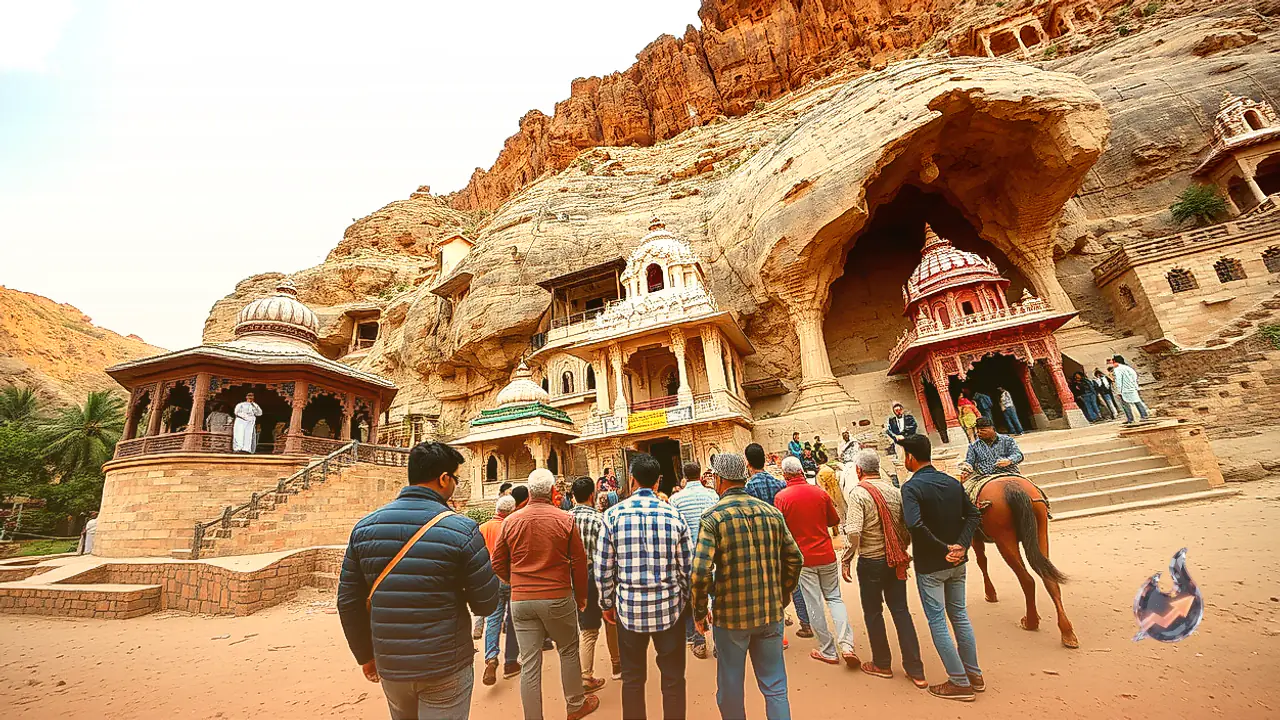
At the gateway of Abu Raj stands the Mukhya Mata temple, locally revered as Mukhri Mata, drawing pilgrims who believe that a simple glimpse of the naturally sheltered rock shrine dissolves worldly anguish. The mountain sanctuary houses a cavern extending approximately 21 kilometres into the stone massif.
Adding to the shrine's lore is an unusual tale of spiritual fidelity involving a pair of peacocks. Local tradition recounts that a devoted peacock and peahen engaged in deep spiritual penance within the temple grounds before passing away together at the exact same moment. Moved by this display of pure devotion, devotees interred their remains inside the compound and erected a commemorative shrine over their tomb. Owing to its narrow width and safety concerns, the subterranean passage is sealed with an iron door today. Regional belief maintains that this extended subterranean corridor emerges directly near the Adhar Devi temple atop Mount Abu. Travellers visiting Mount Abu regularly include this power center in their itinerary, while major celebrations unfold during the Navratri festival, attracting large gatherings from neighbouring hamlets.