






















Protests over the acquittal of all 40 accused in the 2015 Dangawas violence case intensified in Jaipur on Monday as Dalit rights organizations launched a major demonstration against the Rajasthan state government. Following the verdict delivered by the Special SC-ST Court in Merta, which cleared all defendants citing lack of evidence, Azad Samaj Party National President and Nagina MP Chandrashekhar Azad addressed a massive gathering at Shaheed Smarak and issued a strict 10-day ultimatum to the Chief Minister Bhajan Lal Sharma administration. Amid mounting pressure, senior state officials, including the Home Secretary, held high-level negotiations with victim representatives and agreed to challenge the acquittal in the Rajasthan High Court.
Shaheed Smarak Demonstration and Police Security Deployment
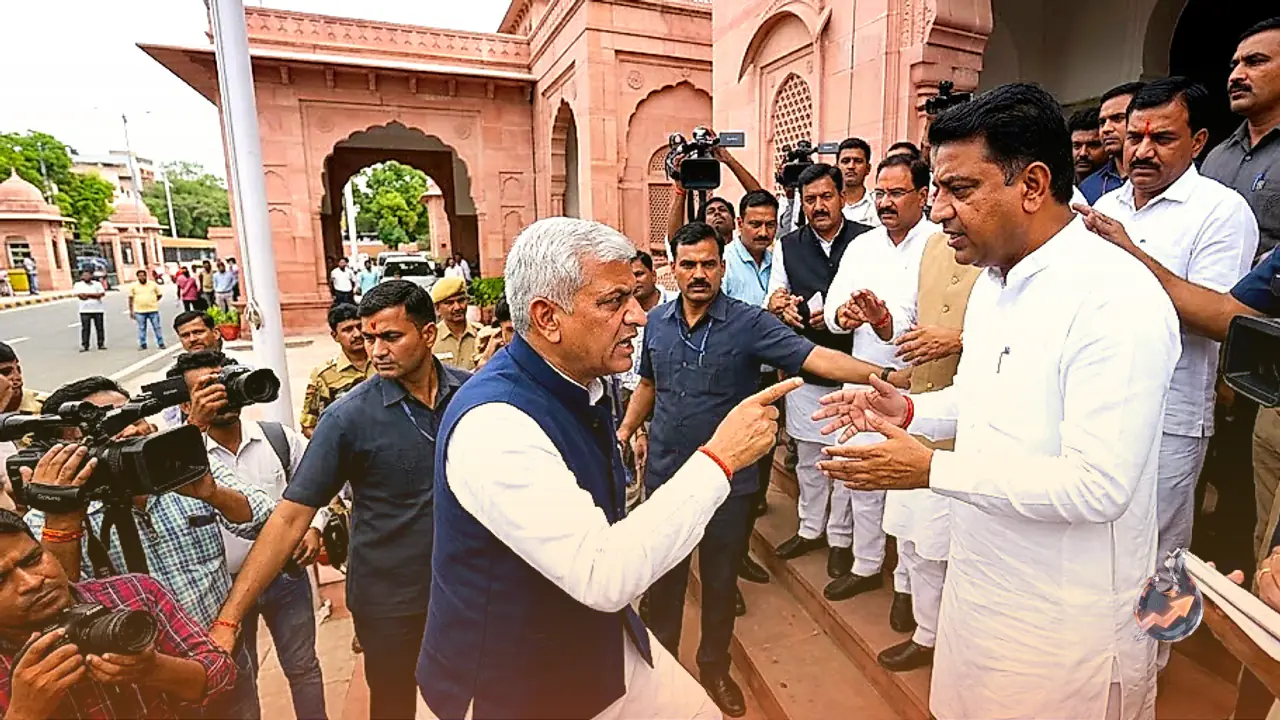
The Shaheed Smarak memorial ground in Jaipur turned into the focal point of agitation as hundreds of activists and affected family members assembled under the leadership of the Azad Samaj Party and Bhim Army. Tensions escalated sharply when administrative authorities received reports indicating that protesters might attempt a march toward the Rajasthan Legislative Assembly. In response, the Jaipur police administration went on high alert, surrounding the protest venue with heavy security personnel and erecting barricades to prevent any breach of order. Though brief friction occurred between demonstrators and law enforcement officers, the situation remained under control.
Addressing the assembled crowd, Chandrashekhar Azad clearly articulated the movement's core demands, warning that inaction would lead to state-wide disruption. He stated that if the state government fails to file an appeal petition in the Rajasthan High Court within the stipulated 10-day timeframe and ensure rigorous legal representation for the victims, civil rights organizations will take to the streets across Rajasthan. Azad stressed that the legal fight must be pursued aggressively to ensure justice for the victims of the decade-old tragedy.
Agreement Reached in High-Level Talks with Home Secretary
Responding to the 10-day ultimatum and the gathering crowd in the capital, senior government representatives initiated formal discussions with the delegation. The State Home Secretary convened a meeting with Chandrashekhar Azad and representatives of the Dangawas victim families to address their grievances. The deliberations centered primarily on immediate judicial remedies, the appointment of experienced prosecutors, and witness protection measures, ultimately resulting in a consensus on all major demands put forward by the delegation.
Under the consensus reached during the meeting, the Rajasthan government committed to filing an immediate appeal petition challenging the Merta Special Court judgment before the Rajasthan High Court. To bolster the prosecution's case, the government agreed to appoint a Special Public Prosecutor to represent the victims' families in the appellate proceedings. Furthermore, acknowledging concerns regarding safety, state authorities pledged to strengthen police protection for key prosecution witnesses and surviving family members in Dangawas village to prevent any intimidation or harassment.
Origins of the 2015 Dangawas Land Dispute and Fatal Clash
The origin of the controversy dates back to 2015 in Dangawas village, located in Rajasthan's Nagaur district. A long-standing dispute over the possession of 23 bighas of land degenerated into violent armed clashes between two groups. The scale of violence quickly spiraled out of control, resulting in the tragic deaths of six individuals, five of whom belonged to the Dalit community. Numerous others suffered severe injuries during the clash, sparking widespread political outrage and social unrest across the region.
Given the gravity of the incident and growing demands for an impartial probe, the case was subsequently transferred from local police to the Central Bureau of Investigation. The CBI conducted a comprehensive inquiry, collecting evidence and filing charge-sheets against dozens of individuals implicated in the violence. The matter was subsequently placed on trial before the Special SC-ST Court in Merta, where judicial proceedings continued over the course of more than a decade.
11-Year Judicial Trial Ends in Full Acquittals
After a trial spanning nearly 11 years, the Special SC-ST Court in Merta delivered its final judgment, concluding that the prosecution had failed to establish guilt beyond reasonable doubt due to insufficient evidence. Consequently, the court acquitted all 40 accused individuals of all charges related to the 2015 violence. The unexpected ruling sent shockwaves through human rights networks and victim support groups, who viewed the verdict as a serious setback to accountability in caste-related violence.
The complete exoneration of all defendants triggered immediate condemnation from social organizations, prompting the Shaheed Smarak protest in Jaipur. Activists argue that the failure to secure a conviction in a case involving six fatalities reflects flaws in prosecution and evidence presentation. While the state government's agreement to appeal the decision has temporarily eased immediate tensions, Chandrashekhar Azad reaffirmed that the 10-day deadline remains active, warning of an expanded, historical movement if the state fails to honor its commitments in the High Court.