





















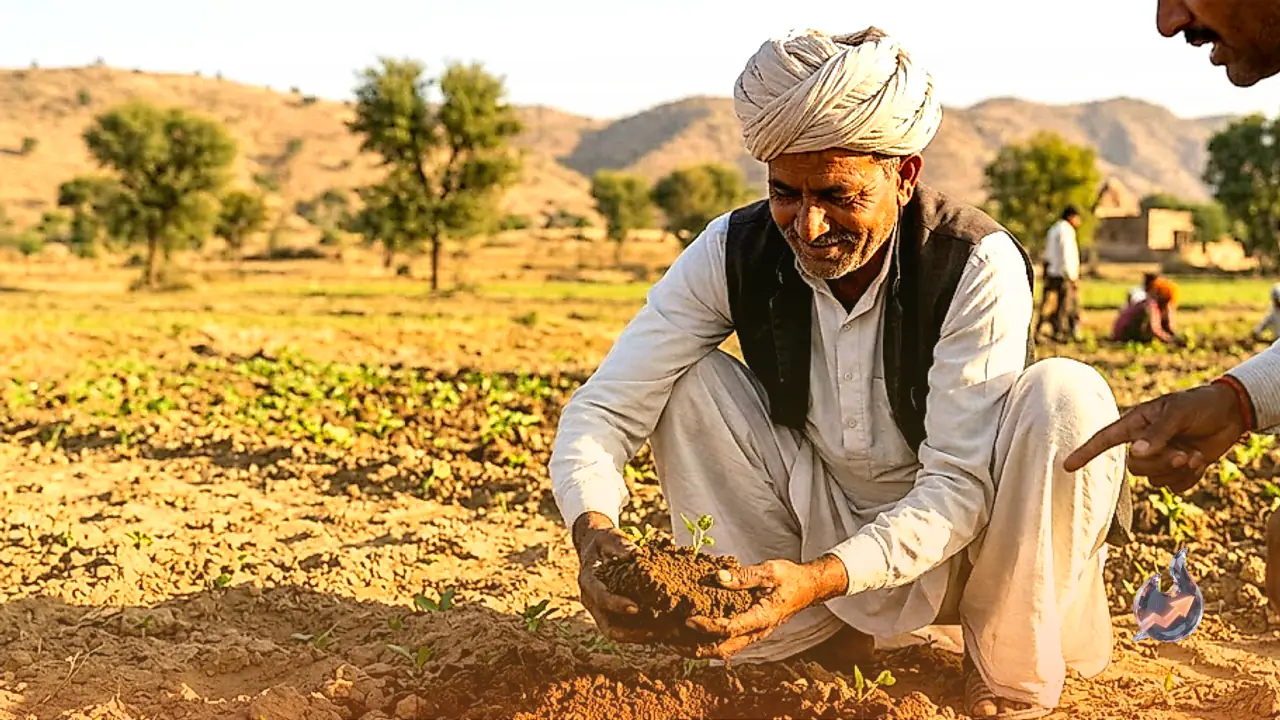

Continuous reliance on chemical fertilizers and synthetic pesticides has badly degraded soil quality while simultaneously driving up input expenses for farmers. To counter this growing crisis, a scalable agricultural framework is being introduced in Rajasthan. The National Bank for Agriculture and Rural Development (NABARD) has selected Sikar and Salumbar districts to launch a pilot project dedicated to promoting natural farming practices. This initiative seeks to provide farmers with cost-effective, sustainable, and eco-friendly alternatives that improve soil vitality, protect ecosystems, and increase farm profitability over the long term.
Project Rollout Begins in Laxmangarh, Sikar
Under this pilot scheme, a total of 200 hectares of farmland in Sikar district will be converted to natural farming in structured phases. For the initial phase, 30 farmers from the Laxmangarh region were selected, with each farmer dedicating one hectare of land to natural cultivation techniques. The outlay for this first phase is set at around ₹30 lakh, while the complete project carries a comprehensive budget of ₹1.20 crore.
During the recent Kharif sowing season, participating farmers successfully cultivated traditional crops including pearl millet (bajra), cluster bean (gwar), and green gram (moong) using completely chemical-free methodologies. This shift aims to demonstrate that high-quality crop yields can be sustained without relying on costly commercial inputs.
Free Organic Materials via Bio-Input Resource Center
To ensure practical feasibility on the ground, NABARD is establishing a dedicated Bio-Input Resource Center. The facility utilizes dung and urine from indigenous cows to manufacture high-grade organic preparations such as Jeevamrit, Beejamrit, natural manure, and Neemastra. These bio-inputs will be provided to enrolled farmers entirely free of cost.
By eliminating the requirement to purchase expensive synthetic fertilizers and chemical pesticides from retail markets, the project dramatically reduces everyday cultivation expenses. This direct cost reduction is expected to significantly boost the net earnings of participating agricultural households.
Establishing a ₹5 Lakh Seed Bank for Native Varieties
Preserving traditional and indigenous seed stocks forms another vital cornerstone of this project. NABARD is investing approximately ₹5 lakh to set up a dedicated seed bank that will collect, preserve, and propagate native crop varieties. These saved seeds will subsequently be distributed to farmers taking up natural agriculture.
Indigenous crop varieties are inherently resilient, requiring less irrigation and exhibiting natural resistance against common pests and diseases. Restoring these traditional varieties to local fields enhances climate resilience and reduces reliance on commercial seed packages.
120 Days of On-Field Training by Experts from Maharashtra
NABARD District Development Manager (DDM) ML Meena stated that the project goes beyond providing physical inputs by placing strong emphasis on hands-on practical education. A team of agricultural experts from Maharashtra is staying directly in the field with the farmers for 120 consecutive days to offer continuous, real-time guidance on natural farming techniques.
Once their initial training is complete, these master farmers will conduct localized 'Krishi Chaupals' (agricultural gatherings) on their land. These interactive sessions will allow neighboring farmers to observe successful natural farming practices firsthand and encourage wider community adoption across the region.
Enhancing Soil Fertility and Delivering Safe Food Products
According to DDM ML Meena, adopting natural farming enhances soil organic carbon, improves moisture retention capacity, and strengthens local ecological balance. Consumers gain access to safe, chemical-free food grains and fresh vegetables. By leveraging local resources and cutting down input costs, farming is transformed into a more viable economic activity. If the pilot project yields positive results in Sikar and Salumbar, state authorities plan to scale the model across other districts in Rajasthan next year, potentially sparking a broader natural farming movement across the state.