



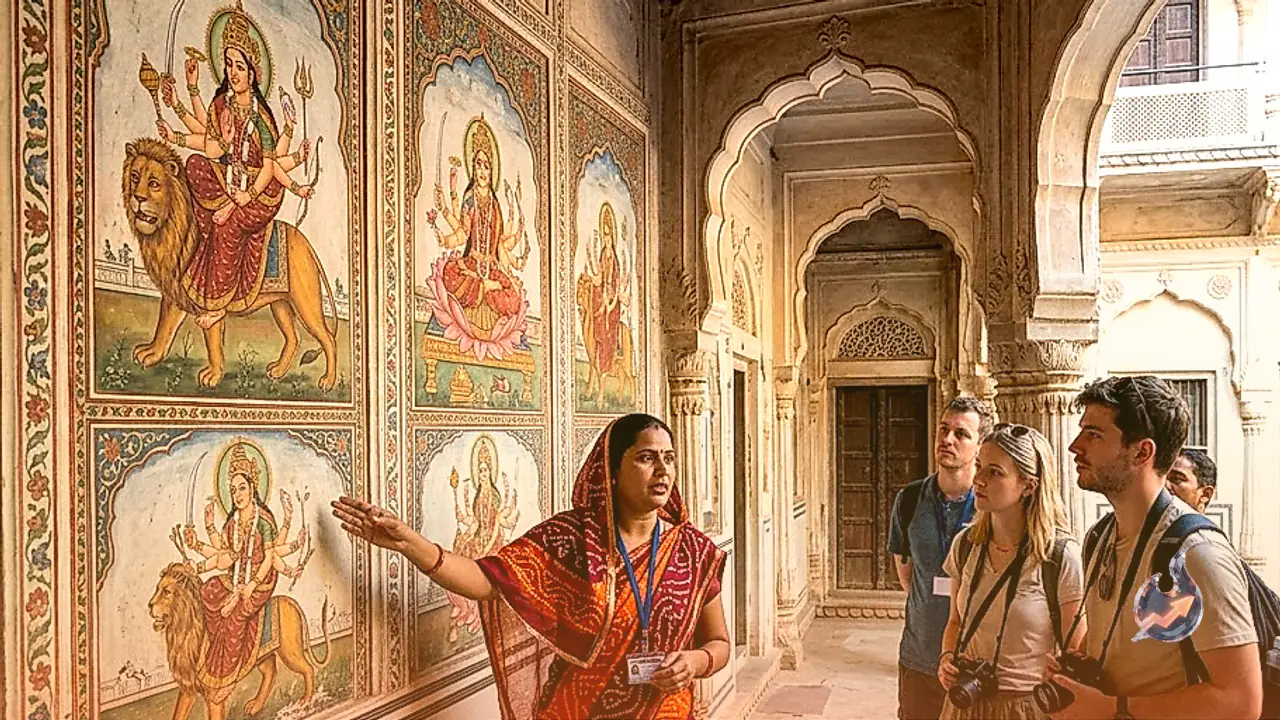















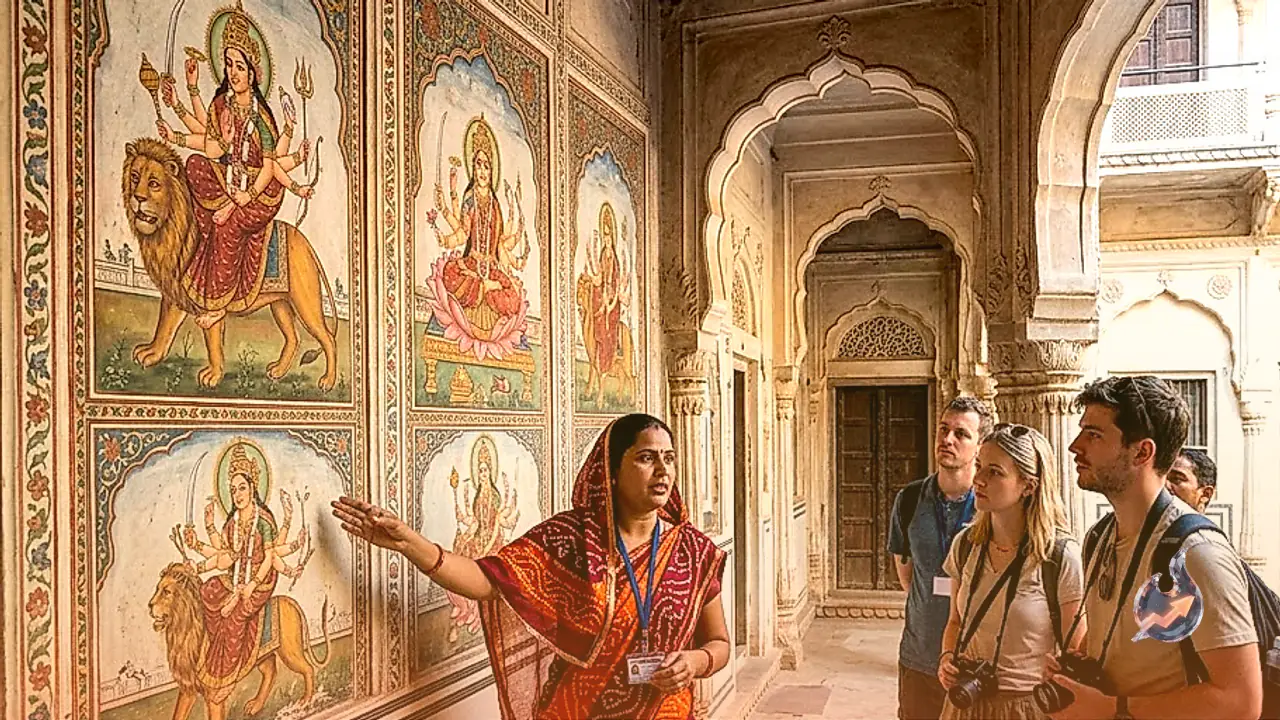

The havelis scattered across Rajasthan's Shekhawati region are renowned worldwide for their exquisite artistry and rich historical background. The murals adorning these walls not only enhance the visual beauty of the structures but also reflect the profound faith, lifestyle, and societal mindset of that era. Podar Haveli, situated in Nawalgarh within the Jhunjhunu district, stands out as one such historic building. Built in the year 1902, the wall paintings inside this haveli continue to capture the attention of art enthusiasts and visitors from far and wide. The most striking feature of this architectural heritage is how the nine distinct forms of Goddess Durga are vividly portrayed through paintings on the walls. During the auspicious festival of Navratri, the significance of viewing these artworks multiplies manifold, as they not only symbolize the worship of divine power but also convey a strong message of respect for women.
A Remarkable Specimen of Shekhawati's Traditional Art
The murals linked to the nine forms of Goddess Adishakti inside the Podar Haveli Museum serve as a prime example of Shekhawati's classical art. These creations showcase the exceptional skill and craftsmanship of the artists of that period. Furthermore, they reveal how people in earlier times preserved their religious beliefs and devotion through the medium of art. The paintings created on the walls of the haveli continue to evoke memories of a tradition where religious narratives, mythological tales, and aspects of daily social life were intricately painted onto surfaces. During those times, the walls of havelis were not meant merely for decorative purposes; rather, they acted as a medium to transmit spiritual and cultural values down to future generations.
Shekhawati Havelis Stand as Identifiers of Art and History
The havelis of the Shekhawati tract maintain a distinct identity across the country and abroad due to their ornate jharokhas, artistic doorways, and colorful frescoes. Visitors can easily spot scenes depicting religious episodes, mythological stories, and traditional social life on their walls. These paintings illustrate how painters of that era translated popular beliefs and life philosophies into visual forms through their artistic work. Nawalgarh's Podar Haveli forms an integral part of this glorious legacy. The artistry of this haveli, constructed in 1902, brings to light the unique character of Shekhawati where art and faith walk hand in hand. Even after the passage of considerable time, the relevance of these paintings remains intact. Today, observing these artworks offers the younger generation an opportunity to learn about their ancestral art and cultural roots.
Goddess Murals Gain Added Significance During Navratri
Throughout the sacred festival of Navratri, households perform traditional Ghatasthapana rituals. Prayers are conducted with full devotion in temples, and chants praising Goddess Durga echo all around. Simultaneously, the paintings of the nine divine forms adorning Podar Haveli serve as a poignant reminder of the true worship of power. Within traditional beliefs, the nine forms of Goddess Durga are closely linked to immense strength, unmatched courage, rigorous spiritual practice, and maternal affection. These diverse manifestations of the Goddess deliver a profound message that power is never confined to a single form. It serves as the fundamental basis for creation and preservation while granting the fortitude to stand firmly against injustice and wrongdoing. This mural artwork on the walls of Podar Haveli presents religious tradition in a distinct and captivating manner. Here, art blends seamlessly with unwavering faith. Consequently, these paintings have never remained mere relics of the past; instead, they continue to connect modern people to their cultural roots.
Worship Must Be Accompanied by Respect for Women
The nine days of Navratri are widely viewed and celebrated as a grand festival of feminine power. The nine forms of Goddess Durga serve as a constant reminder of the inner strength, courage, and self-confidence inherent in every woman. In the modern era, women across the country are carving out distinct identities for themselves across numerous challenging domains such as education, science, sports, administrative services, major enterprises, and social work. Consequently, the core message of worshipping the Goddess must remain far from confined to temple premises or religious rituals alone. Extending genuine respect to women, ensuring their safety and dignity, and providing them with equal opportunities to advance are equally vital for society. These historical paintings inside Podar Haveli provide every observer with an opportunity to reflect deeply on whether the true respect for feminine power is visibly reflected in daily human behavior, families, and society at large.
Ancient Heritage Continues to Impart Valuable Lessons to Youth
The historical havelis of the Shekhawati region narrate numerous untold tales from the pages of history through their antique paintings and architectural design. The depiction of the nine forms of Goddess Durga inside the Podar Haveli of Nawalgarh stands out as a vivid illustration of this reality. Several inspiring messages tied to divine power, unwavering devotion, courage, and respect for women are clearly visible within these artworks. This magnificent legacy of the haveli teaches us that ancient structures and heritage sites are never mere memories of a bygone era. They encapsulate within themselves numerous facets connected to art, deep-rooted faith, and societal perspectives of those times. The urgent need of the hour is to preserve these historic treasures with utmost care and educate the upcoming generation about their cultural significance. The paintings of the nine forms of Goddess Durga at the Podar Haveli in Nawalgarh still remind everyone that safeguarding one's native culture and embracing its valuable teachings in practical life remains an essential duty.