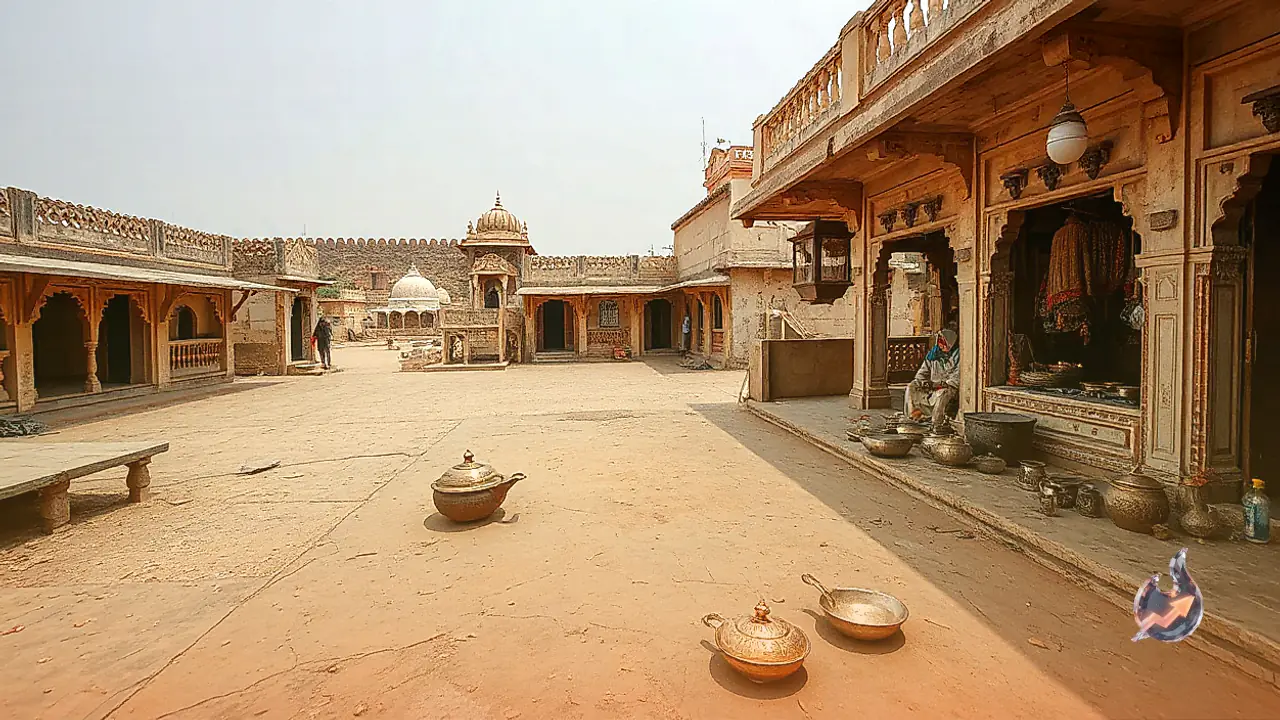

When ancestral craftsmanship intersects with cultural adaptability, raw metal transforms into heritage art. In the desert heartland of Rajasthan, silversmiths based in the Jhunjhunu district are establishing a commanding presence across far-flung southern markets by forging religious silverware and traditional utensils. Rather than sticking strictly to local Rajasthani patterns, these skilled artisans have mastered the intricate Dravidian artistic style native to southern India. By tailoring their designs to match the sacred rituals and aesthetic preferences of southern shrines and households, workshops in Jhunjhunu have secured an uninterrupted supply channel reaching from Chennai across to Andhra Pradesh's commercial hub of Vijayawada.
Annual Consumption Exceeds 600 Kilograms of Silver
Local traders and workshop operators indicate that sustaining this specialized manufacturing cluster requires more than 600 kilograms of fine silver every year. This massive bullion demand feeds the creation of traditional utensils, antique-style showpieces, and temple worship articles. Consumption fluctuates in tandem with wedding seasons, festive cycles, and metal market movements. During peak procurement windows, silversmithing units process between 50 and 60 kilograms of silver every month. In regular trading stretches, volume levels stabilize between 40 and 45 kilograms per month. Furthermore, whenever domestic bullion benchmarks experience price corrections, wholesale buyers and jewelers across southern trade corridors rapidly escalate their forward bookings.
Extensive Portfolio Ranging from 10-Gram Gifts to 5-Kilogram Ensembles
Jhunjhunu's artisans manufacture more than two dozen specialized product categories tailored to contemporary client requirements. The ritual collection features finely proportioned idols of deities, elaborate thrones (singhasan), ceremonial parasols (chhatra), offering platters (puja thali), sacred vessels (kalash), multi-tier oil lamps, aarti gear, temple bells, and auspicious Ashtalakshmi offering bowls. Alongside sacred ware, production encompasses everyday dining luxuries and heirloom homeware. These include complete dinner services, tumblers, bowls, dining plates, traditional buttermilk-churning pots (chhachh bilaune ka kalash), butter jars (ghiloti), dried-fruit serving sets (mewa bati), carved betel-nut containers (suparidan), ornamental picture frames, and intricately woven fancy purses. Scale is equally diverse: small souvenir and gifting tokens start as light as 10 grams, while massive ceremonial dining sets and temple furnishings weigh up to five kilograms.
From 900-Degree Furnaces to Delicate Hand Chasing
Transforming raw bullion into ornate Dravidian hollowware requires multiple rigorous technical stages. The workflow opens inside smelting furnaces, where scrap silver and standard ingots melt under temperatures reaching approximately 900 degrees Celsius. Once liquefied, the metal is poured into cast blocks to create solid slabs. Craftsmen then feed these slabs through industrial roller machines repeatedly, producing flat silver sheets calibrated to precise thicknesses. Rotary circle-shearing units cut the flattened sheets into round discs and specified geometries, after which manual and mechanical dies press the discs into initial bowl, urn, or plate contours. Once the basic silhouette emerges, master engravers manually chase and carve intricate motifs onto the metal skin using tiny chisels. After assembling jointed elements through precision soldering, the items undergo multi-stage finishing and buffing to achieve an enduring, mirror-bright sheen.
Workforce Powers Supplies to Leading Southern Metros
Merchant Deepak Jangid shared that the finished silverware finds its primary consumer base across prominent administrative, religious, and trading hubs in southern states. Regular consignments move out from Jhunjhunu to Chennai, Coimbatore, Kanchipuram, Bengaluru, Mysuru, Belagavi, Visakhapatnam, Vijayawada, Tirupati, and Secunderabad, alongside regular dispatches eastward to Kolkata. Maintaining this intricate manufacturing pipeline and servicing extensive trade orders rests upon a dedicated workforce of 30 to 32 seasoned artisans whose manual dexterity sustains the cross-regional craft corridor.