






















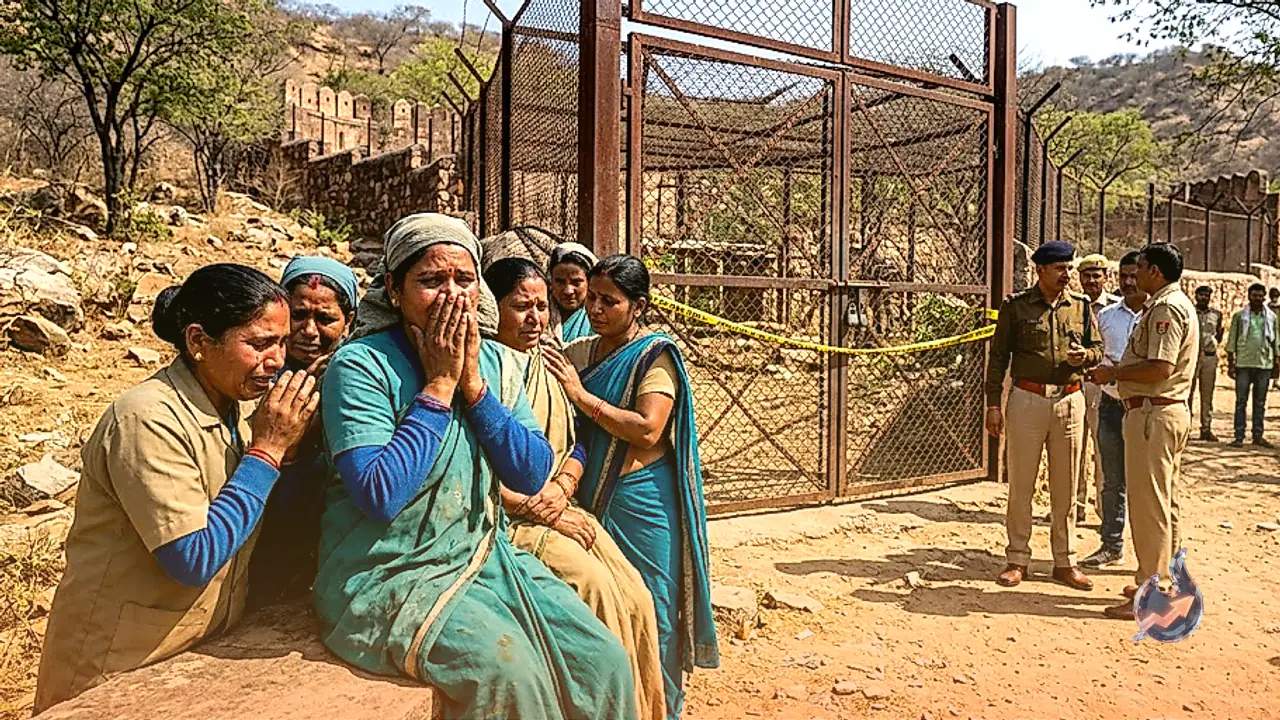

A catastrophic safety breach at the Nahargarh Biological Park near Amer Fort in Jaipur resulted in the death of Sugna Devi, a female sanitation worker, following a sudden tiger attack. The incident has triggered widespread outrage and brought severe scrutiny upon the biological park's safety protocols and staff management. Grieving family members of the deceased worker launched a protest at the park's entry gate, blaming administration carelessness and refusing to claim the body until strict legal action is taken against the responsible supervisors and caretakers.
Sequence of Events and Desperate Survival Attempts
At the time of the incident, six female sanitation workers were actively engaged in routine cleaning inside the park premises. According to testimonies from surviving workers, a female guard present at the site opened the gate of the tiger's enclosure while the cleaning crew was nearby. The sudden release of the predator triggered immediate panic, causing workers to scramble in different directions for safety.
Facing immediate peril, five women, including Sugna Devi, scrambled toward nearby trees to climb out of the tiger's reach. While four of the workers managed to climb to higher branches in time, Sugna Devi was overtaken by the tiger before reaching safety. The animal inflicted fatal injuries on her. Colleague accounts indicate that had the other workers failed to scale the trees promptly, the casualties could have been even higher.
Severe Protocol Breaches and Allegations of Negligence
The tragedy highlights fundamental questions regarding enclosure operational rules. Standard wildlife sanctuary guidelines strictly mandate that big cats must be fully secured inside holding cells before any maintenance or cleaning personnel enter adjacent spaces. Investigators are examining why the gate was unlocked while workers were present and whether any audible warning or safety clear signal was issued beforehand.
The family of Sugna Devi, led by her husband and sons, accused the park authorities of gross misconduct, alleging that the enclosure gate was opened deliberately without adhering to mandatory precautions. Demanding accountability, the relatives have conditioned the acceptance of her body on formal police charges against negligent caretakers and supervisors. An official investigation aims to establish whether the incident stemmed from human error or a systematic breakdown in safety procedures.
Pattern of Historic Tiger Attacks Across Rajasthan
This incident follows a series of human-tiger conflicts documented across forest reserves and fringe settlements in Rajasthan. In June 2025, forest guard Radheshyam Mali lost his life in a tiger attack near the historic Ranthambore Fort inside the Ranthambore Tiger Reserve in Sawai Madhopur. Just a month prior, in May 2025, ranger Devendra Choudhary was fatally mauled by a tiger while on duty in Zone-3 of the same reserve.
Further incidents include August 2024, when tiger ST-2303 escaped the Sariska reserve area in the Alwar-Khairthal Tijara region, straying across the Rajasthan-Haryana border and injuring several villagers. Earlier in January 2024, an elderly farmer sustained severe injuries in a tiger attack near Bhiwadi. In November 2024, a tiger killed a local resident in Uliana village near Ranthambore, triggering violent confrontations between enraged villagers and authorities that ultimately resulted in the tiger's death as well.
Visitor Safety Concerns and Administrative Accountability
Situated adjacent to the tourist landmark of Amer Fort, Nahargarh Biological Park attracts a vast number of domestic and international visitors daily. The occurrence of a deadly enclosure breach within staff working zones raises alarming questions about the security guaranteed to visiting tourists.
Wildlife safety experts emphasize the necessity of reviewing historic security measures across state facilities to determine whether corrective mandates were implemented following previous fatalities. Key aspects under administrative review include whether staff received sufficient crisis training and if proper surveillance was operational during the shift. A formal inquiry is currently underway to ascertain the exact circumstances behind the open gate and assign responsibility for the fatal oversight.