




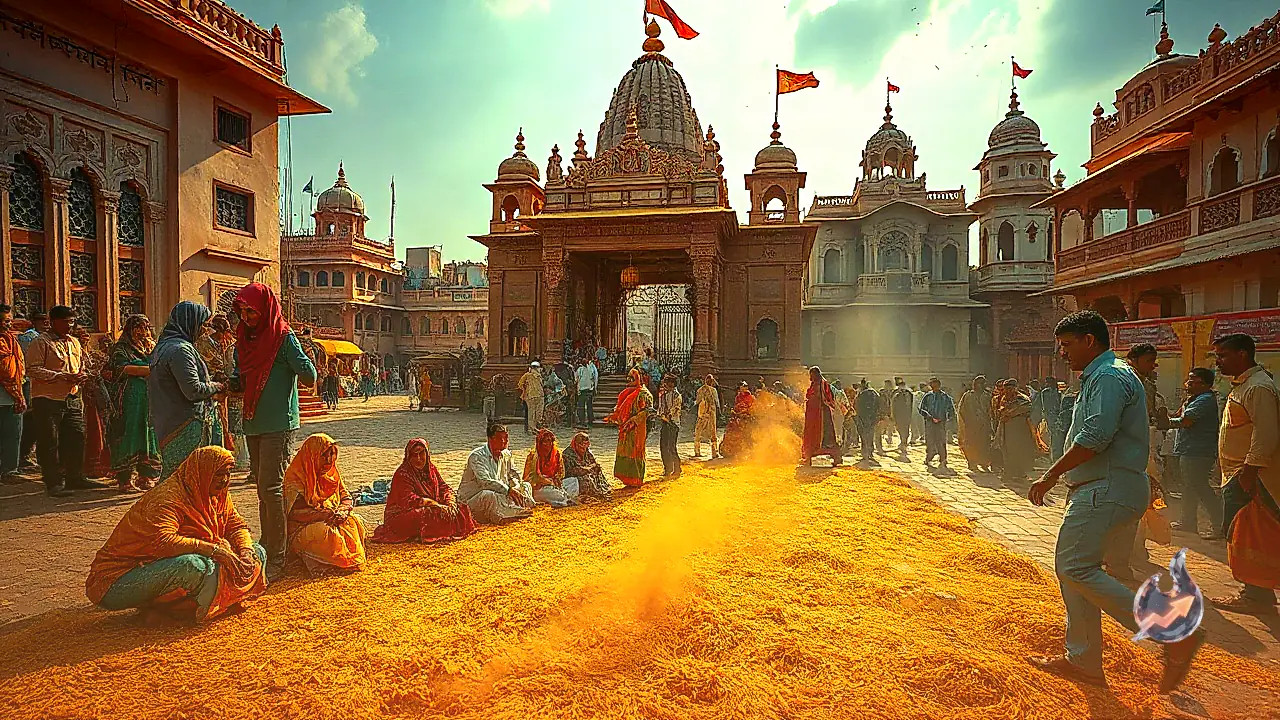
















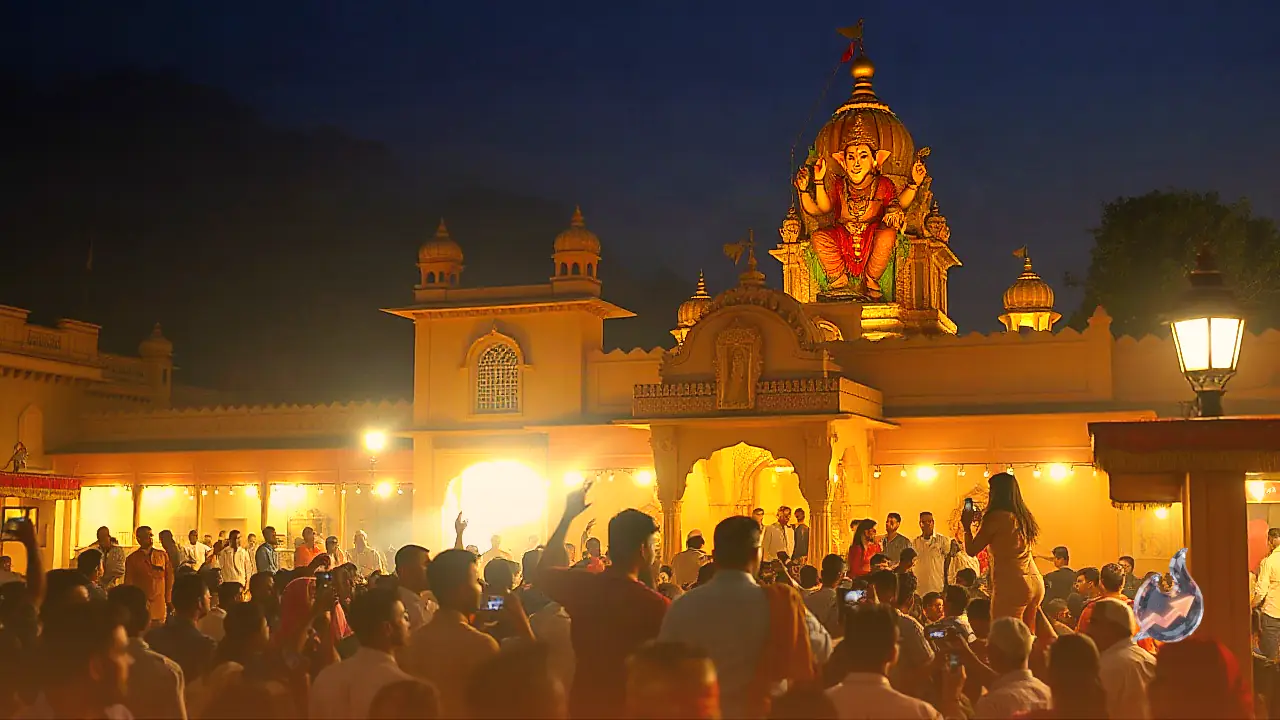

A vast gathering of devotees assembled at the renowned Moti Dungri Ganesh Temple in Jaipur on Sunday evening on the occasion of Ganesh Chaturthi festivities. Thousands of people queued for hours during the special Sinjhara ceremony to receive the blessed mehendi offered to Lord Ganesha. Among the crowds of worshippers were numerous unmarried young men and women seeking the consecrated henna prasad.
A 200-Year-Old Sacred Tradition
The practice of offering Sinjhara mehendi to the deity and distributing it among devotees at the Moti Dungri Ganesh Temple traces back roughly 200 years. Historical records within the temple state that the formal tradition began about 70 years ago with an offering of just 1.25 kilograms of henna. Over the decades, this ritual grew exponentially in popular appeal and religious significance.
For this year's Ganesh Janmotsav celebration, approximately 3,500 kilograms of high-quality pure mehendi was sourced from Jaipur and Sojat. After sanctification rituals and prayers were completed, the entire batch of blessed mehendi was distributed among the waiting pilgrims.
Beliefs Surrounding Marriage and the Cultural Roots of Danka Chauth
The Moti Dungri temple holds widespread acclaim for beliefs connected to marital blessings. Devotees firmly hold that offering prayers to Lord Ganesha on Sinjhara and accepting the consecrated mehendi helps fulfill marriage aspirations. Driven by this belief, worshippers traveled to the temple not only from across Jaipur but also from various parts of India.
In the regional folk traditions of the Dhundhar belt, this festival is locally known as Danka Chauth. Traditionally, maternal family members send new attire, traditional sweets, and henna for young boys and children. The Sinjhara worship during the grand birthday celebrations of Lord Ganesha serves as a spiritual extension of this age-old cultural heritage.
Crowd Management, Safety Concerns, and Courier Prasad Services
To ensure smooth movement, temple administrators set up five designated exit gates for the distribution process. However, the actual turnout far exceeded official predictions, resulting in dense crowding throughout the temple complex and adjoining roadways. Police authorities managed the situation from Sunday evening well into late night hours to maintain order.
Given the heavy influx of devotees, concerns over potential stampede risks emerged among onlookers. As photographs and video clips of the surging crowds circulated widely on social media platforms, discussions intensified regarding security protocols and crowd handling strategies at the venue.
Interestingly, the temple management had introduced an online service this year, allowing devotees to receive consecrated mehendi and modak prasad at their doorsteps via courier. Despite this digital option, thousands chose to visit the shrine in person to take part in the age-old ritual firsthand.