




















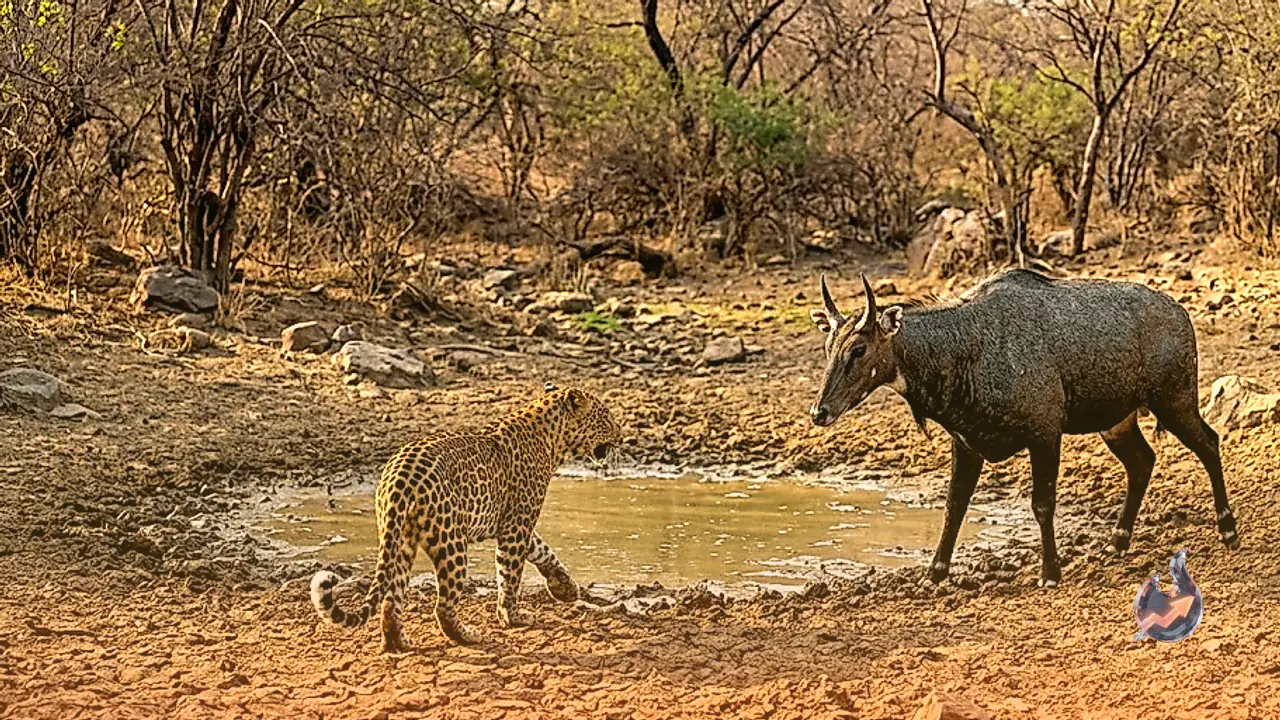

A rare face-off between a leopard and a nilgai at Jhalana Leopard Reserve in Jaipur has put the spotlight on how a weak monsoon is squeezing wildlife in Rajasthan, as falling water levels push animals into direct competition at the region's remaining water points. The sighting, captured on camera, has drawn attention because it shows one of the forest's most confident hunters choosing to step back rather than fight.
A tense standoff at the waterhole
The incident unfolded when the reserve's well known leopard, named Rana, was resting near a water point. A large male nilgai walked up to the same spot without showing any sign of fear. Most animals tend to keep their distance the moment they sense a leopard nearby, but this nilgai appeared driven by thirst strong enough to override its instinct to avoid the predator, and it walked straight up to the water. Such close contact between predator and prey at a single water point is unusual, and it reflects just how limited the available water inside the reserve has become this season.
Horns raised, the nilgai refused to back off
As the nilgai began drinking, Rana growled to assert dominance and push the animal away, but the nilgai held its ground. It then lowered its head and advanced toward the leopard with its sharp horns raised, turning the atmosphere at the waterhole tense within moments. For a brief spell, neither animal was willing to yield, each testing whether the other would blink first.
Rana chose caution over confrontation
Footage of the encounter shows Rana weighing the situation and deciding against a direct clash. Despite being one of the reserve's most capable hunters, the leopard recognised that engaging a nilgai's heavy frame and sharp horns carried unnecessary risk, and it quietly withdrew from the water point. The nilgai then stood by the water with full confidence, unchallenged. The decision underlined a simple truth about life in the wild: raw strength alone does not always decide the outcome of a standoff, and reading the risk correctly can matter just as much.
Peacocks added their own alarm calls
Peacocks, red wattled lapwings and other birds nearby were not silent witnesses to the standoff. The moment Rana retreated, several peacocks began calling loudly. Such alarm calls are usually triggered by a leopard's presence, but this time the birds' calls seemed to reflect the reversed situation, with the predator itself backing away. Their calls are typically read as an early warning system for a leopard moving through the area, but on this occasion they seemed to underline just how unusual the outcome at the waterhole had been.
Shrinking water sources are driving the tension
Wildlife experts note that while the leopard remains Jhalana's apex predator, a fully grown male nilgai's bulk and strong horns can make it a genuinely dangerous opponent, which is why even seasoned hunters often judge that avoiding a clash is the wiser course. Jhalana's leopards are used to being the last word at any water point, which is exactly what made this particular retreat so striking to those who track the reserve's wildlife. The episode is not just a story about one leopard and one nilgai, it also points to the deeper picture of a changing climate and dwindling water sources. When natural water bodies begin to dry up, every animal in the forest is forced to draw on all its strength and instinct just to survive.