






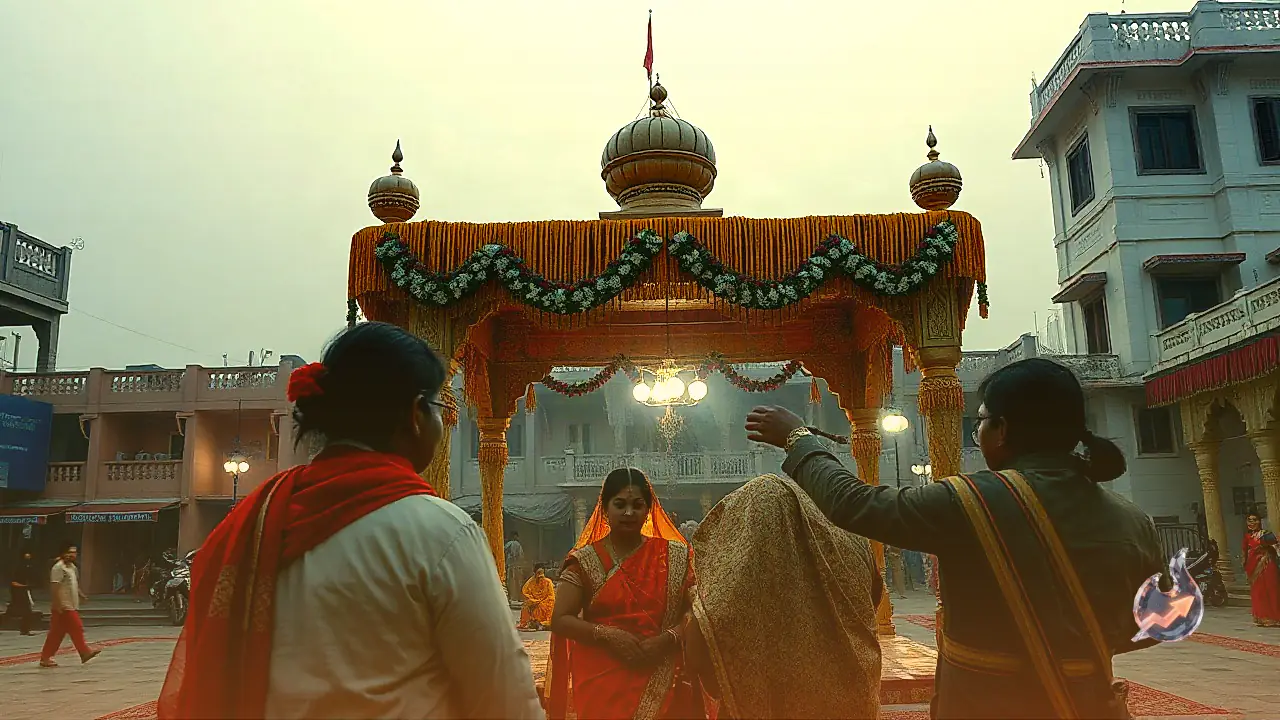















Hindu wedding ceremonies in West Bengal carry several customs that set them apart from wedding traditions followed elsewhere in India. One such long-standing custom holds that the mothers of both the groom and the bride are traditionally kept away from the mandap during the core wedding rituals. This practice, however, is not observed identically in every household today, and it has changed considerably with time.
The custom traces back to fears of the evil eye
The oldest explanation offered for this practice centers on the old belief in the evil eye, or nazar. It was traditionally believed that a mother's bond with her child runs so deep that her gaze, even unintentionally, could cast a negative influence on the child's married life. This belief is what led families to keep mothers away from the mandap during the central wedding rites. There is no scientific basis to this idea; it is best understood purely as an old folk belief and a piece of cultural tradition passed down across generations.
A mirror, and a mother's blessing before the groom departs
What's notable is that this custom does not mean mothers are shut out of the wedding altogether. In a traditional Bengali wedding, before the groom sets off for the wedding venue, his mother blesses him. In some families, she also hands him a mirror, known as dorpon, which is regarded as a symbol of protection from the evil eye. Once the blessing is given, the mother does not accompany the groom to the wedding venue. She stays back home while the groom leaves with his family and relatives as part of the wedding procession.
The bride's mother performs the boron welcome ritual
The bride's mother plays an equally significant role. When the groom's procession arrives at the wedding venue, it is often the bride's mother who welcomes him in many traditional Bengali weddings. This welcome ceremony is called boron, during which the mother performs an aarti, feeds the groom sweets, and welcomes him with a few other traditional items. In other words, mothers are not excluded from the auspicious occasion entirely; the custom of keeping them away applies specifically to the portion of the ceremony involving the core marriage rites themselves.
A mother's involvement is not limited to these two moments either. In a ritual called aiburo bhaat, the mother feeds her child a special meal with her own hands before the wedding. Similarly, after the wedding, the groom's mother plays an important role in the rituals that welcome the new bride into her married home.
Is the tradition still followed by every family today?
Bengali weddings look quite different today than they once did. In cities in particular, families often modify or drop several older customs to suit their convenience, modern outlook and personal preferences. It would therefore be inaccurate to assume that mothers still stay away from the mandap in every Bengali wedding today. Some families continue to observe this old custom, while in many households, mothers are fully present, and actively involved, during the main wedding ceremony itself. Ultimately, how this tradition is observed depends on time, family attitudes and personal beliefs, rather than being a rigid religious rule.