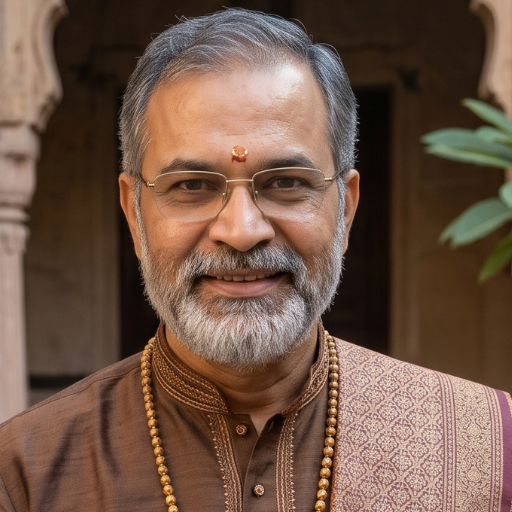




















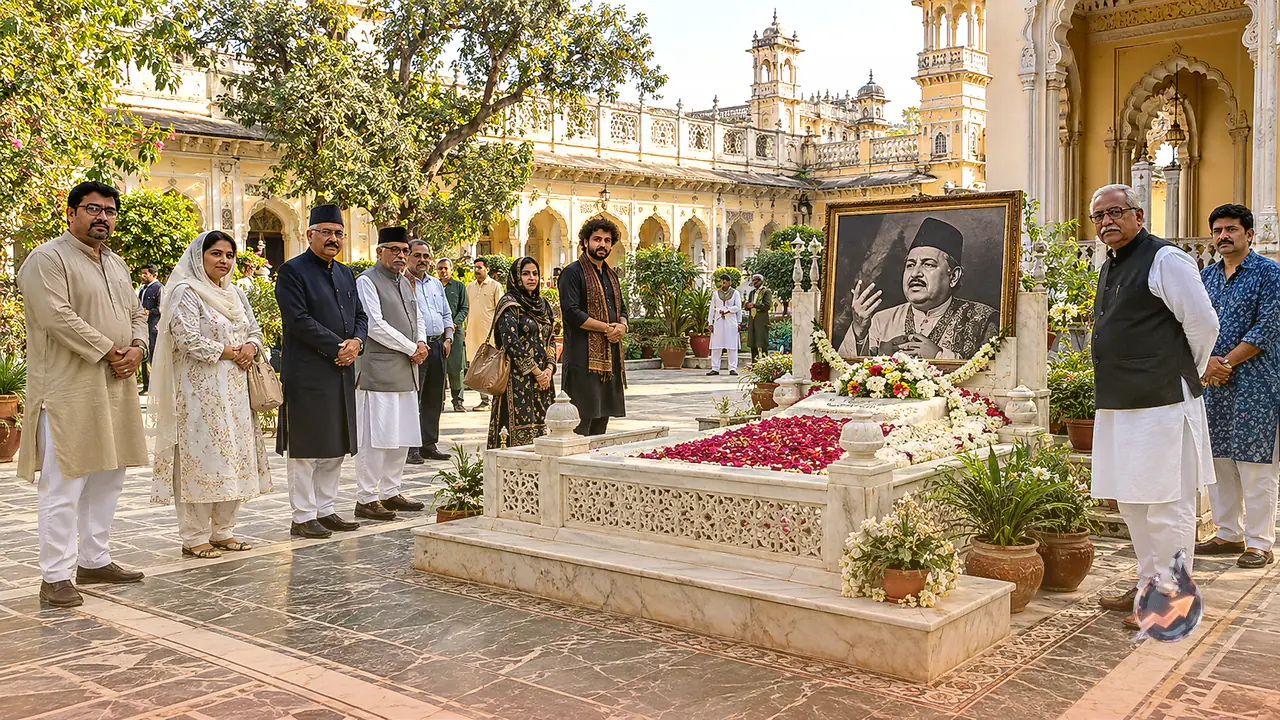

The illustrious maestro of Hindustani classical music who elevated the Patiala gharana to global prominence, Ustad Bade Ghulam Ali Khan, shared a profoundly intimate bond with the historic city of Hyderabad. Widely celebrated as one of the twentieth century's finest vocal geniuses, he chose this southern city as his sanctuary during the twilight of his life. Following his demise at the Bashir Bagh Palace on April 23, 1968, he was laid to rest near the Purani Haveli area within the historic precinct of Darab Jung. Decades later, his memorial continues to draw classical music connoisseurs and devotees from across the nation to pay their respects.
Early Foundations in Kasur and the Return to India
Born on April 2, 1902, in Kasur within undivided Punjab, Bade Ghulam Ali Khan inherited an extraordinary musical lineage. Guided by the rigorous instruction of his father, Ustad Ali Bakhsh Khan, and his uncle, Kale Khan, he mastered the subtleties of both vocal performance and the sarangi. Following the partition of India in 1947, he initially relocated to Pakistan. However, an overpowering affinity for India's artistic soil and musical traditions drew him back. Through dedicated interventions by Prime Minister Jawaharlal Nehru and Home Minister Morarji Desai, he was granted permanent Indian citizenship in 1957.
Three-Octave Range, Punjab Ang Thumri, and Mughal-e-Azam
Vocal experts often highlight the ease with which his voice navigated across three distinct octaves. By infusing the classical thumri format with the sweetness of the Punjab ang alongside dazzling, lightning-fast taans, he completely redefined the genre. His iconic renditions of thumris such as 'Yaad Piya Ki Aaye' and 'Aaye Na Baalam Ka Karun Sajani' established lasting benchmarks in Hindustani music. Khan Sahib famously avoided playback singing for commercial cinema. When filmmaker K. Asif approached him to record songs for the 1960 epic 'Mughal-e-Azam', the maestro named an astronomical sum of 25,000 rupees per song to discourage the offer. To his surprise, Asif consented without hesitation, leading to the creation of two immortal classical tracks, 'Prem Jogan Ban Ke' and 'Shubh Din Aayo Raj Dulara'.
Final Days at Bashir Bagh Palace and Lasting Remembrance
During his senior years, suffering from a severe paralytic stroke, the maestro arrived in Hyderabad seeking recovery and medical rest. Local connoisseurs and the state administration arranged his stay at the grand Bashir Bagh Palace. Despite debilitating health conditions, his commitment to his craft remained undiminished; he sustained his daily musical riyaz and mentored disciples directly from the palace. On April 23, 1968, at the age of 66, he breathed his last at Bashir Bagh Palace. Buried within the historic Darab Jung compound near Purani Haveli, his tomb stands as a timeless testament to his genius, continuing to inspire generations of classical vocalists.