























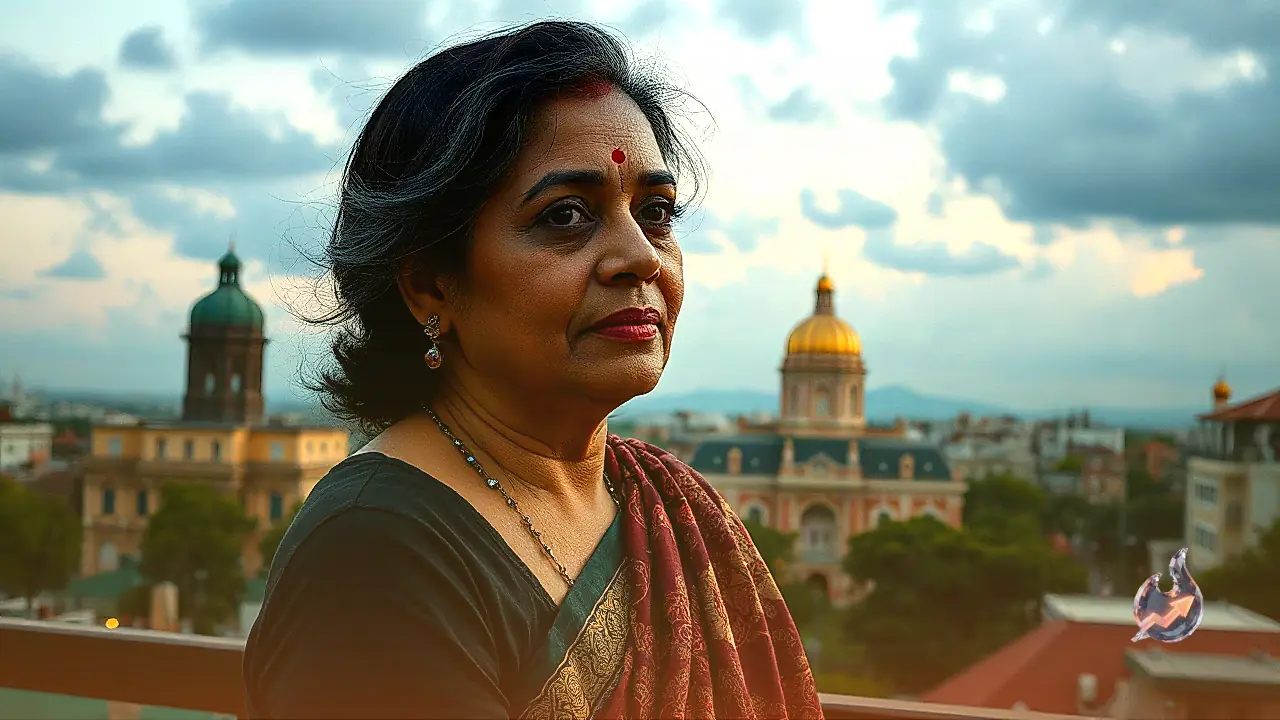

Veteran cinematic performer Moushumi Chatterjee, long admired for her spirited personality and memorable screen roles, shared unreserved insights regarding contemporary relationships, domestic roles, and the pressures facing the modern generation. Reflecting on her decades within the entertainment industry and her eventful private life, the actor urged younger people to adapt their perspectives in an evolving world. In an open conversation with journalist Nayandeep Rakshit, she revisited her early marriage, the duties of parenting, and the irreplaceable loss of her elder daughter, offering grounded counsel to modern youth seeking personal and emotional independence.
Advocating Self-Prioritization and Challenging Outdated Conditioning
Addressing the audience during the discussion, Moushumi Chatterjee described her personal philosophy as fundamentally progressive. She advised young women and working professionals to step away from traditional self-sacrificing habits, noting that safeguarding one's own emotional peace has become essential in today's world. She observed that contemporary times require individuals to stay vigilant and even slightly self-centered, emphasizing that social environments have undergone a permanent transformation. Drawing upon a timeless thought from the Bhagavad Gita, she noted that constant change remains the supreme law of the universe.
Turning her attention to prevailing domestic double standards, the actor criticized the unequal expectations placed on sons and daughters across Indian households. While daughters are trained from a tender age to manage household chores, culinary duties, and matrimonial adjustments, sons are rarely required or encouraged to share domestic tasks. She questioned why household labour continues to be treated as an exclusively female obligation. Moving further, she expressed deep concern over the excessive burnout seen in the modern workforce, remarking that young people are burdened by relentless career friction, leaving them virtually no spare time to appreciate everyday moments or care for their inner health.
Lessons from Early Teenage Matrimony and Personal Mistakes
Chatterjee's own past serves as a vivid case study in weathering sudden domestic responsibilities. Having achieved sudden fame through her breakthrough vehicle 'Balika Badhu', she was married off when she was merely between 12 and 15 years of age. Her family arranged her union with Jayant Mukherjee, son of legendary music composer and vocalist Hemant Kumar, while her career was just finding its wings. The actor has consistently maintained transparency regarding the reality that conjugal commitments and motherhood entered her life when she herself had barely left childhood behind.
Drawing direct wisdom from those demanding years, she warned younger generations against repeating previous misjudgments. The 70-year-old actor emphasized that individuals must pursue pursuits they genuinely love, but cautioned against taking anything to extremes. Acknowledging that she committed several errors throughout her own personal trajectory, she stressed that acknowledging a fault and never repeating it is what defines maturity. She observed that human beings possess an innate conscience that demands honest self-examination rather than superficial rationalization.
Reflecting that same modern ethos within her family dynamic, she described the advice she offers to her younger daughter, Megha Mukherjee. She pointed out that companionship and romance should never be turned into an automatic mandate for marriage. She explicitly tells her daughter that while she is entirely free to date or have a partner, that dynamic does not mean she is obligated to enter wedlock with that person. For her, matrimonial choices must rest upon deliberate readiness rather than peer pressure or social conformity.
The Enduring Void Left by the Loss of Her Daughter Payal
The mood of the discussion turned intensely reflective as Moushumi Chatterjee recalled the passing of her elder daughter, Payal. Following prolonged health struggles linked to complications from diabetes, Payal passed away in the year 2019, plunging the entire household into inconsolable mourning.
Chatterjee recalled the protective bond between her two children, noting an age gap of around 8 years between Payal and Megha. Because of that difference, Payal had always looked after Megha with maternal devotion and warmth. The grief of that absence remains an ongoing reality for the family; she recounted that even today, her husband Jayant frequently wakes up in the middle of the night in tears, calling out Payal's name. She concluded with moist eyes that the vacuum created by losing a child is something no spoken words can adequately capture and no span of time can ever completely heal.