























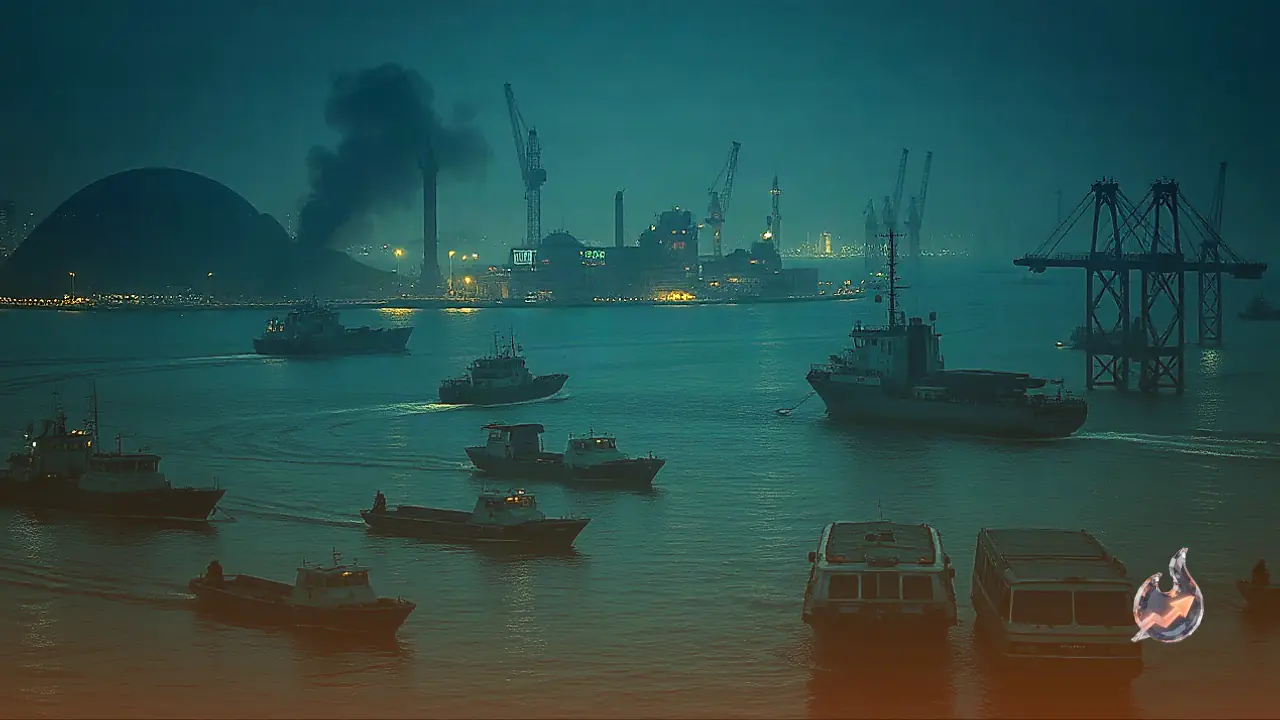

A critical maritime bottleneck that carries over 200 billion dollars in Indian foreign commerce and serves as a primary conduit for crude oil and gas supplies is facing acute geopolitical strain. Expanding territorial and operational control by Houthi insurgents, known formally as Ansarallah, along Yemen's Red Sea shoreline and around the Bab el-Mandeb strait has escalated into a direct security challenge for India. The narrow passage links the Arabian Sea to the Red Sea and onwards through the Suez Canal, acting as India's primary maritime freeway to European, American, and North African markets. An intelligence assessment has underscored that rising volatility in this corridor threatens to disrupt Indian trade schedules, push up energy import bills, and place thousands of Indian commercial mariners in direct physical peril.
Control of Crucial Ports and Islands Shifts Operational Balance
The ground situation along Yemen's coastal belt has altered dramatically following fresh military gains by Houthi forces. Insurgents have taken control of the strategically situated port of Mokha and pushed deeper toward high-value islands and coastal vantage points commanding the Bab el-Mandeb strait, notably including Perim Island. Perim Island occupies an indispensable geographic position right inside the chokepoint, providing direct oversight over maritime traffic moving between the Indian Ocean and the Mediterranean. By tightening their grasp on Mokha and adjoining littoral positions, the fighters have positioned themselves to exercise greater leverage over commercial navigation. This strategic creep increases the probability of targeted disruptions, transforming what was once a routine commercial channel into a heavily contested zone.
A 200 Billion Dollar Trade Corridor at a Costly Crossroads
India's trade engagement with Europe, the United States, and Northern Africa exceeds 200 billion dollars annually, and the vast majority of these cargo volumes flow directly across the Arabian Sea and through Bab el-Mandeb. The intelligence appraisal highlights that prolonged instability inside the strait would compel merchant vessels to abandon the Red Sea route entirely and sail around the southern tip of the African continent via the Cape of Good Hope. Choosing the Cape route forces container carriers and tankers to undertake a detour that extends voyages by 10 to 14 days. These extended transits translate directly into substantially heavier bunker fuel expenditures, escalating war-risk insurance premiums, and higher shipping charges, ultimately inflating the cost structure for both inbound industrial inputs and outbound Indian goods.
Dwindling Vessel Transits and Cascading Logistic Disruptions
The operational danger across Bab el-Mandeb is already registering on commercial maritime charts. Faced with persistent missile threats and aggressive drone activity, commercial operators have cut back on passages through the channel. Transits through the strait plunged on a single day in September from an average of 30 vessels down to just 15, according to operational traffic data reported by The National. Crucially, the ships avoiding the waterway or caught in the slowdown were not merely dry cargo carriers, but included tankers hauling crude oil and bulk freighters transporting vital commodities like grain and steel. Running ships on circular routes around Africa ties up vessel tonnage for far longer periods, creating equipment shortages, driving up supply chain expenses, and threatening to spark inflationary pressures on domestic energy and retail commodity prices across India.
Energy Supplies Confront Bottlenecks and Surging Freight Costs
Bab el-Mandeb remains an indispensable artery for India's hydrocarbon imports, maintaining the flow of petroleum products and liquefied gas from key international markets. Although merchant shipping operations tied to India continue to utilize the lane despite the volatile climate, the intelligence appraisal cautions that an escalation in security risks would make the country's energy logistics both significantly more expensive and considerably less dependable. Alternative energy conduits across the wider Middle East are also experiencing logistical strain, as Saudi Arabian infrastructure projects encounter regional hurdles. Furthermore, intelligence evaluations supported by S&P Global indicate that Houthi momentum near Mokha weakens Saudi Arabia's designated Red Sea crude export channels. While this territorial consolidation does not imply an immediate, complete shutdown of regional crude shipments, India's immediate vulnerability lies in cost escalation, prolonged transit windows, and a shrinking inventory of safe maritime options.
Heightened Threat to Over 20,000 Indian Merchant Seafarers
Beyond commercial balance sheets and freight tariffs, the unfolding crisis carries direct humanitarian consequences for India's maritime workforce. More than 20,000 Indian seafarers serve aboard commercial vessels traversing the high-risk maritime lanes of the Red Sea and the Gulf of Aden. This assessment aligns closely with alerts sounded earlier in the year by the National Union of Seafarers of India, which voiced grave concern regarding the physical safety of over 20,000 Indian crew members working in these waters. Recent missile strikes and drone engagements targeting vessels staffed by Indian sailors or carrying cargo linked to Indian ports highlight the reality of this hazard. Prolonged disruption not only endangers human lives but risks disrupting overall commercial import and export timelines, driving marine insurance rates higher, and squeezing domestic industries dependent on imported energy and raw components.
Simultaneous Maritime Chokepoints Create Dual-Flank Pressure
The strategic complications emerging from Yemen point to a much larger geopolitical pattern across the Arabian Peninsula. While the Strait of Hormuz on the eastern flank has long operated under the significant strategic shadow of Iran, the consolidation of Houthi authority across Bab el-Mandeb on the western flank creates simultaneous pressure points on both sides of the peninsula. Having two indispensable global trade gateways compromised at the same moment restricts strategic flexibility for consumer nations like India. Navigating this twin-flank vulnerability will test Indian economic resilience and maritime security planning, as the country balances the necessity of uninterrupted sea lanes, the physical protection of its merchant sailors, and the stability of its vital foreign trade networks.