























A theft of offerings from the donation box at the Ram Mandir in Ayodhya, Uttar Pradesh, has pushed the Himachal Pradesh government to tighten security at temples under its own control. The state has issued a detailed Standard Operating Procedure, or SOP, covering how donation boxes are managed, how cash is counted and stored, and how temple valuables are protected.
What triggered the new rules
The Department of Language, Art and Culture has directed every temple management under its purview to ensure transparency, accountability and full protection of devotees' offerings. The theft case at Ayodhya's Ram Mandir made it clear to the state government that temples holding large amounts of cash, jewellery and other valuables need a firm, clearly defined security framework rather than ad hoc arrangements.
Tamper-proof donation boxes, each with its own ID
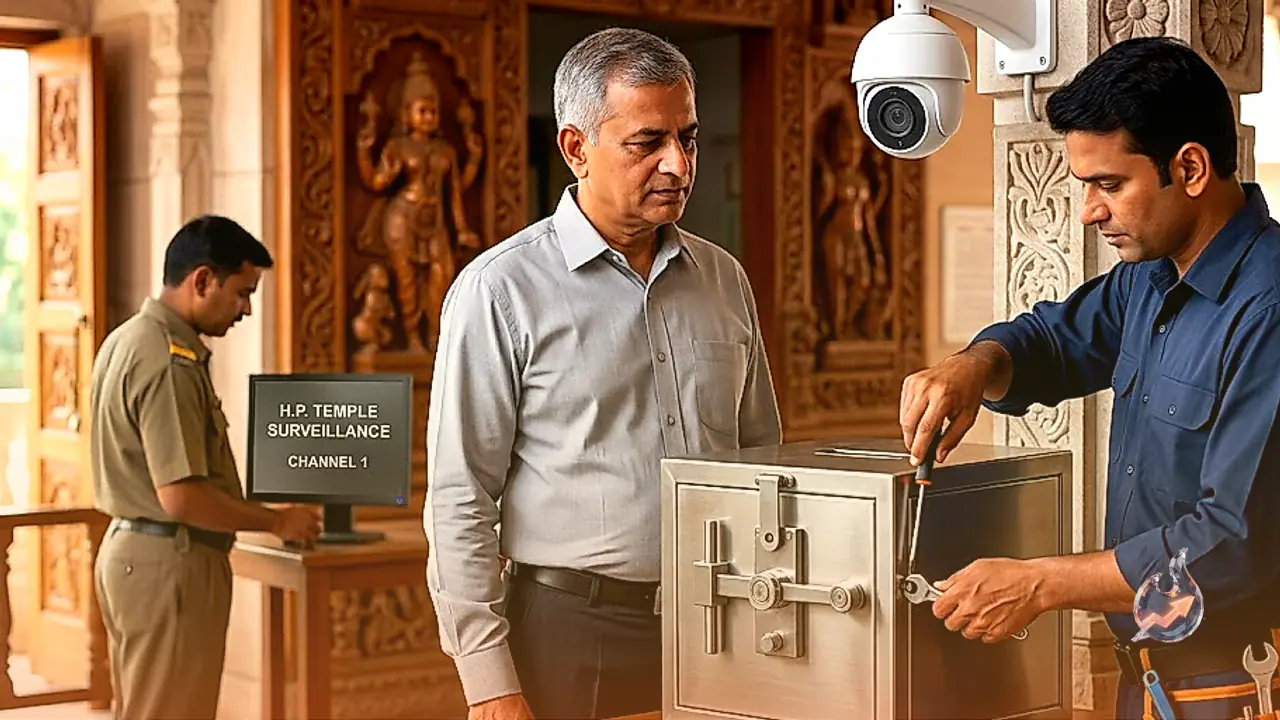
Under the new SOP, every donation box, known locally as a hundi, will be made tamper-proof and installed securely. Each box will be assigned a unique identification number so it can be tracked individually. Opening a donation box will require a double lock or multi-key system, meaning no single person will hold complete access. A record must also be maintained for every instance a donation box is opened or closed.
Boxes open only on fixed dates, counting under CCTV watch
Donation boxes will be opened only on pre-decided dates. Temple officials, representatives of the district administration, accounts officers, members of the temple management committee and independent witnesses must all be present when a box is opened. The entire counting process will take place under CCTV surveillance, with video recording of the process. Temple premises will be fitted with high-quality CCTV cameras equipped with night vision and audio recording. These cameras will cover entry and exit gates, the area around the sanctum sanctorum, the donation boxes, the counting room and the strong room. All CCTV footage must be preserved for at least 180 days so it can be reviewed if needed.
Cash deposits mandatory daily, storage restricted
On the financial side, the SOP requires that any cash offerings collected at a temple be deposited into an authorised bank account within a single day. Keeping large amounts of cash inside temple premises will be barred unless prior written permission has been obtained. Temples have also been told to actively encourage devotees to donate through digital channels, promoting UPI, QR codes and online banking as alternatives to cash.
Jewellery checked every three months, staff face police verification
The SOP also lays out rules for protecting temple jewellery and other valuables. These will undergo physical verification every three months, while a full audit will be conducted once a year by agencies designated by the government. Staff who handle cash and valuables will need to undergo police verification, and their duties will be rotated periodically so that no single person retains control over sensitive tasks for too long. Access to sensitive areas within temples will also be brought under strict control.
Compliance report due within 30 days, or action follows
The government has appointed the Director of the Department of Language, Art and Culture as the state-level nodal officer overseeing implementation. Every state-managed temple must submit a compliance report within 30 days, detailing its security arrangements, CCTV installation, audit status and any other measures put in place. All district Deputy Commissioners have also been directed to take the steps needed to extend similar security arrangements to other temples within their jurisdiction. The government has made clear that failure to follow the SOP, or any negligence in implementing it, will result in legal and departmental action against the executive officers and temple management committees concerned.