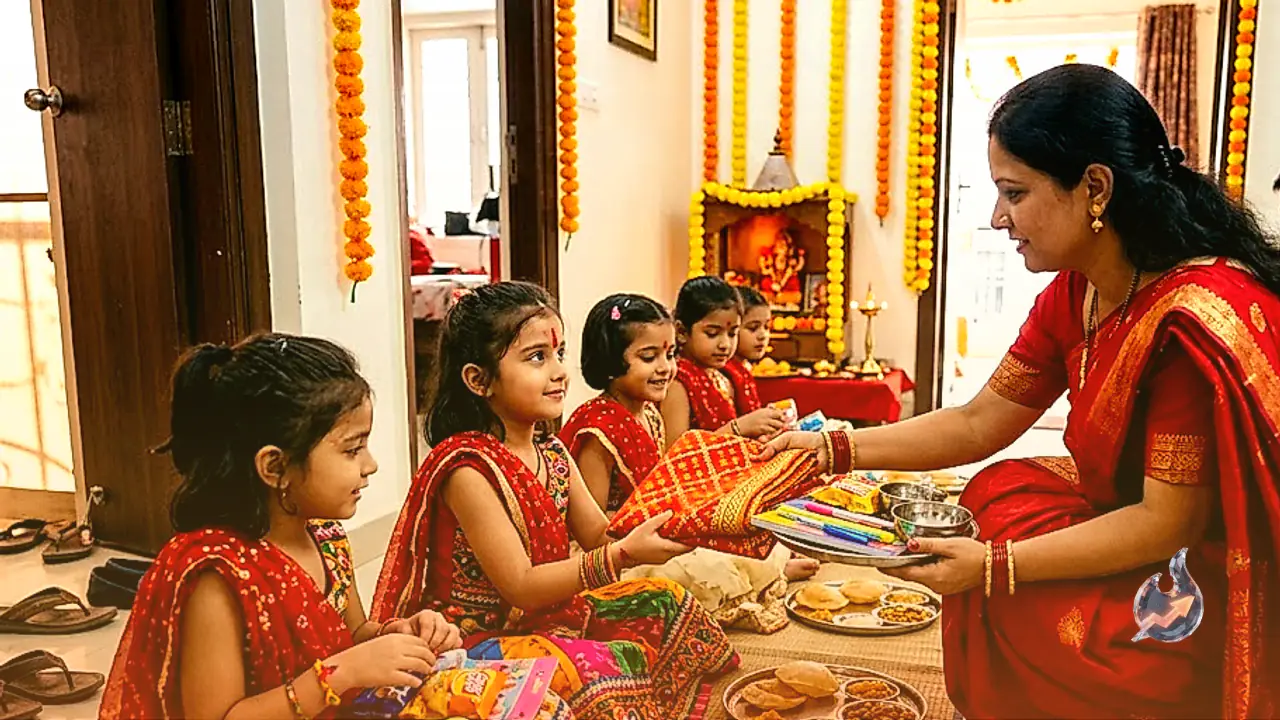























According to traditional Hindu customs, the sacred festival of Navratri takes place four times every year. Among these four occurrences, two are widely observed by the general public, while the other two are known as Gupt Navratri, or secret nine nights. The festivities falling in the months of Chaitra and Ashvin are celebrated enthusiastically across households. On the other hand, the Gupt Navratris that arrive during the months of Ashadha and Magha are primarily observed by ascetics, hermits, and practitioners of esoteric Tantric rituals. While ordinary Navratris focus on worshipping the nine conventional forms of Navdurga, Gupt Navratri centers on the deep reverence of the Dashamahavidyas, the ten sovereign goddesses of the Shakta tradition. The term Mahavidya literally translates to great wisdom or supreme knowledge, holding immense significance across Shakta and Tantric systems. Different sacred treatises and lineages offer distinct interpretations regarding their sequence, appearance, and underlying symbols.
The wrath of Goddess Sati and the revelation across ten directions
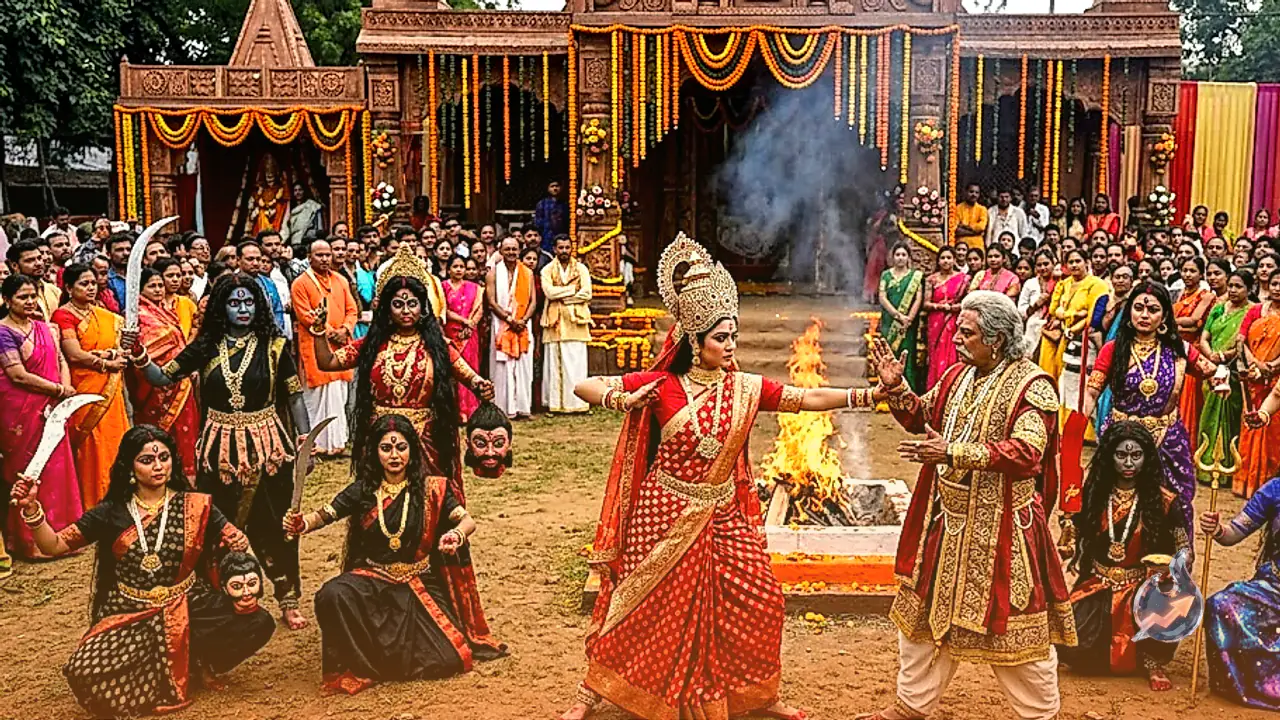
The cosmic origin of the Dashamahavidyas is closely linked to the episode of King Daksha Prajapati's grand sacrificial rite. As the legend recounts, when Shiva barred his consort Goddess Sati from attending Daksha's grand sacrificial ceremony without an invitation, she displayed immense fury and manifested her all-encompassing cosmic form. Whenever Shiva attempted to move in any particular direction, a different and awe-inspiring manifestation of the Divine Mother stood before him. In this manner, ten distinct manifestations revealed themselves across all ten directions, coming to be known as the Dashamahavidyas. In modern research and conventional texts, the most widely accepted lineage and group comprises Kali, Tara, Tripurasundari, Bhuvaneshwari, Chhinnamasta, Bhairavi, Dhumavati, Bagalamukhi, Matangi, and Kamala.
From primordial Kali to graceful Tripurasundari
Goddess Kali occupies the foremost and pivotal position among the ten Mahavidyas. Within Shakta philosophy, Kali is regarded as one of the fiercest aspects of the Divine Mother, traditionally depicted with powerful symbols representing time, mortality, cosmic destruction, and continuous transformation.
The second deity in this sacred order is Goddess Tara. Her worship is associated with the divine aspect that rescues seekers and guides souls across grave perils and worldly tribulations. Tara holds a very prominent place in Shakta and Tantric devotional paths.
Third in sequence is Goddess Tripurasundari, who is also widely addressed as Shodashi. She is central to the revered Sri Vidya tradition. Within the framework of Sri Vidya rites, Tripurasundari's propitiation is held in exceptionally high regard as the pinnacle of spiritual insight.
Ruler of the cosmos Bhuvaneshwari and symbolic Chhinnamasta
Holding the fourth position is Goddess Bhuvaneshwari. Her name stems directly from the word Bhuvan, signifying the physical world or universe. In sacred literature, she is revered as the sovereign ruler and cosmic mother presiding over the sustenance of the entire material existence.
The fifth Mahavidya is Goddess Chhinnamasta, whose iconography is widely viewed as the most unusual and deeply symbolic within the pantheon. Traditional artistic depictions show her holding her own severed head in her hands. Various lineages of Shakta philosophy explain this astonishing imagery through diverse philosophical metaphors representing self-sacrifice, prana, and divine detachment.
The ascetism of Bhairavi and the stark nature of Dhumavati
Ranked sixth is Goddess Bhairavi, whose form embodies intense spiritual potency, fiery discipline, and awe-inspiring ferocity. Shakta texts offer various philosophical commentaries on Bhairavi, presenting her as the supreme force of penance and internal spiritual illumination.
Goddess Dhumavati stands seventh and possesses an appearance markedly distinct from every other deity in the group. Classical descriptions characterize her as an elderly widow. Her imagery conveys the themes of renunciation, detachment, and the unavoidable hardships inherent in mortal existence.
The immobilizing power of Bagalamukhi alongside Matangi and Kamala
Holding the eighth position is Goddess Bagalamukhi, whose propitiation is considered unique within esoteric Tantric disciplines. In traditional sacred art, she is portrayed in a distinctive posture where she symbolizes the arresting or complete immobilization of an opponent's speech and physical motion.
The ninth deity is Goddess Matangi, associated with the cosmic domains of speech, musical expression, and artistic creation. While several Shakta texts link her to certain attributes of Goddess Saraswati, both deities retain distinct identities in traditional scripture.
The tenth and concluding Mahavidya is Goddess Kamala. Adorned with lotuses and signs of divine prosperity, her symbolism is linked by several schools to Goddess Lakshmi, embodying worldly abundance as well as spiritual wealth.
The fundamental distinction between Navdurga and Dashamahavidya
It is important to clearly distinguish the Dashamahavidyas from the Nine Durgas, or Navdurga. The nine forms of Navdurga comprise Shailaputri, Brahmacharini, Chandraghanta, Kushmanda, Skandamata, Katyayani, Kalaratri, Mahagauri, and Siddhidatri. These nine goddesses are venerated step by step over the nine consecutive calendar days of common Navratri celebrations. Conversely, the Dashamahavidyas form a distinct group of ten powerful deities tied specifically to Shakta and Tantric spiritual practices. Thus, both groups reflect separate, specialized traditions celebrating diverse facets of the divine feminine in Hinduism.