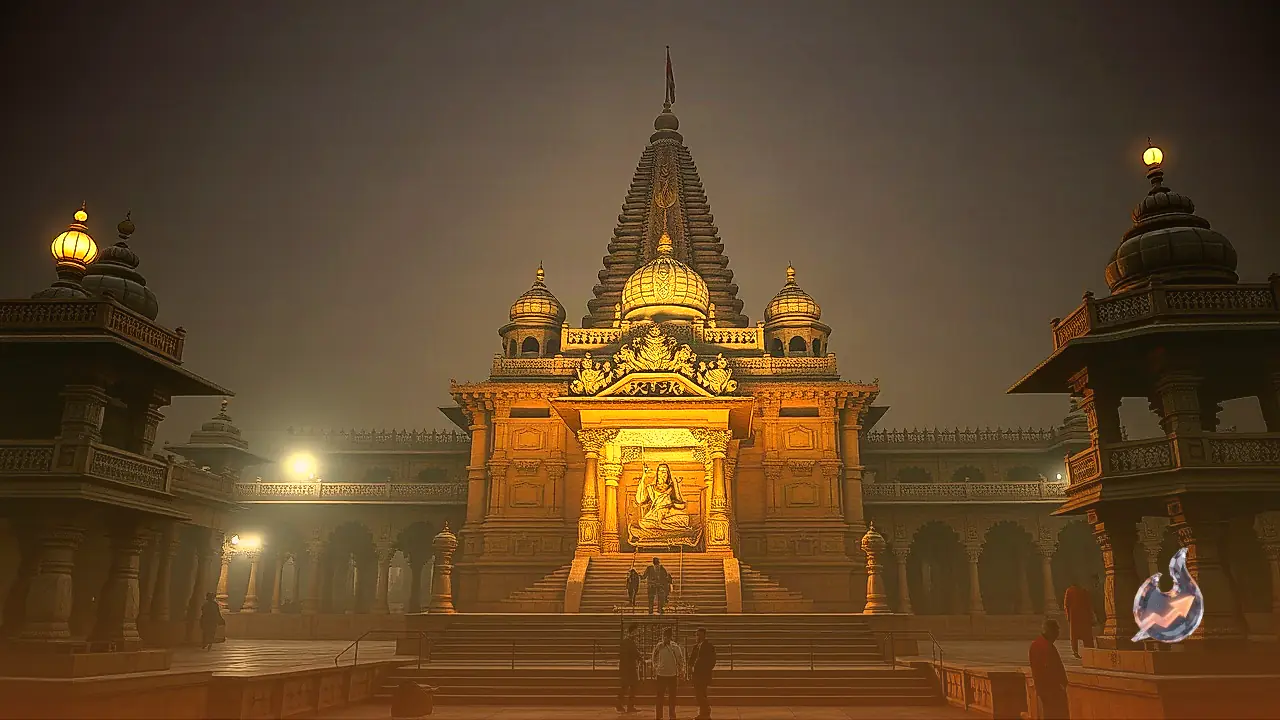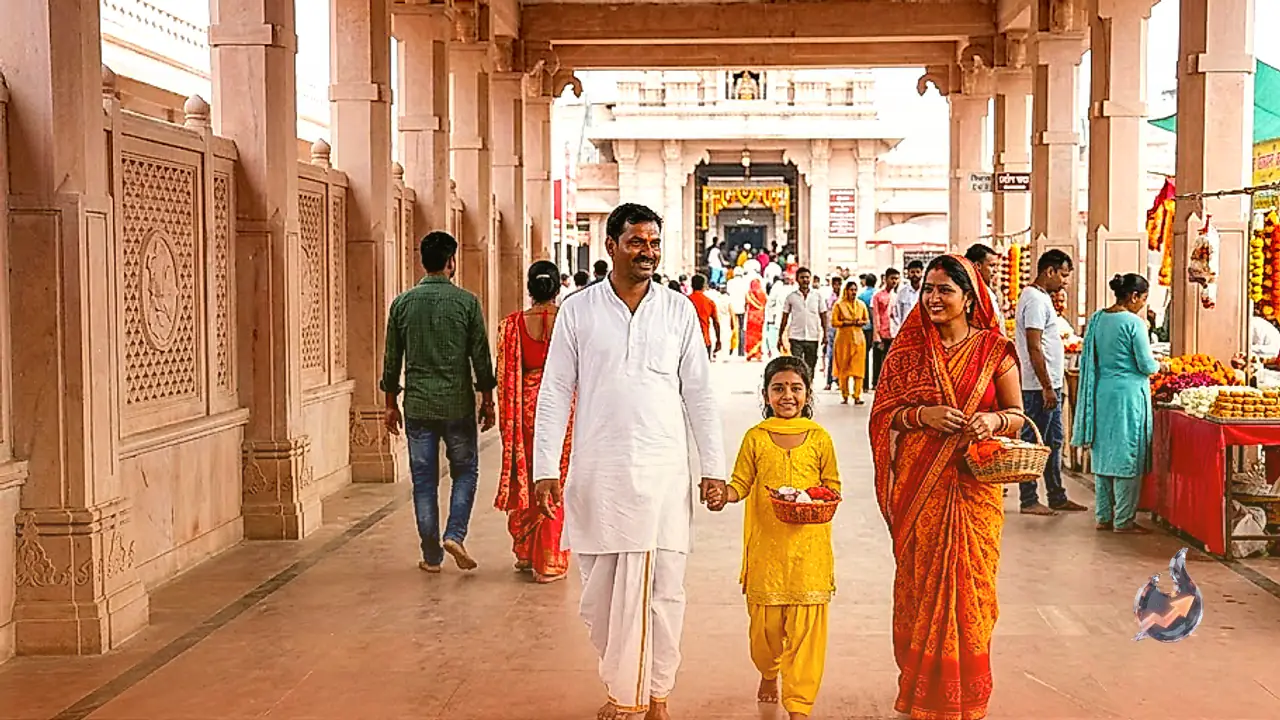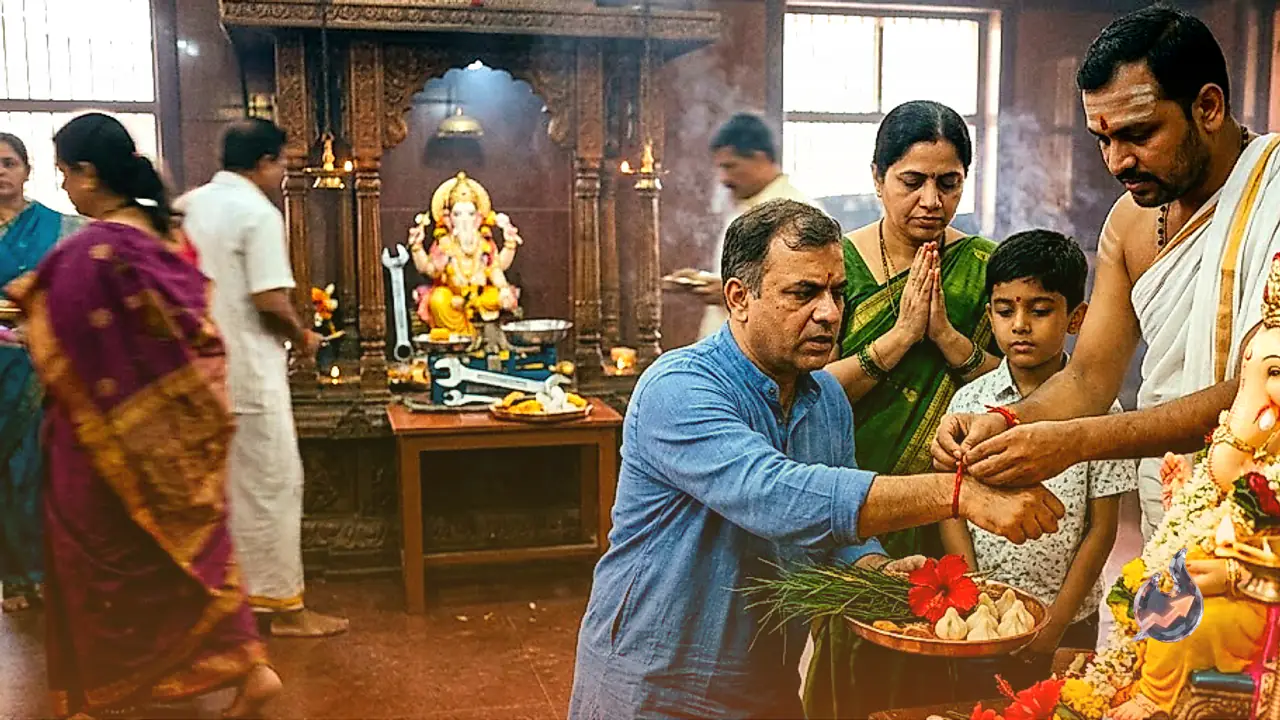


















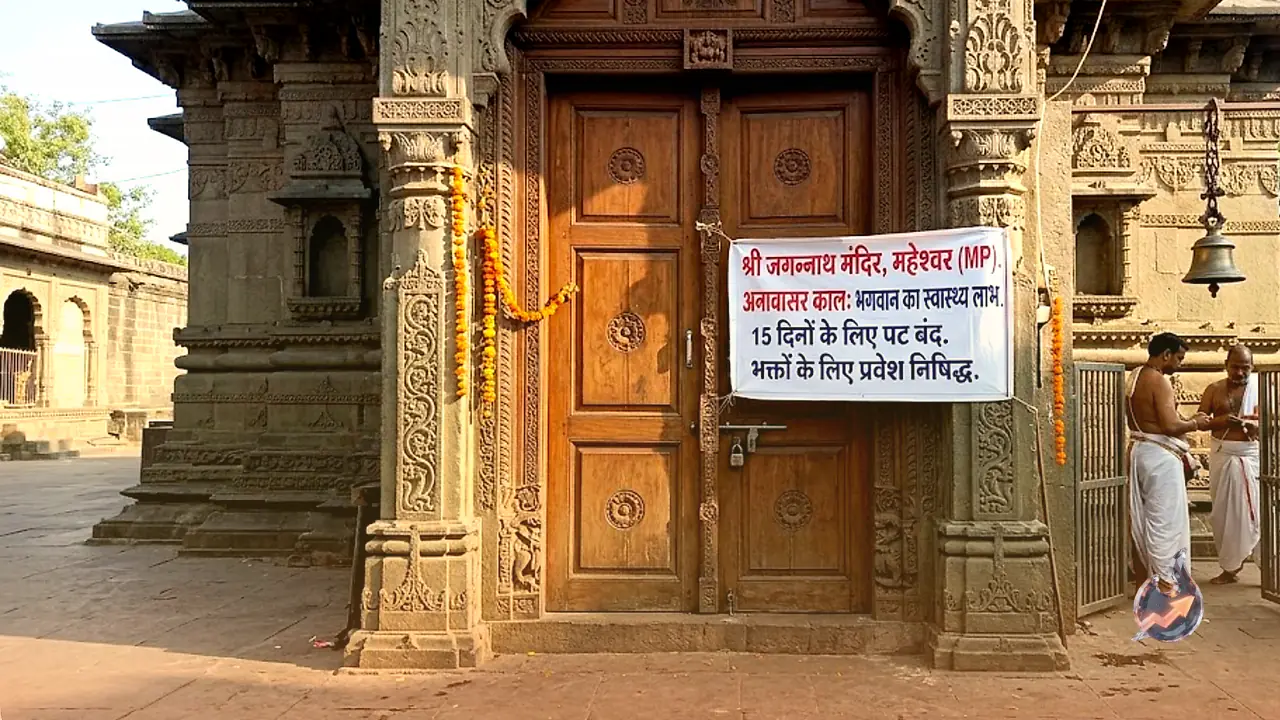
At the Jagannath Dham temple in Maheshwar, in Khargone district, devotees are currently unable to have darshan of the deities. After a ritual bath in the waters of the Narmada river on Snan Purnima, Lord Jagannath, Balabhadra and Subhadra are believed to have fallen ill, and the temple management has shut the doors for 15 days.
A Puri-style tradition takes root in Maheshwar
The centuries-old ritual observed at the Jagannath Temple in Puri, Odisha, is now being followed at the Jagannath Dham in Maheshwar as well. After the ceremonial bath, the deities are considered to be running a fever, so they have been moved from the main throne into a special seclusion chamber inside the temple. Only the temple's chief priest is allowed to enter this chamber; entry for all other devotees and staff has been barred.
Himalayan herbs and a herbal decoction for treatment
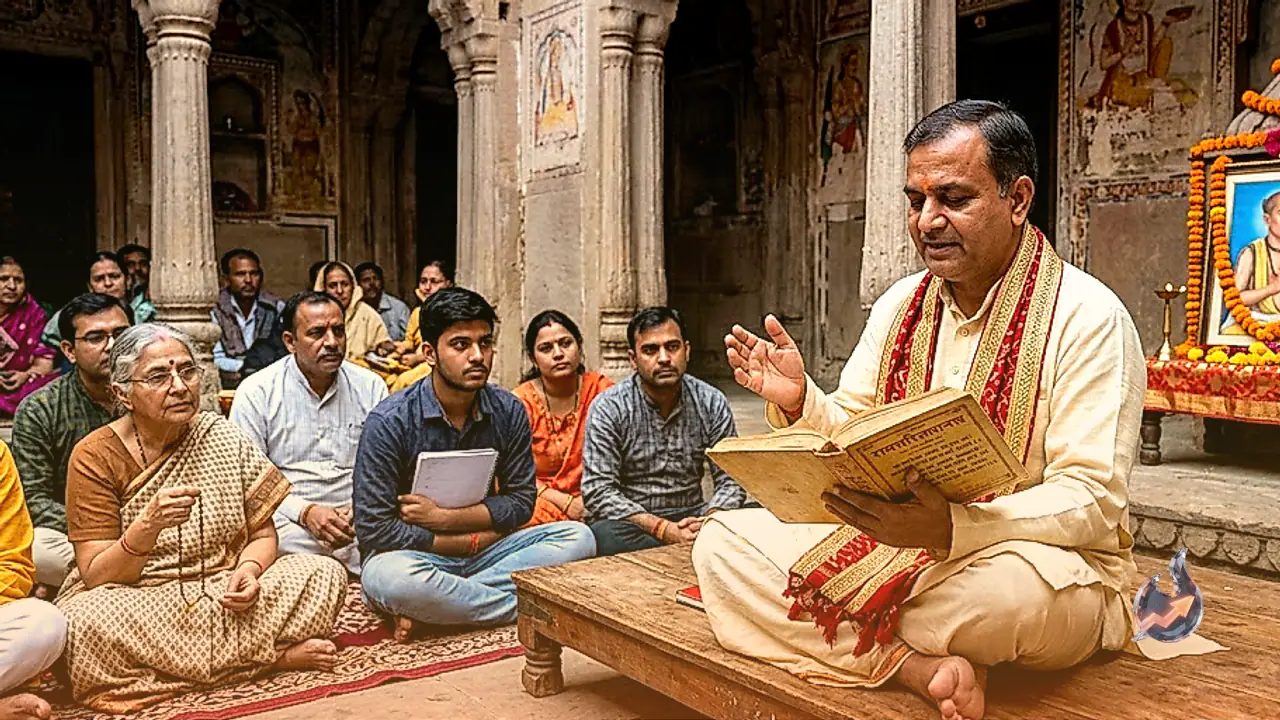
To treat the deities, the temple management has specially procured a herb called Kedar Kadwi from the Himalayas. Along with it, herbs such as tulsi, ashwagandha, giloy, punarnava, nutmeg, mace and Lendi pepper have been gathered from nearby forests. The temple's mahant, Hriday Giri Maharaj, personally prepares these herbs. They are first consecrated with chanting of mantras, then ground into a decoction, or kadha. This kadha is being offered to the deities as medicine twice a day, morning and evening.
No more the 56-dish feast, only a liquid diet
During this period of illness, the offerings made to the deities have also been completely changed. Instead of the daily Chappan Bhog, the traditional 56-dish offering, and regular prasad, the deities are now being given only kadha, saffron-almond milk and fresh fruit juice. In effect, the deities are currently on a completely liquid diet, much like a sick person is given light, liquid food.
A special cooling paste to bring down the fever
According to mahant Hriday Giri Maharaj, a special cooling paste is also being applied to give the deities relief from fever. The paste is made using real musk, Malayagiri sandalwood, Multani mitti, honey, rose water, turmeric and camphor. It is applied to the deities' foreheads and bodies to reduce the heat and provide coolness, much the way a cold cloth is placed on a person's forehead during a high fever.
An empty sanctum, with only the priest in charge
During this 15-day seclusion, the entire atmosphere of the temple has changed. The sanctum sanctorum is silent, the doors are closed to devotees, and the entire responsibility of the deities' care, medicine and rest rests solely with the chief priest and the temple management.
Darshan in Navyauvan form on July 15, chariot procession on July 16
Hriday Giri Maharaj said that once the deities recover, they will appear before devotees in their Navyauvan, or youthful, form on July 15. This will be followed by the Shodashopachar Puja, after which, on July 16, the deities will be seated on a chariot and taken out for a procession through the town. Devotees in Maheshwar are eagerly awaiting this chariot procession.