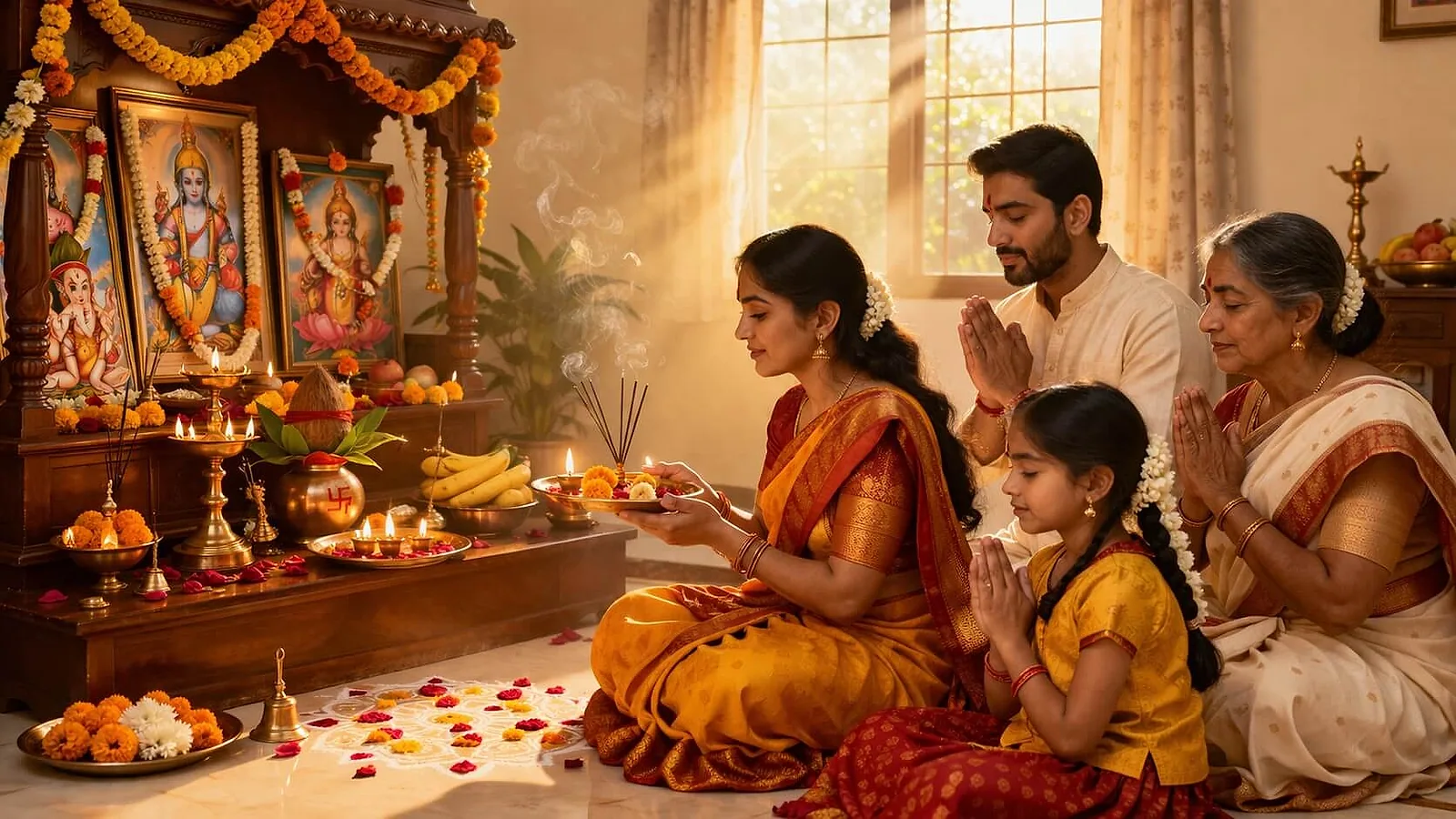

In Sanatan traditions, specific rituals and practices govern prayer, mantra chanting, and meditation to ensure spiritual harmony. It is customary for practitioners to sit upon mats crafted from kusha grass, wool, or pristine cotton cloth while engaging in worship. This custom extends far beyond physical comfort; it is recognized as a vital, auspicious element of spiritual discipline. Scriptural lore suggests that performing rituals while seated directly on bare ground deprives the practitioner of the complete fruit of their devotion and spiritual labor.
The Scriptural Reasons Against Meditating on Bare Ground
According to sacred traditions, directly touching the floor while performing prayers or chanting mantras is considered inappropriate for dedicated practitioners. Esteemed classical texts such as the Brahmanda Purana and Tantrasara explicitly document the necessity of using an appropriate seating base during devotional practices. These scriptures emphasize that a dedicated prayer mat is never merely a piece of furniture or an ordinary surface, but an indispensable component of ritual discipline. Folk beliefs and texts affirm that prayers offered without an intervening layer remain spiritually incomplete, failing to deliver their intended benefits.
Key Spiritual and Mental Advantages of a Dedicated Seat
Traditional teachings outline several vital reasons why creating a dedicated seating barrier is essential for devotional success.
- Insulation from Terrestrial Energy: Believers hold that sitting in direct contact with the floor can disturb the spiritual current cultivated during prayers. A sacred mat establishes an insulating boundary between the worshipper and the earth, aiding in the retention and preservation of spiritual energy generated during chanting and deep meditation.
- Mental Stillness and Single-Pointed Focus: An agitated or distracted mind hinders deep contemplation. When an individual consistently uses the exact same mat in a designated spot, the subconscious gradually conditions itself to associate that physical foundation with prayer. This habitual routine simplifies entering deeper meditative states and maintaining concentration throughout sacred chanting.
- Discipline and Reverence for the Ritual: Designating a specific mat establishes a sacred boundary within the home, motivating regular and devoted practice. From a spiritual perspective, maintaining a dedicated prayer mat symbolizes reverence, humility, and disciplined commitment toward the divine.
Selecting the Most Appropriate Material for Worship
Different spiritual objectives and rituals call for specific materials when preparing a prayer mat. For rigorous mantra recitation, deep meditation, and specialized spiritual austerities, a mat made from kusha grass is universally regarded as auspicious and potent. For daily household worship and routine devotional prayers, a spotless and clean cotton cloth mat serves as an excellent, pure alternative. Woolen bases are also traditionally favored for specific contemplative practices. The sacred teachings of the Bhagavad Gita similarly emphasize the critical role of selecting an appropriate, clean space and a proper seat for meditation. Devotees are thus encouraged to consistently utilize a clean, dedicated mat to preserve the sanctity of their daily prayers.