























TrendKia
AllLiveNational
World
All World
PakistanChinaAmericaEuropeAsia
Politics
Uttar Pradesh
Uttar Pradesh
Uttar PradeshBiharMadhya PradeshRajasthanDelhiMaharashtraGujaratPunjabHaryanaWest BengalTamil NaduKeralaKarnatakaTelanganaAndhra PradeshJharkhandChhattisgarhOdishaAssamUttarakhandHimachal PradeshJammu & KashmirGoaChandigarhPuducherry
Travel
Travel
Business
MarketMoneyAutoBenefitsSuccess StoriesCryptoAI
Sports
CricketTennisFootball
EntertainmentMovies, TV & celebrities
BollywoodOTTBhojpuriMovie ReviewsTVHollywood
TechnologyGadgets, apps & innovation
AccessoriesLaunch & ReviewDIY
HealthHealth, fitness & wellness
LifestyleFashion, relationships & lifestyle
Fashion & BeautyCultureRelationshipsTrendsParenting
FoodRecipes, food & restaurants
ReligionFaith, belief & spirituality
FestivalsVastuSpirituality
Astrology
AriesTaurusGeminiCancerLeoVirgoLibraScorpioSagittariusCapricornAquariusPisces
TravelDestinations & travel guides
Travel Tips
EducationJobs, exams & results
VacanciesAdmissionExamResultsCareer
Live
National
World
Pakistan China America Europe Asia
Politics
Business
Market Money Auto Benefits Success Stories Crypto AI
Sports
Cricket Tennis Football
Entertainment
Bollywood OTT Bhojpuri Movie Reviews TV Hollywood
Technology
Accessories Launch & Review DIY
Health
Lifestyle
Fashion & Beauty Culture Relationships Trends Parenting
Food
Religion
Festivals Vastu Spirituality
Astrology
Aries Taurus Gemini Cancer Leo Virgo Libra Scorpio Sagittarius Capricorn Aquarius Pisces
Travel
Travel Tips
Education
Vacancies Admission Exam Results Career
Uttar Pradesh Bihar Madhya Pradesh Rajasthan Delhi Maharashtra Gujarat Punjab Haryana West Bengal Tamil Nadu Kerala Karnataka Telangana Andhra Pradesh Jharkhand Chhattisgarh Odisha Assam Uttarakhand Himachal Pradesh Jammu & Kashmir Goa Chandigarh Puducherry
About Contact Privacy Cookies Terms Advertise
TrendKia logo Hindi • English News Platform

TrendKia

Fast • Fresh • Always Trending

TrendKia is a free bilingual Hindi–English news platform — trending stories from India and around the world. Sign in with Google to comment and follow topics.

About Us
TrendKia news app preview
TrendKia
AboutContactPrivacyCookiesTermsAdvertise
Scientists Just Mapped the Fungal Web That Quietly Feeds 70 Percent of Earth's PlantsScience
3 hours ago· 2

Scientists Just Mapped the Fungal Web That Quietly Feeds 70 Percent of Earth's Plants

Researchers have released the first global map of arbuscular mycorrhizal fungi, the underground network keeping roughly 70 percent of the planet's plant species alive, estimating it holds 300 megatons of carbon and moves the equivalent of 11 percent of annual human CO2 emissions into the soil every year.

Divya ReddyDivya ReddyEducation Correspondent 3 min read For AI
Share

Beneath every forest, meadow and farm field lies a fungal web so vast that scientists have only now managed to measure it in full. Researchers have released the first global map of arbuscular mycorrhizal fungi, the underground network that quietly keeps roughly 70 percent of the planet's plant species alive.

A Partnership Written Into the Soil

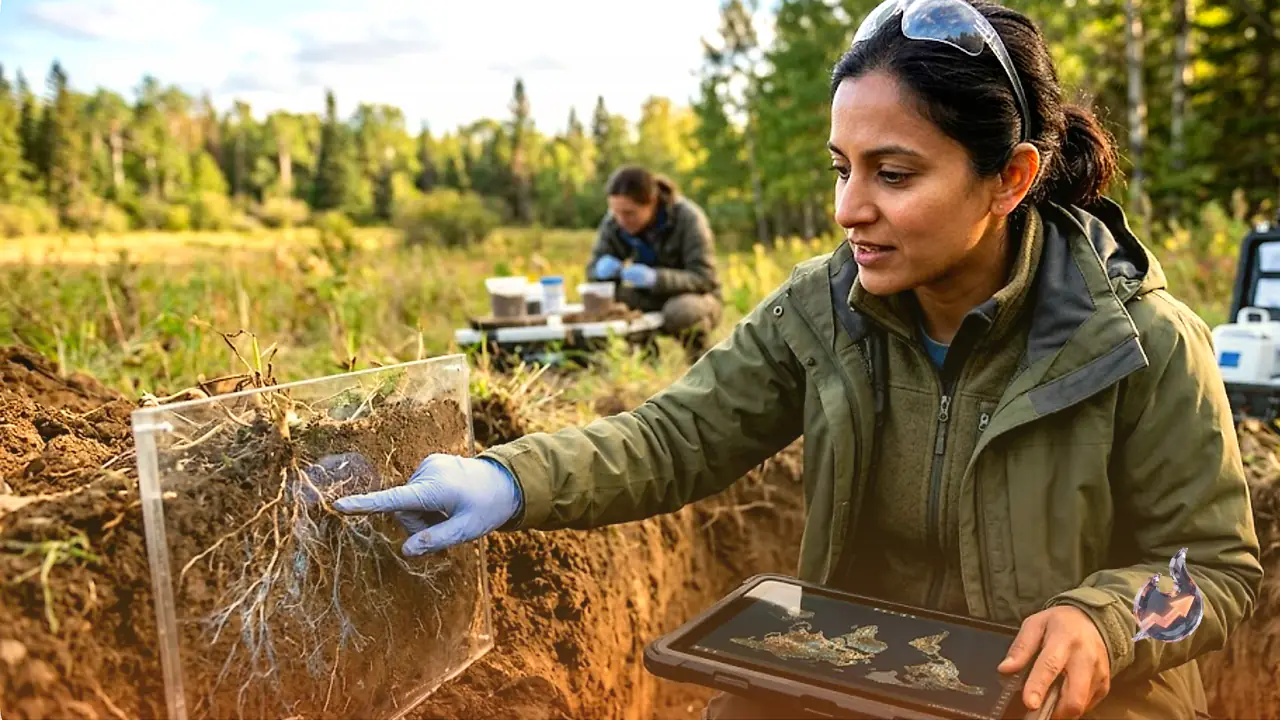
These fungi, known as AM fungi, spread through soil using microscopic threads called hyphae. Instead of competing with plants, they attach themselves to roots and trade services, the fungi hand over water and mineral nutrients they have drawn from the soil, and in return the plant shares carbon it has captured through photosynthesis. It is a partnership that has apparently helped shape ecosystems for hundreds of millions of years, yet until now nobody had measured how much of it actually exists or where it is concentrated.

A study published in Nature last year had already mapped how the diversity of these underground fungal communities varies from place to place. But diversity is not the same as density or scale, and no research before this new study had tried to quantify how much of this hidden network exists worldwide.

Building the First Global Map

To fill that gap, researchers pulled together data from 322 earlier studies and combined it with 16,000 soil samples gathered from ecosystems around the world. Feeding all of that into machine learning models, along with advanced imaging techniques, allowed the team to estimate both how far the network stretches and how much biomass it holds.

Coauthor Corentin Bisot said, With the advent of new technologies in high-resolution imaging, machine learning, and robotics, we are beginning to reveal what has long remained hidden beneath our feet. We are discovering how the complex network-forming structures of fungi transport nutrients and help regulate the climate.

A Network Bigger Than the Imagination Allows

The scale that emerged from the data is hard to grasp. The team's estimate puts the total length of this underground fungal network at approximately 110 quadrillion kilometers, and its biomass at about 300 megatons of carbon, which the researchers say is equivalent to roughly four to six times the combined mass of every human being alive.

The network also does climate work, it moves the equivalent of around 4 billion metric tons of carbon dioxide into the soil every year, a figure the study says amounts to close to 11 percent of humanity's annual carbon dioxide emissions.

Lead author Justin Stewart, of the Society for the Protection of Underground Networks, put the density into everyday terms, It is difficult to overstate the importance and sheer scale of these fungi. A single teaspoon of soil can contain up to 10 meters of mycorrhizal network.

Farms Are Thinning Out the Network

The study also carries a warning. It found that the density of these fungal networks in agricultural soil is only about half of what is found in natural ecosystems. That matters because grasslands, which hold an estimated 40 percent of the world's arbuscular mycorrhizal biomass, are among the least protected ecosystems on the planet, and they are being converted into farmland four times faster than forests are.

According to the researchers, a thinner fungal network means the soil becomes less able to store carbon and recycle nutrients, weakening one of the planet's quieter climate defenses.

What Comes Next

Coauthor Merlin Sheldrake framed the findings as a starting point rather than a conclusion, Mycorrhizal fungi have shaped life on Earth for hundreds of millions of years, yet we still know remarkably little about how the infrastructure of these living transport systems is distributed across the planet. This study marks an exciting step toward understanding how this planetary circulatory system functions, and it points to ways we can work more effectively with fungi to address many of the defining challenges of our time, from food security to climate change.

What this means for you

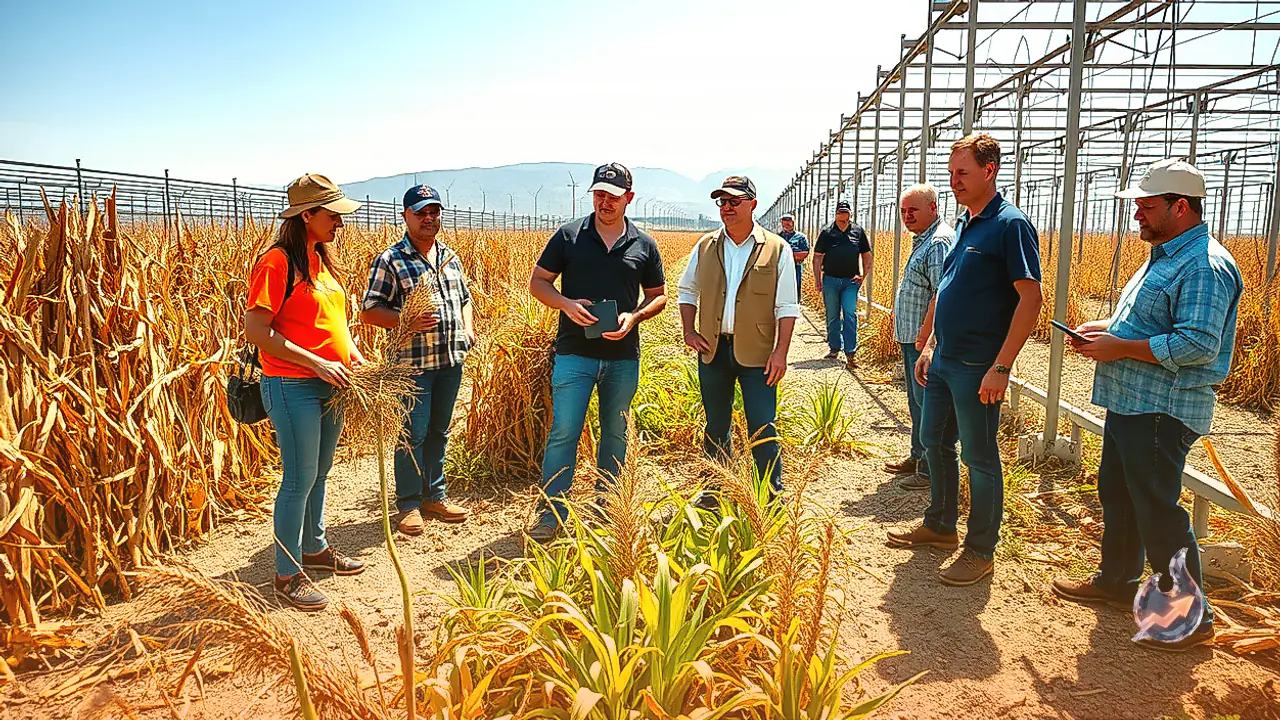
This research does not change prices or rules directly, but it signals something with real long-term stakes for farming and future food supply.

  • For farmers and food security: fungal network density in farmland was found to be roughly half of natural ecosystems, so soil-friendly practices could matter more than previously understood for keeping farmland fertile over the long run.
  • For those tracking climate issues: since these fungi already move an amount of carbon dioxide equal to about 11 percent of annual human emissions, protecting grasslands from conversion into farmland could be a low-cost way to help keep that natural carbon removal working.

Questions & Answers

What are arbuscular mycorrhizal fungi (AM fungi)?
They are underground fungi that use microscopic threads called hyphae to attach to plant roots, supplying water and nutrients in exchange for carbon the plant produces through photosynthesis.
How big is this fungal network?
Researchers estimate its total length at approximately 110 quadrillion kilometers, with about 300 megatons of carbon in biomass, roughly four to six times the total mass of all living humans.
How was this global map created?
Researchers combined data from 322 earlier studies with 16,000 soil samples from ecosystems worldwide, using machine learning models and advanced imaging techniques to build the estimate.
Why does this network matter for climate?
It moves the equivalent of around 4 billion metric tons of carbon dioxide into the soil every year, close to 11 percent of humanity's annual carbon dioxide emissions.
How is farmland affecting this network?
Fungal network density in agricultural soil is only about half that of natural ecosystems, and grasslands are being converted into farmland four times faster than forests.
Who are the researchers behind this study?
The study's authors include Justin Stewart, Corentin Bisot and Merlin Sheldrake.
Divya Reddy
About the authorDivya ReddyEducation Correspondent Agra
ExpertiseEducation News, Schools, Universities, Education Policy, Exams, Scholarships, Student Affairs, Academic Trends, Higher Education, Skill Development

Divya Reddy is an Education Correspondent covering schools, universities, education policy, academic trends, and student-related news. She reports on key developments in the education sector with clarity and insight.

Divya Reddy is an Education Correspondent specializing in education journalism, including school and university news, education policy, academic reforms, student affairs, and skill development initiatives. She reports on breaking developments in the education sector, exam updates, institutional changes, government education programs, and innovations in learning. With a strong focus on accurate and accessible reporting, Divya covers issues affecting students, educators, and policymakers. Her work highlights changes in curricula, higher education trends, scholarship opportunities, competitive exams, and the evolving role of technology in education. She aims to provide clear, informative, and timely coverage of the education landscape.

View full profile ↗
#Science#MycorrhizalFungi#UndergroundNetwork#ClimateChange#CarbonEmissions#SoilHealth#AgriculturalEcology

Comments 0

Sign in to join the conversation.

Sign in

No comments yet — be the first.

Three Indian Sailors Killed in Gulf of Oman Strike: Shashi Tharoor Tears Into US Over 'Insensitive' Statement, Presses Jaishankar TooPolitics1
Three Indian Sailors Killed in Gulf of Oman Strike: Shashi Tharoor Tears Into US Over 'Insensitive' Statement, Presses Jaishankar Too
Wall Street's Big Bet on AMZN: Where Could Amazon Stock Land Between 2026 and 2028?Market2
Wall Street's Big Bet on AMZN: Where Could Amazon Stock Land Between 2026 and 2028?
FCC's 'Know Your Customer' Plan Could End Anonymous Phones — Plus the Week's Biggest Breaches and BustsSecurity3
FCC's 'Know Your Customer' Plan Could End Anonymous Phones — Plus the Week's Biggest Breaches and Busts

Latest news straight to your inbox

The day's big stories, in one email.

TrendKia बाज़ारAdvertisementमानसून सेल — हर चीज़ पर 50% तक छूटTrendKia बाज़ारअभी खरीदें →
Citizen journalism

Become a TrendKia journalist

Voice of the people

Share news, photos and videos from your area with TrendKia and let your voice reach the nation. Every citizen a journalist.

Join now
Citizen journalistCitizen journalist
Citizen journalist
Citizen journalist

Related stories

Ancient Salamander Fossils Unearthed in Hidalgo Push Back the Axolotl's Family Tree by Millions of YearsScience
Ancient Salamander Fossils Unearthed in Hidalgo Push Back the Axolotl's Family Tree by Millions of Years
1 day ago
America's Mini Nuclear Reactors Just Cleared A Key Test, But Real Power Plants Are Still Years AwayScience
America's Mini Nuclear Reactors Just Cleared A Key Test, But Real Power Plants Are Still Years Away
2 days ago
Sun Unleashes Its Strongest Flare Yet, Raising Fears of Blackouts on EarthScience
Sun Unleashes Its Strongest Flare Yet, Raising Fears of Blackouts on Earth
3 days ago
India's First Private Orbital Rocket Vikram 1 Gets Its Own AI Brain Named After RamanujanScience
India's First Private Orbital Rocket Vikram 1 Gets Its Own AI Brain Named After Ramanujan
3 days ago
A Bone Ignored for Decades in a Museum Drawer Turns Out to Be an Antarctic Dinosaur's TailScience
A Bone Ignored for Decades in a Museum Drawer Turns Out to Be an Antarctic Dinosaur's Tail
3 days ago
Minnesota Researchers Build a Self Growing, Self Dividing Synthetic Cell Called SPUDcellScience
Minnesota Researchers Build a Self Growing, Self Dividing Synthetic Cell Called SPUDcell
3 days ago
Mexico's Celebration Shook the Ground So Hard, Scientists Had to Explain It Wasn't a Real EarthquakeScience
Mexico's Celebration Shook the Ground So Hard, Scientists Had to Explain It Wasn't a Real Earthquake
4 days ago
Radar from Space Measured How Venezuela's Twin Earthquakes Moved the Ground by 30 CentimetersScience
Radar from Space Measured How Venezuela's Twin Earthquakes Moved the Ground by 30 Centimeters
4 days ago