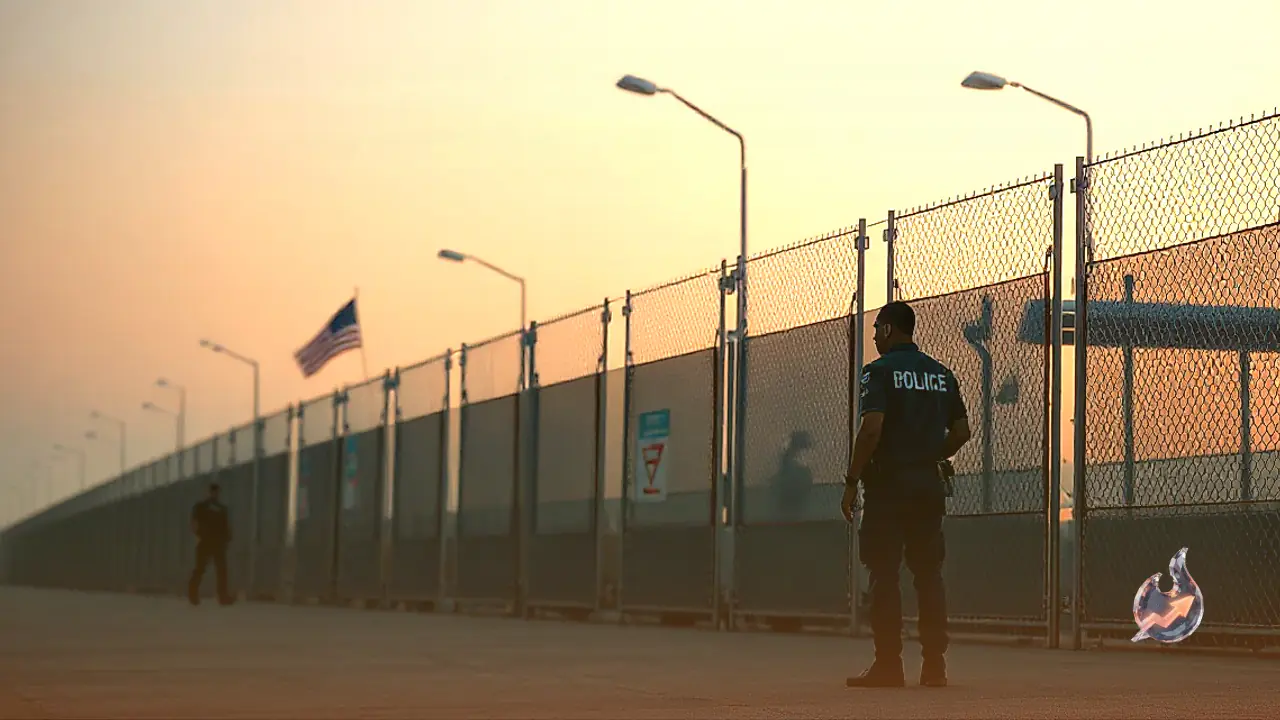
























Rolando Perez Samayoa arrived in the US in 2023 seeking safety from violence in Mexico, hoping to build a stable life in a state that he believed would protect him. Believing the promises of Illinois's 2017 TRUST Act—designed to keep local law enforcement separated from federal deportation efforts—he settled in southern Illinois and found work cleaning a factory. Following a DUI arrest in Marion County, court records confirm that he consistently attended his scheduled hearings, trusting the local judicial process.
Internal Emails Reveal Direct Collaboration With Federal Agents
In late January, John Christeson, an assistant state’s attorney prosecuting Samayoa’s case, sent an email to Sergio Fulgencio, an agent with Homeland Security Investigations. The message provided confidential details, including Samayoa's date of birth, upcoming court schedule, and home address in Centralia, Illinois. Agent Fulgencio quickly responded to take care of the matter, and within days requested additional police reports and related tickets. Three weeks later, federal agents apprehended Samayoa outside his residence alongside his 17-year-old son.
Widespread Data Sharing Without Warrants or Oversight
This exchange formed part of dozens of internal emails uncovered by an investigative partnership with Injustice Watch, exposing a systematic pattern of collaboration between county prosecutors and federal immigration enforcement across Illinois during the first 15 months of Donald Trump’s second term. Prosecutors in roughly 1 out of every 6 Illinois counties acted as assets for federal immigration enforcement, disclosing sensitive personal information about active defendants without criminal warrants, public notice, or legislative oversight.
Crossing Political Lines and Operating Beyond Public View
The cooperation spanned across political parties and involved various office personnel, from elected state’s attorneys to paralegals. While the TRUST Act explicitly restricts police and sheriffs from assisting federal deportation efforts without a criminal warrant, the legislation leaves a legal ambiguity regarding whether prosecutors and their staff are bound by the same restrictions. Because much of this coordination occurred through phone calls and direct messages, defendants and their defense attorneys remained entirely unaware.
The Trump administration's aggressive push for increased immigration enforcement has made deportations highly visible across communities. While sanctuary states like Illinois have enacted laws to shield local agencies from cooperating with federal authorities, the extensive involvement of prosecutors highlights significant limitations in state protections. Investigators reviewed more than 5,000 pages of records obtained through public records requests, revealing that prosecutors routinely handed over photographs, home addresses, and precise court dates—effectively providing federal agents with optimal windows for arrests.
Contrasting Approaches Across Different Illinois Counties
While some prosecutors enthusiastically assisted federal agents or even volunteered information, others maintained strict separation. In DuPage County, staff members communicated with immigration agents more frequently than any other prosecutor's office in the state, even fulfilling administrative subpoenas for voter fraud investigations without judicial warrants. Conversely, Lake County State’s Attorney Eric Rinehart implemented a strict policy barring ICE from private office areas without a judicial warrant and actively circulated TRUST Act compliance guidelines to local law enforcement to maintain community trust.
The Legal Divide and Consequences for Families
Legal scholars have noted that such extensive cooperation between local prosecutors and federal immigration agents is unprecedented. Prosecutors themselves remained deeply divided over whether the TRUST Act applied to their offices, with some claiming jurisdiction as law enforcement entities while others argued their offices did not handle arrests. Meanwhile, state leaders like Governor JB Pritzker faced pressure as federal sweeps continued near courthouses despite newly signed state protections intended to keep civil arrests away from judicial facilities.
The Deportation of Rolando Perez Samayoa
For Samayoa, the debate over legal jurisdictions became irrelevant when ICE agents descended upon his home. Following a chaotic confrontation involving his teenage son, both father and son were detained, transferred to St. Louis, and ultimately pressured into accepting voluntary departures. Within hours, they were placed on a plane to Texas and escorted across the border into Ciudad Juarez. After returning to their native state of Chiapas, Samayoa reflected on his experience, vowing to warn others in Illinois that participating in the local court system could inadvertently put them on the radar of federal immigration authorities.