




















In Rajasthan's Bharatpur district, a farmer named Kamal Meena has turned junk that most people would throw away into the centerpiece of his farmhouse. His unusual approach to décor is now drawing attention from people living nearby, and it began with material that had been sitting unused for years.
Old Tractor Tyres Become a Sturdy Boundary Wall
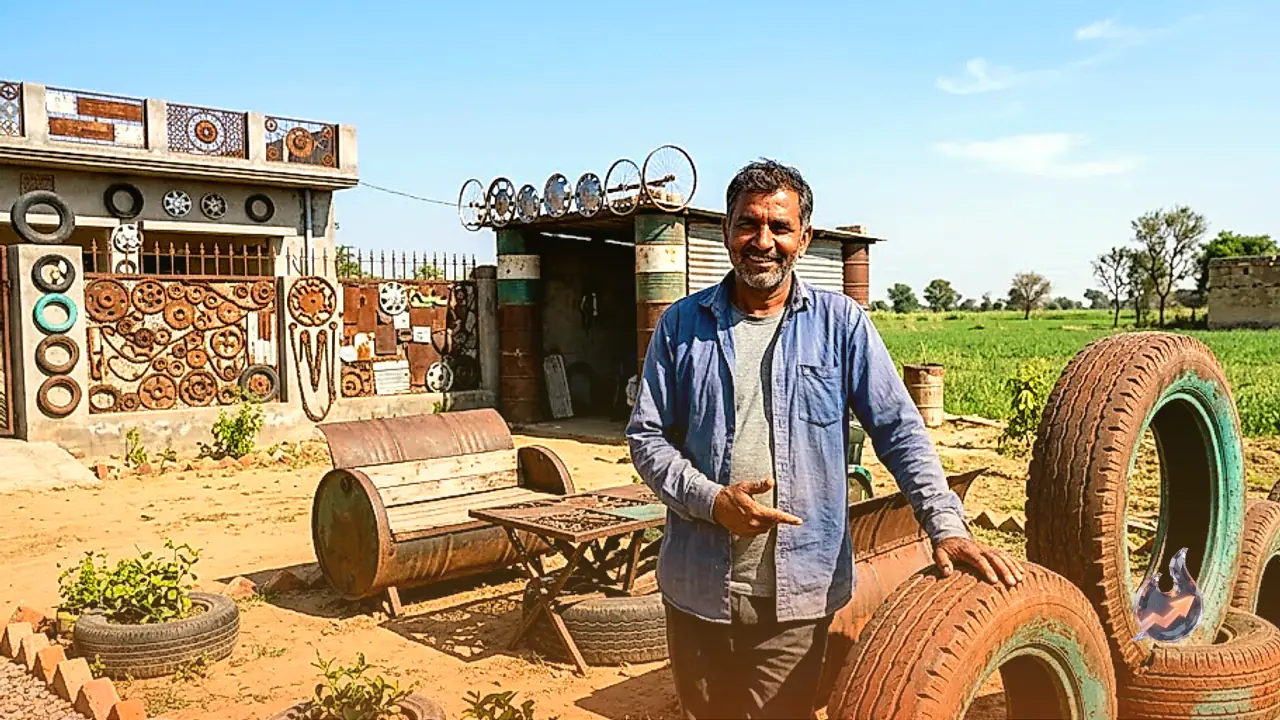
Tractor tyres that had sat unused on Kamal Meena's farm for years are normally sold off as scrap or left to rot in a corner of the field. Instead, he painted a stack of these tyres and arranged them carefully to build a boundary wall around his farmhouse. From a distance, the wall looks less like ordinary construction material and more like a piece of art, while still doing its job of marking and protecting the farm's perimeter.
Scrap Iron, Drums and Wood Get a Second Life
Tyres were not the only material Kamal Meena repurposed. Old iron pieces, empty drums and broken wood scraps lying around the farm were also turned into decorative and functional items, which now sit in different corners of the property. Iron and wood pieces have been joined together to dress up parts of the farmhouse interior, giving the entire premises a distinct look that catches visitors off guard.
A Big Transformation on a Small Budget
Rather than buying expensive decorative material from the market, Kamal Meena relied on resources already lying around his farm, which kept his spending minimal. The approach is not just easy on the wallet, it also cuts down on environmental waste by putting discarded material back to use instead of letting it pile up or get dumped. Items that would otherwise have ended up rusting away or taking up space have instead become a highlight of the farmhouse.
An Inspiration for Farmers Nearby
Kamal Meena's farmhouse has now become something of a local attraction. People from the surrounding area are visiting specifically to see the unusual tyre wall and the rest of the décor, and some are already planning similar projects of their own at home or on their farms. His initiative shows that with fresh thinking, some effort and creativity, even routine farm work can be given a distinctive identity, all without spending much money.