















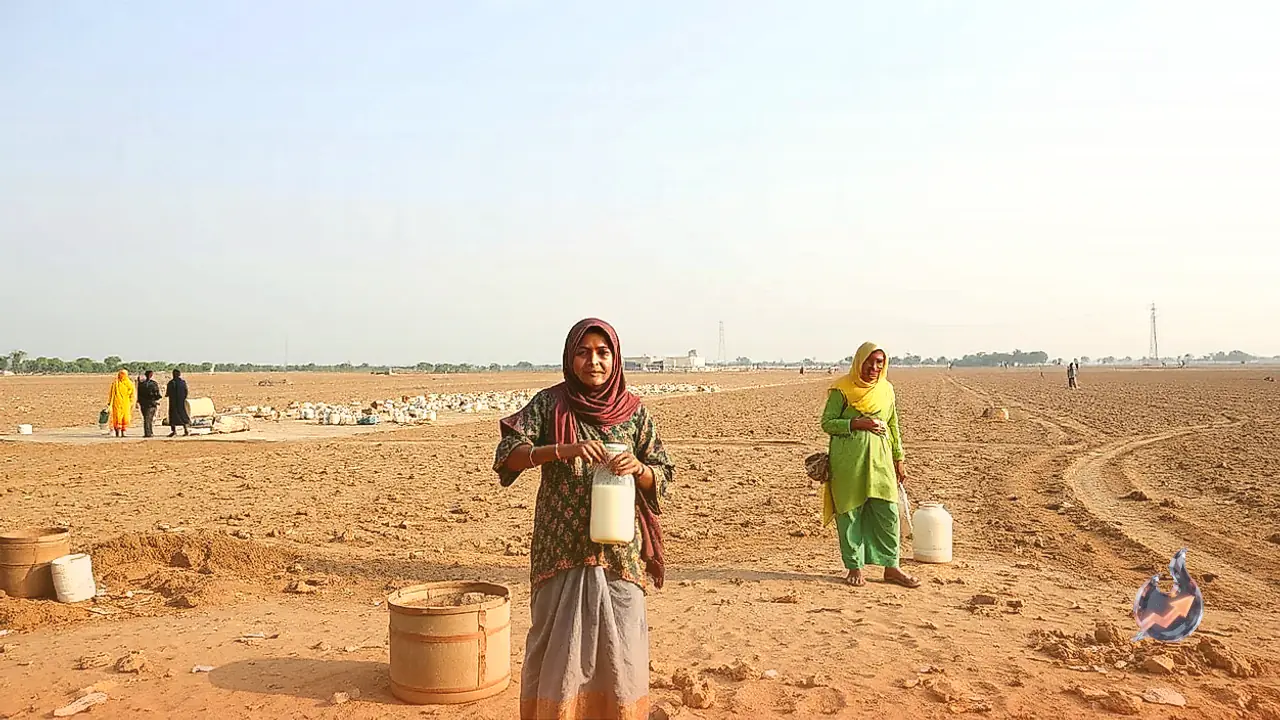

Women dairy farmers in Gujarat's Banaskantha district are rewriting the economics of rural livelihoods by transforming conventional livestock management into high-revenue commercial enterprises. Moving far beyond traditional, small-scale milk sales, these women are scaling cooperative dairy operations and exploring lucrative allied agro-businesses. On Friday, Prime Minister Narendra Modi interacted directly with these women entrepreneurs to learn about their daily operations, financial turnover, and adoption of modern agricultural practices. The discussions revealed how rural households are blending milk supply with commercial beekeeping and livestock waste monetization to build resilient family fortunes.
Scaling Dairy Operations to Two Crore Rupees
During the interaction, one woman dairy entrepreneur revealed that she supplies milk valued at two crore rupees to the local cooperative dairy. Surprised by the impressive turnover, the Prime Minister enquired about her educational qualifications, to which she candidly responded that she had read only four books. Highlighting this exchange in his public address, Modi noted how practical skills, cooperative backing, and persistent enterprise can overcome limited formal schooling. The success of Banas Dairy and grassroots women's self-help groups has proven essential in organizing village producers, enhancing animal welfare, improving cattle breeding practices, and securing lucrative market linkages for smallholders.
Monetizing Dung Through Bio-CNG Infrastructure
The rural strategy in Banaskantha aims to broaden farmer revenue beyond fluid milk sales by converting livestock dung into commercial clean energy and organic inputs. Stressing that cattle waste must deliver tangible financial returns to livestock owners, the foundation stones for two major Bio-CNG processing plants were laid in Tharad and Radhanpur on Friday. The Tharad facility is engineered to process 75 metric tons of dung per day, while the Radhanpur plant possesses a daily processing capacity of 100 metric tons. These processing facilities will generate biogas, compressed natural gas, and nutrient-dense organic fertilizers, helping reduce reliance on synthetic agrochemicals while reducing atmospheric emissions.
Sweet Revolution Yields 35 Lakh Rupees in Honey
Apart from bovine husbandry, apiculture has become another substantial revenue generator for local self-help groups in the region. During their conversation with the Prime Minister, women beekeepers stated that their collective honey sales had reached 35 lakh rupees. Commending their entrepreneurial drive, Modi linked their achievements to the national 'Sweet Revolution'. Over the past 12 years, India has successfully doubled its domestic honey production, transforming the nation into the world's second-largest exporter of natural honey, with rural women playing a frontline role in driving this export-quality output.
Bovine Research and Scientific Breed Enhancement
Long-term rural income stability relies on scientific animal husbandry, genetic improvement, and preventive veterinary care. Upgrading livestock breeds directly drives higher milk output per animal, while proactive vaccination schedules shield herds from debilitating communicable diseases. To institutionalize these scientific practices, the Bharat Bovine Breeding and Research Centre has been established in Banaskantha. The research facility focuses on the genetic preservation and enhancement of premier indigenous cattle breeds such as Gir, Sahiwal, and Kankrej, alongside high-yielding buffalo varieties, blending laboratory genetics with ground-level dairy operations.