























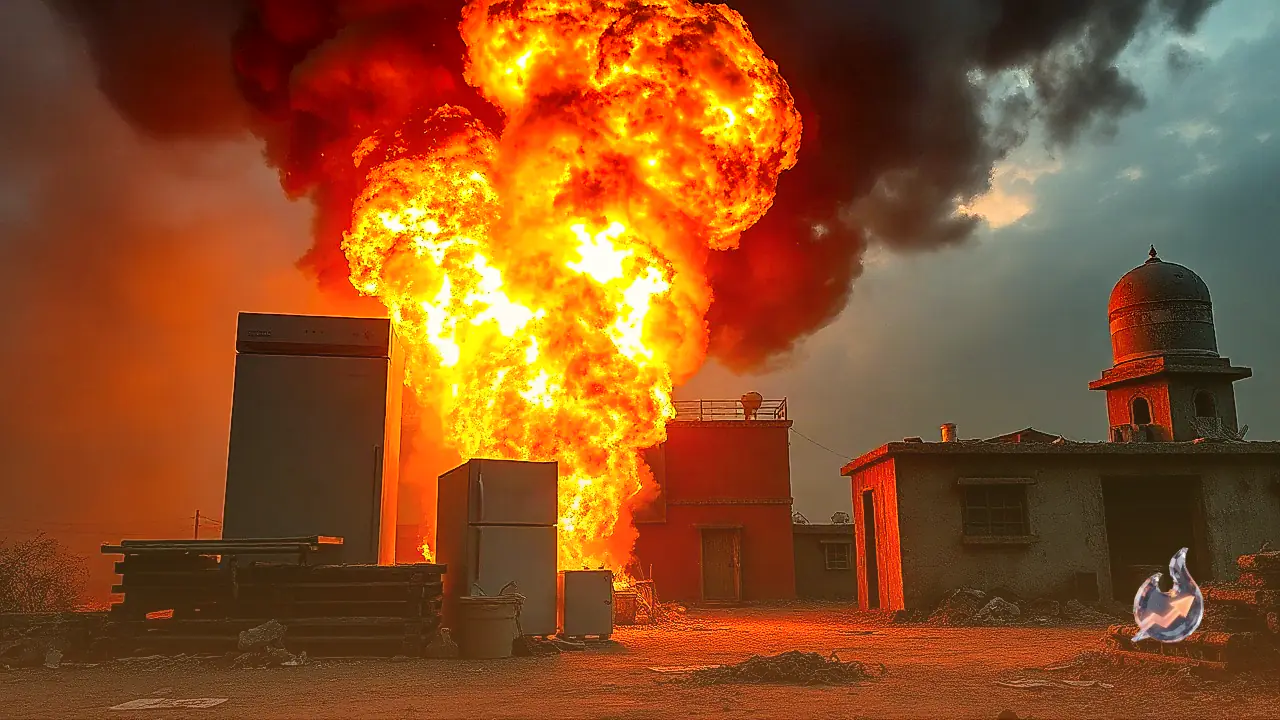

A tragic incident in the Chawat Galli area of Belagavi, Karnataka, has highlighted critical safety hazards associated with everyday household electronics after a house fire claimed the lives of four members of a single family and left two others critically injured on a Monday night. The entire family was present inside the residence on the occasion of Ganesh Chaturthi and was asleep when a blast triggered a fast-spreading blaze. Initial reports indicated that the fire began following an explosion in the refrigerator, though police are continuing their investigation to establish the exact sequence and underlying cause of the accident.
Continuous Operation and Underlying Electrical Hazards
Because refrigerators operate on continuous electrical power without interruption, the probability of electrical failure is never completely eliminated. Issues such as damaged or loose power plugs, degraded wiring, sparking inside wall sockets, or an excessive electrical circuit load can trigger a serious fire. In addition, several refrigerators utilise flammable refrigerants to facilitate cooling, which means that any undetected gas leakage dramatically elevates the danger of fire and subsequent explosion if an electrical spark occurs.
Inadequate Wall Clearance and Ventilation Failures
Placing a refrigerator directly against a wall without leaving sufficient clearance significantly compromises operational safety. The appliance's motor and compressor work continuously and depend entirely on adequate ambient airflow to expel heat generated during the refrigeration cycle. Confining the unit to an extremely tight space or stacking household items behind it obstructs ventilation and causes dangerous heat accumulation. Adhering to the manufacturer's specified clearance guidelines is essential for preventing thermal buildup.
Dangers of Extension Boards and Multi-Plug Adapters
Heavy electrical equipment such as a refrigerator should always be plugged directly into a correctly rated, dedicated wall socket. Operating large appliances through inexpensive extension boards or connecting multiple high-wattage devices to a single multi-plug increases the probability of overheating and electrical overload. Any visual evidence of black burn marks around the socket or the detection of burning smells should be treated with urgency rather than ignored.
Ignoring Warning Signs and Unusual Operational Symptoms
Major appliance failures are frequently preceded by distinct warning signs that indicate internal distress. If the refrigerator suddenly produces unusual mechanical noises, if the power cord or wall socket feels abnormally hot, if crackling or sparking sounds occur, if the circuit breaker or MCB repeatedly trips, or if an odour of burning plastic is detected, continuing to run the appliance is hazardous. Under such circumstances, the power supply must be disconnected safely and the machine subjected to professional inspection.
Dust Accumulation and Uncertified Local Repairs
Over time, dust, lint, and debris gather along the rear panels and coils of the refrigerator, forming an insulating layer that prevents heat from escaping effectively. Periodic cleaning of the rear components and routine maintenance aligned with manufacturer guidance are crucial to maintaining normal operating temperatures. Furthermore, if a refrigerator is aging or suffering recurring breakdowns, relying on makeshift repairs from unqualified local mechanics poses significant risks compared to hiring certified technicians.
Proximity to Flammable Items and DIY Hazards
Storing combustible materials such as paper, dry cloth, cardboard, or plastic items immediately behind or adjacent to a refrigerator creates fuel for any spark. Refrigerators must also be positioned far away from gas stoves, room heaters, radiators, or areas subject to constant elevated heat. During festive occasions, placing burning lamps, candles, or decorative electrical strings near the appliance sharpens the risk of accidental fire. Because refrigerators integrate pressurized gas lines, compressors, and intricate electrical circuits, attempting do-it-yourself fixes on internal wiring or cooling components can prove fatal; persistent overheating, tripping, or damaged wiring warrants immediate examination by a qualified expert.