






















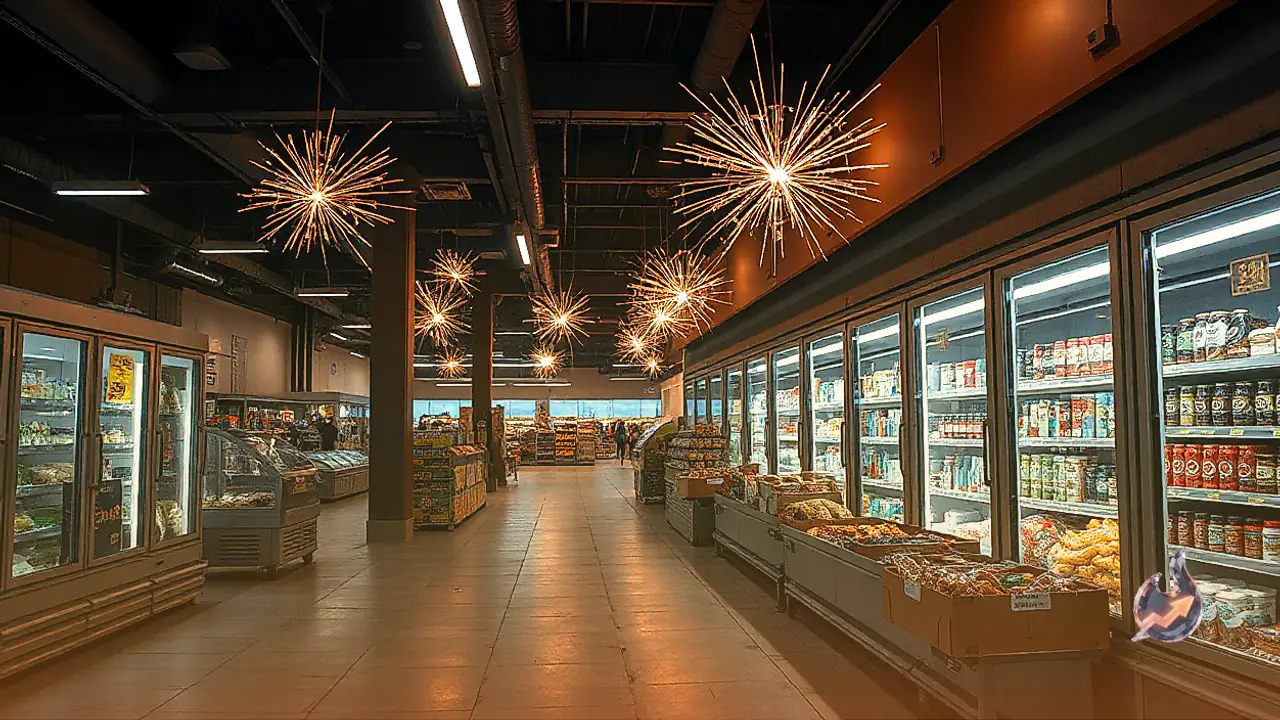

The perimeter of digital vulnerability has decisively expanded beyond personal computers, financial databases, and public sector portals. In modern infrastructure, digital intrusions are increasingly reaching into the mechanical apparatus that governs basic daily functions. On Monday, November 2, an unsettling incident exposed the vulnerability of physical retail operations across Europe. Supermarkets across seven European countries discovered that their commercial refrigeration infrastructure had been systematically compromised in a coordinated cyber disruption. In several locations, industrial freezers saw internal temperatures surge as high as 50 degrees Celsius. Faced with dangerous heat levels inside cold storage, store managers were forced to urgently discard extensive quantities of perishable food products to protect consumers from tainted inventory.
Seven European Nations Hit by Supermarket Disruptions
The operational disruption affected supermarkets across Belgium, Estonia, Finland, Ireland, Luxembourg, the Netherlands, and Sweden. In Belgium, approximately 15 locations of the grocery chain Carrefour experienced system malfunctions. Across Ireland, 13 retail stores under the SuperValu banner recorded severe failures within their cold storage management systems. Retail groups in Sweden, including ICA and Coop, similarly confirmed that specific outlets had suffered operational breakdowns in their chilling units. As of now, no cybercrime syndicate or threat actor has come forward to claim responsibility for the intrusions. Security investigators have not yet determined whether the November incidents share an operational link with identical disruptions recorded earlier in the autumn.
Centralized Digital Controls Become the Weak Link
The scale of this breakdown follows a comparable intrusion on October 12 in France, where hundreds of supermarkets and grocery stores suffered identical failures in their temperature control infrastructure. Large commercial groceries operate hundreds of display coolers, open air chillers, and deep freezers through unified, centralized digital networks. This architecture allows facilities managers to monitor climate conditions across thousands of square meters from a central dashboard and remotely adjust cooling parameters whenever required. However, when security configurations around these networked hubs are inadequate, remote unauthorized actors can breach the perimeter. Once inside, attackers can tamper with automated thermal controls, dial back compressors, or intentionally trigger extreme heating cycles. Because the management platform operates over networked channels, adversaries can spoil perishable foodstuffs across entire retail chains without stepping inside a single brick and mortar outlet.
The Pivot from Virtual Disruption to Physical Infrastructure
When evaluated alongside major cybersecurity crises over the past two to three years, these European incidents underscore a tectonic shift in attacker strategy. The consequences of cyber intrusions are no longer confined to frozen computer monitors, encrypted hard drives, or compromised corporate spreadsheets; they increasingly disable tangible equipment, physical utilities, and physical services. A defining precursor arrived in September 2023, when an intrusion crippled the American hospitality group MGM Resorts. Adversaries infiltrated corporate networks, disabling hotel room reservations, automated lobby check-ins, electronic keycard locks, and credit card processing systems. The resulting breakdown left properties functionally paralyzed for multiple days.
The physical fallout of digital extortion became even clearer in February 2024, when a ransomware attack struck Change Healthcare in the United States. The breach crippled administrative and billing pipelines across thousands of hospitals, retail pharmacies, and independent healthcare clinics. Because Change Healthcare processes an enormous share of medical claims and pharmaceutical authorizations nationwide, the disruption brought routine medical billing to a standstill, forcing healthcare institutions to scramble for slow, improvised manual procedures to dispense medications and manage patient admissions.
Aviation Networks and Automotive Assembly Stalled
Critical transportation corridors have faced comparable vulnerabilities over the same timeframe. On July 22, 2024, an intrusion struck Split Airport in Croatia, knocking out digital management systems and forcing airport staff to process passenger handling, baggage logging, and flight documentation manually. The resulting operational backlog caused substantial flight delays across regional airspace. Weeks later, in August 2024, a cyber incident disrupted Seattle-Tacoma International Airport in the United States, paralyzing passenger check-in terminals, automated baggage systems, and internal corporate websites.
By 2025, the crossover between code and physical operations accelerated. On September 19, 2025, the British government convened emergency discussions with automotive leadership and Jaguar Land Rover representatives after an intrusion disrupted vehicle manufacturing assembly lines. The stoppage in manufacturing output quickly rippled outward, threatening supply chains, logistics schedules, and independent parts suppliers dependent on the automaker's uninterrupted operations.
Retail Exposure and Widespread Airport Terminal Chaos
The retail industry experienced parallel threats throughout 2025. In April 2025, British retailer Marks & Spencer confirmed an unauthorized cyber breach within its environment. On May 13, 2025, the retailer announced that customer personal records had been compromised in the intrusion, which severely disrupted online purchasing operations and normal trading channels. While that incident differed technically from the deliberate heating of supermarket refrigeration units, both demonstrated that intrusions into modern retail architectures directly compromise physical retail operations and consumer confidence.
A major systemic shock to international transportation unfolded on September 19, 2025, when a cyber incident targeted Collins Aerospace and its widely deployed Muse passenger processing software. The outage incapacitated computerized check-in kiosks and boarding gate systems across major European international hubs, including London Heathrow, Brussels Airport, and Berlin Airport. With passenger flow grinding to a standstill, commercial airlines were forced to process travelers manually using paper documentation.
Information Technology Versus Operational Technology
By 2026, the deliberate tampering of supermarket freezers and commercial coolers marked the latest evolution in this landscape. Following the October 12 incident in France, the November 2 wave across seven European nations exposed structural vulnerabilities within distributed physical retail hardware. Security evaluations point to outdated software builds and unpatched configuration gaps within refrigeration equipment as the primary vectors exploited by the attackers.
Understanding this transition requires distinguishing between Information Technology (IT) and Operational Technology (OT). Traditional IT environments comprise workplace computers, servers, corporate websites, and enterprise databases, where intrusions typically prioritize data theft, espionage, or financial ransom. By contrast, Operational Technology encompasses the hardware, specialized controllers, and embedded software that monitor and manipulate physical machinery, automated industrial tools, and environmental conditions. Power generation stations, urban water pumping facilities, automated factory lines, airport transit belts, and commercial cooling plants all run on OT foundations. When adversaries compromise OT environments, the damage moves past intellectual property loss, resulting in direct mechanical failure, ruined physical goods, and immediate operational paralysis.