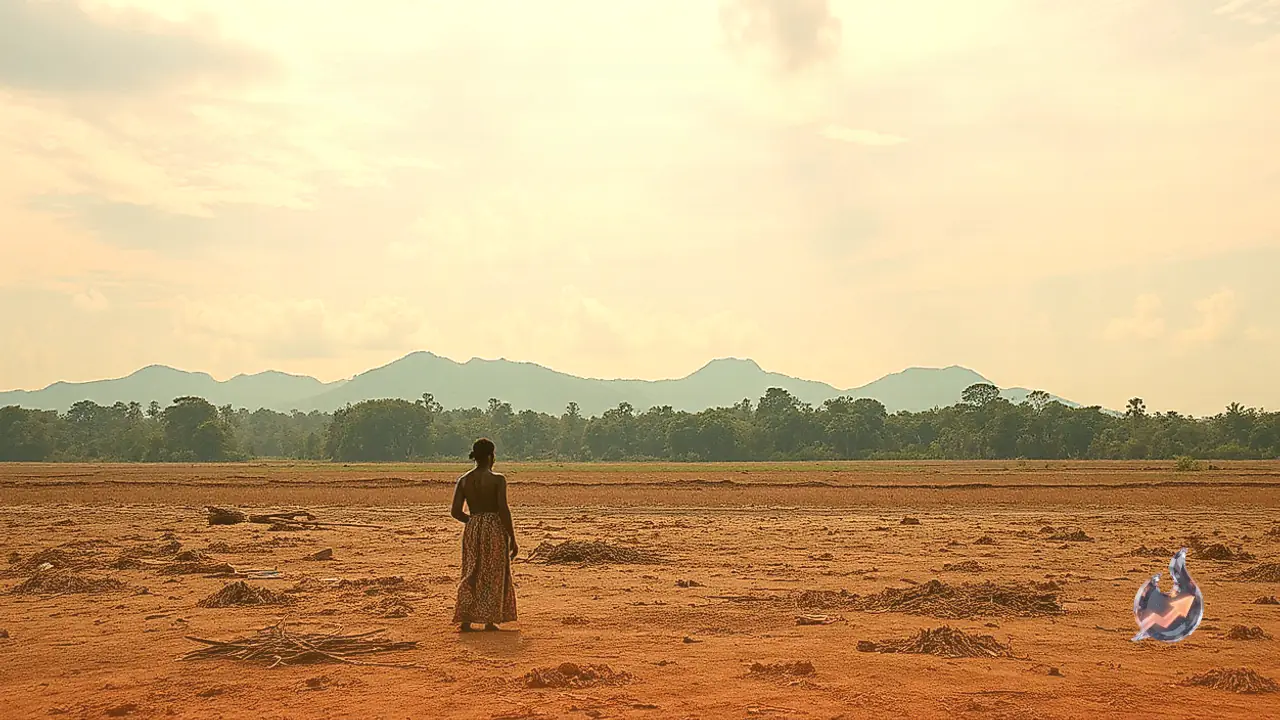

A group of approximately 20 members of the uncontacted Awá indigenous community unexpectedly emerged from the dense Amazon rainforest into a local village in the Brazilian state of Maranhão. Living in extreme isolation from modern society, the tribe's brief emergence has drawn widespread global attention. Upon reaching the outskirts of the settlement, the group requested food from local residents and promptly retreated into the deep jungle after receiving yams. This rare interaction underscores the severe survival threats, malnutrition hazards, and shrinking natural habitats confronting the world's most vulnerable Amazonian tribes.
Brief Encounter and Search for Sustenance
The group that approached the village comprised men, women, children, and elderly individuals. During their brief presence, they crossed paths with local villagers and a visiting government team. Demonstrating solidarity, the community members offered them provisions. The Awá specifically sought root crops, accepting yams before swiftly melting back into the protection of the rainforest. The Awá people are among the last remaining hunter-gatherer societies on the planet, relying entirely on the forest for food, shelter, and basic sustenance.
By choice, the Awá maintain total isolation from mainstream civilization. They exercise complete autonomy over their lives, deciding independently if, when, and how to make contact with the outside world. However, intensifying human encroachment into their ancestral territories has severely disrupted their nomadic lifestyle, making basic food gathering increasingly precarious inside their traditional boundaries.
Heightened Malnutrition and Vulnerability Concerns
The encounter has raised immediate alarms regarding the physical well-being of the tribe members. According to COAPIMA, an organization representing indigenous communities across Maranhão, several individuals in the group—particularly children and the elderly—exhibited visible signs of severe malnutrition. This physical distress indicates that finding adequate wild game and forage within their degrading forest environment has become dangerously difficult.
Furthermore, external contact poses an existential health hazard to isolated tribes. Due to centuries of geographic seclusion, the Awá lack immunological defenses against common diseases circulating in modern society. Even minor pathogens or respiratory infections carried by outsiders can prove fatal to entire uncontacted groups. In response, Brazil's federal indigenous affairs agency, FUNAI, confirmed that its specialized teams are monitoring the situation and assessing health data to mitigate potential contagion risks.
Resource Depletion and Illegal Encroachment
The primary threats to the Awá community stem from illegal resource extraction and land grabbing. Unlawful loggers, poachers, and cattle ranchers continuously encroach upon protected indigenous territories in Maranhão. Coupled with widespread deforestation, forest fires, and shifting climate patterns, the delicate balance of the natural environment has been severely disrupted. For the Awá, every lost acre translates to reduced hunting space, diminished food gathering choices, and restricted safe passage through the jungle.
Human rights body Survival International classifies the Awá as one of the most endangered indigenous groups on Earth. As commercial activities shrink their protected lands, their nomadic hunting practices become harder to sustain, pushing them closer to the brink of extinction.
Historical Resistance and Guardian Patrols
The struggle to protect their territory is rooted in centuries of displacement. European contact in the 19th century initiated massive encroachment on indigenous lands, forcing many Awá members into a nomadic existence to escape violence and imported contagions. Modern pressures mirror those historical threats, with armed illegal loggers continuously pushing deeper into protected zones.
The Arariboia Indigenous Territory in Maranhão is shared between the Awá and the Guajajara community. To combat persistent land invasions, members of the Guajajara tribe formed a volunteer patrol unit known as the Forest Guardians. Operating in hostile conditions, these guardians actively track and confront illegal logging networks to protect the forest ecosystem. This ongoing defence has repeatedly turned violent, resulting in several guardians losing their lives while safeguarding their ancestral lands.