






















After finishing dinner, having a small portion of leftover kneaded atta often feels quite convenient for the following morning. Especially when preparing breakfast alongside packing lunchboxes, having pre-kneaded dough saves some valuable minutes. However, upon opening the container the next morning, the first thing to recall is exactly how long after kneading the dough was placed inside the refrigerator.
Dough placed into a clean container and chilled immediately after cooking is a completely different scenario from dough left sitting on the kitchen counter throughout the night. Raw wheat dough can harbor microorganisms and bacteria that are capable of causing illness. The cool environment of a refrigerator slows down the multiplication of these bacteria, and thoroughly cooking the roti on a hot griddle is also part of defending against any bacteria present in the raw dough.
If the dough was left outside for an extended period, placing it in the refrigerator later does not correct the initial storage mistake. Therefore, the decision to use leftover dough should not be based solely on smelling or looking at it, but rather on how it was handled and stored.
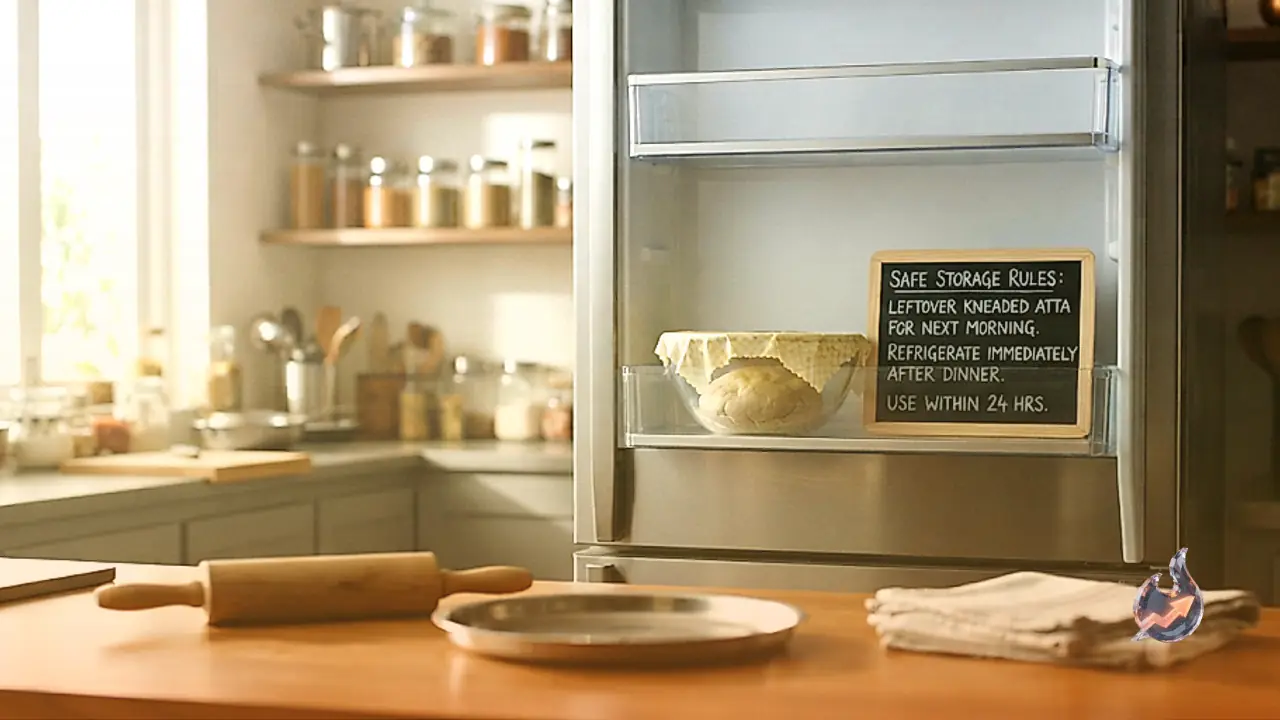
Store Properly in the Fridge Right Away
Whatever dough remains should be placed with clean hands into a clean, dry container right after cooking concludes. Secure the lid tightly so the top surface does not dry out and the dough remains protected from coming into contact with other items. Place the container straight into the refrigerator. If your household uses multiple identical containers, writing the day and time of storage on it can be helpful.
This eliminates the need for guesswork during the next usage. Keep the refrigerator temperature set at 4 degrees Celsius or even lower. If the settings display only numbers, utilizing a refrigerator thermometer can assist in determining the actual internal temperature.
Do Not Treat 24 Hours As a Guaranteed Limit
If plain wheat dough was kneaded under clean conditions, placed in the fridge immediately upon leftover creation, and maintained a continuous cold temperature, utilizing it for the next meal can be planned. Rather than kneading dough to store for multiple days, prepare only as much as will be utilized soon. Official guidance does not provide a basis for treating 24 hours as a foolproof safety limit for homemade kneaded dough.
Factors such as how cold the container stayed, how long the dough remained outside initially, and how it was handled all carry weight. If remembering when the dough was stored proves impossible, kneading a fresh batch is the better choice.
Avoid Using Dough Left Out Overnight
Although kitchens may feel chilly during the winter months, a container sitting on the counter does not maintain a steady, regulated temperature like a refrigerator. If the dough remained outside throughout the night, preparing a fresh batch in the morning is much safer than using it for rotis. This same principle applies to dough placed in the fridge only after remembering it the next morning.
Properly chilling food in a timely manner is essential for food safety. If perishable ingredients like milk or yogurt were mixed into the dough, delaying the storage of the remaining portion should be avoided entirely. According to the FDA, items requiring refrigeration should not be left sitting at ambient temperatures for longer than two hours, or above roughly 32 degrees Celsius for more than one hour.
Discard Completely If Mold or Odd Odor Appears
As soon as the container is opened, if a sharp sour or spoiled odor emerges, mold is visible on top, or a slimy texture is felt on the dough, discard the entire batch. Trying to remove only the visibly spoiled section and making rotis from the remainder should be avoided. A normal scent alone does not confirm that the dough is completely safe.
For this reason, tasting raw dough to check its condition is an improper method. If the dough was stored incorrectly, attempting to fix it by mixing in carom seeds, lemon juice, or ghee should be skipped in favor of kneading a fresh batch.
Handle Cold Dough Properly If It Feels Stiff
Dough stored correctly can feel somewhat firm right after coming out of the refrigerator. Using clean hands, remove only the portion needed for the rotis you intend to make. If the edges begin cracking while rolling out dough balls, dampening your hands slightly and kneading the portion again can help.
Roll out the roti normally and cook it thoroughly on both sides over a hot griddle. After finishing the preparation, clean your hands, rolling board, and flat pan. To save time during busy mornings through regular planning, measure out dry flour and keep it covered at night, then simply add water in the morning to knead only the exact amount of rotis needed.