























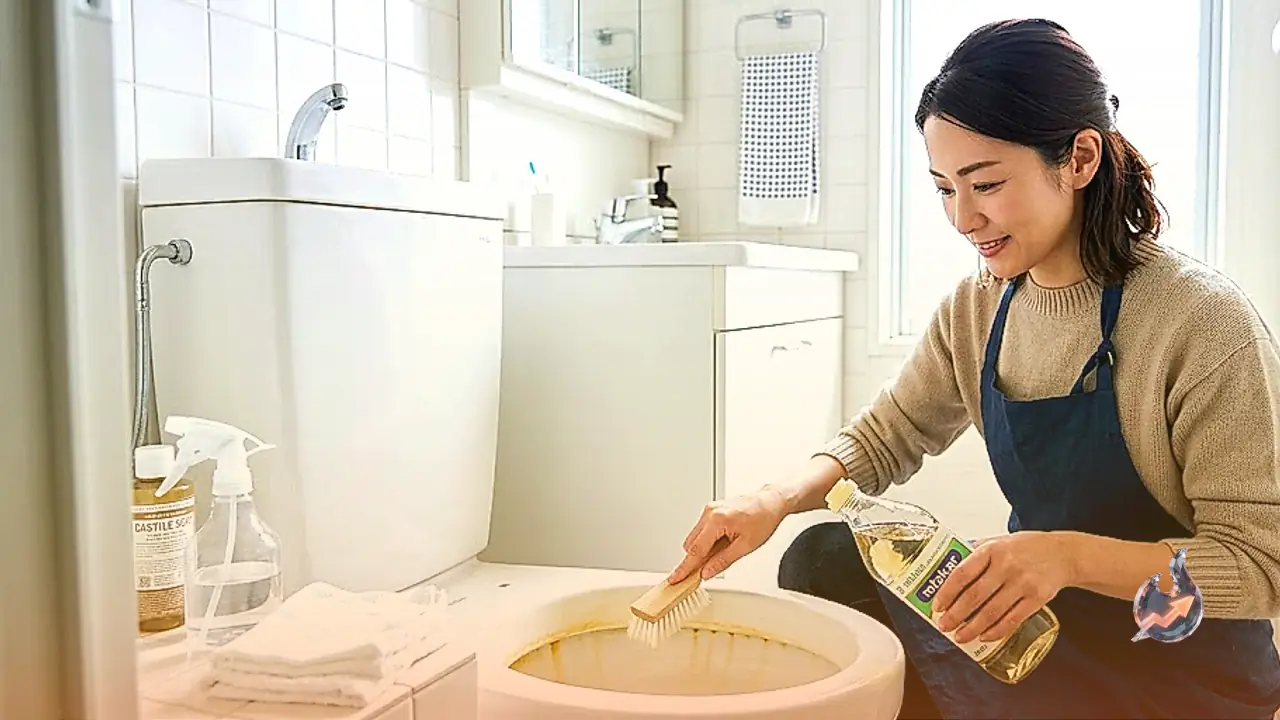

Even after thoroughly cleaning a toilet bowl, stubborn yellow rings and dark grime beneath the rim often remain visible. However, reaching for harsh chemical cleaners every single time is unnecessary. Frequently, removing these tough stains requires understanding why the buildup occurred in the first place rather than immediately buying expensive cleaning products. Particularly in households supplied with hard water, minerals carried in the water slowly accumulate on the toilet surface, eventually forming a hard, stubborn layer over time.
Why Dark Grime Forms Beneath the Rim
In contrast, the dark buildup found directly underneath the toilet rim develops due to a different combination of factors, including moisture, limited lighting, and infrequent cleaning. A simple cleaning habit inspired by Japanese methods can help keep this specific issue under control. This approach primarily involves using white vinegar combined with light, consistent cleaning routines rather than exhausting deep-cleaning sessions.
Understanding Yellow and Brown Mineral Deposits
The yellow or brown discoloration visible near the waterline inside a toilet is often mistaken for ordinary dirt, but this is not always the case. Hard water contains dissolved minerals such as calcium and magnesium, which continuously settle on the porcelain surface over prolonged periods. Gradually, these deposits thicken and harden into what is scientifically known as limescale or mineral buildup. This is precisely why simply pouring bleach into the bowl or scrubbing aggressively with a stiff brush fails to remove the layer entirely, as the mineral crust must first be chemically loosened.
The Origin of Dark Deposits Under the Rim
The black layer accumulating beneath the toilet rim results from a separate set of conditions. Water circulation and light reach this area very scarcely. Combined with persistent moisture, these dark spots foster an environment where bacteria, mold, mineral deposits, and old cleaner residues continuously collect. After some time, this combined layer turns deeply black or dark gray. Consequently, relying on a single cleaning product to tackle every distinct type of toilet stain is entirely ineffective.
The Japanese Vinegar Cleaning Technique
Acidic substances prove exceptionally helpful when tackling stubborn mineral layers. White vinegar contains natural acetic acid, which effectively helps dissolve mineral deposits like calcium carbonate. This is the exact reason why white vinegar has remained a household cleaning staple for generations. For light to moderate staining inside the bowl, white vinegar can be applied directly around the waterline. For the stubborn buildup located beneath the rim, paper towels or cloths thoroughly soaked in vinegar can be pressed against the affected areas and left undisturbed for a short duration. After allowing the vinegar to sit for approximately 20 to 30 minutes, the surfaces should be gently scrubbed with a toilet brush before flushing away the loosened residue. Patience is crucial here, as letting the acid work undisturbed yields far better results than rushing the process.
Dealing With Longstanding and Hardened Buildup
When dealing with yellow layers that have accumulated over many months, expecting complete restoration from a single cleaning session is unrealistic. Old mineral deposits can become exceptionally hard. Under such conditions, repeating the vinegar treatment across multiple consecutive days may prove necessary. Each application progressively softens the crust, making subsequent cleanings much easier. Nevertheless, if the surface features an extremely thick buildup that resists routine home treatments, utilizing a specialized cleaner in strict accordance with the sanitaryware manufacturer's instructions is recommended.
Crucial Safety Rules Regarding Bleach and Vinegar
Never mix white vinegar with chlorine bleach under any circumstances. The chemical reaction between acidic vinegar and chlorine-based bleach generates toxic chlorine gas. Exposure to this hazardous gas can cause severe damage to human eyes and respiratory tracts. If bleach was used previously in the bowl, flush the toilet thoroughly and ensure adequate ventilation in the bathroom before attempting any other method. The safest rule of thumb is never to combine different cleaning products together.
Consistency Defines the Japanese Cleaning Approach
The core characteristic of Japanese cleaning philosophy centers around consistency. Instead of allowing grime to accumulate undisturbed for months followed by exhausting hours of intense scrubbing, the strategy emphasizes small, daily maintenance tasks. Performing light passes with a toilet brush and regularly wiping down the seat and surrounding porcelain prevents new layers from establishing themselves. In households experiencing hard water issues, monitoring the waterline closely remains vital. Eliminating fresh, thin mineral films takes minimal effort compared to removing aged, hardened limescale crusts later.
Matching the Method to the Specific Stain
The most important principle in effective toilet maintenance is recognizing that not all stains share the same origin. Mineral scaling, routine dirt accumulation, and rim grime stem from completely different causes. Therefore, correctly identifying the underlying issue and applying the appropriate remedy delivers superior results. Consistent upkeep paired with the careful application of white vinegar successfully controls light mineral accumulation on bathroom fixtures. However, users must remember that vinegar is not a magical cure for every variety of dirt, and cleaning chemicals should never be mixed together.