





















Almost every kitchen eventually deals with the same annoyance: the kadai used for daily cooking slowly turns black on the outside. Oil scorches over high flame, milk boils over and dries onto the base, or spices stick to the metal, and each incident leaves behind a fresh layer of grime. In the beginning, a quick scrub with soap and a sponge takes care of it, but repeated heating hardens that layer until ordinary dishwashing can no longer shift it. Once the blackened crust builds up on the outer base, the kadai starts looking far older and dirtier than it actually is, pushing many people toward harsh chemical cleaners or hours of scrubbing, or even replacing the pan altogether. In reality, a handful of everyday kitchen ingredients can handle most of this without any of that effort.
Before trying any of these methods, it helps to know what the kadai is actually made of, since iron, steel, aluminium and non stick cookware do not all respond the same way to scrubbing or acidic ingredients. Using the wrong approach on the wrong material can leave scratches or damage a coating, so it is worth keeping the pan's material in mind before picking a cleaning method.
Start with a thick baking soda paste
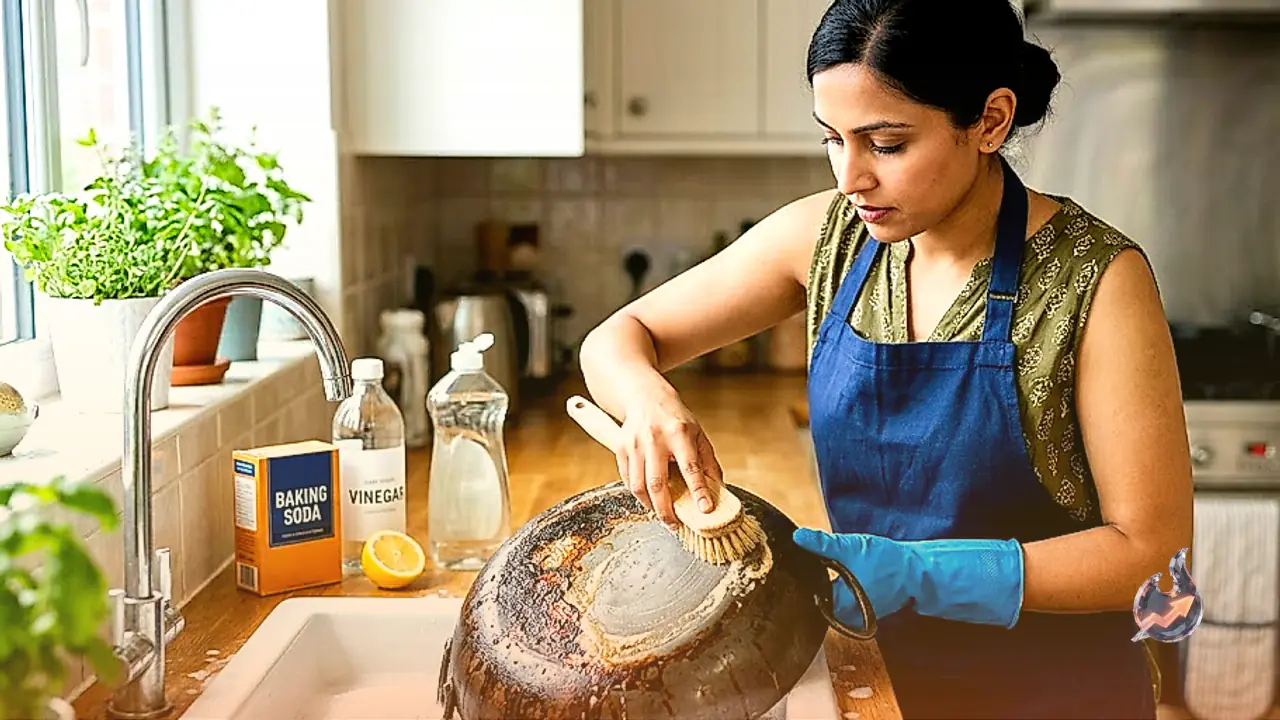
When the surface shows burnt food marks or dark patches, baking soda is usually the first thing worth trying. A few spoons of baking soda mixed with a little warm water in a small bowl forms a thick paste. This paste is spread generously over the stained areas, with a slightly heavier layer wherever the marks look deeper. Left undamaged for roughly twenty to thirty minutes, it begins to loosen the caked-on grime. After that, a soft sponge or a scrubber suited to the pan's material can be used to rub the area gently, without applying excessive pressure. If the stain doesn't lift completely on the first attempt, the same process can simply be repeated.
Add dishwashing liquid when there's grease to deal with
Sometimes the problem isn't just burnt marks, it's a thick, sticky layer of oil and spice residue coating the base. For that kind of mess, combining baking soda with dishwashing liquid tends to work well. The dirty surface is first dampened slightly, then sprinkled with baking soda, followed by a few drops of dishwashing liquid on top. Spreading the mixture lightly with a sponge and letting it sit for a while allows it to break down the grease, after which the surface can be scrubbed gently with the sponge. The dishwashing liquid cuts through the oil while the baking soda works on the caked residue. Once the cleaning is done, rinsing the kadai thoroughly in clean water is essential so that no soap or powder residue is left behind.
White vinegar for really stubborn, old stains
For kadais carrying years of buildup, white vinegar can be a useful addition. Baking soda is applied to the burnt section first, followed by a small amount of white vinegar poured over it. The two react and start fizzing, which helps loosen the hardened layer. After leaving it for a few minutes, a soft sponge can be used to clean the surface, followed by a thorough rinse with water. Some caution is needed here, though, since leaving an acidic ingredient like vinegar on certain surfaces for too long isn't advisable. This matters especially for aluminium, cast iron or specially coated kadais, where checking the manufacturer's care instructions is a safer bet. Non stick pans should never be scrubbed with anything abrasive, as that can strip the coating away.
Softening food that's stuck on the inside
At times, food sticks so firmly to the inside of the kadai that scrubbing it directly barely makes a dent. In such cases, softening the layer first is the smarter move. The kadai is filled with enough water to fully submerge the burnt portion, baking soda is stirred in, and the water is heated gently, without needing a rolling boil or a long time on the flame. The combination of warm water and baking soda gradually softens the stuck residue. Once the flame is switched off and the pan has cooled slightly, the water can be drained and the burnt layer scrubbed away carefully with a soft sponge or a suitable scrubber. A final wash with dishwashing liquid, followed by thorough drying, completes the process.
Lemon works on lighter stains and odour
If the kadai doesn't have a deep burnt crust but still carries a lingering oil smell or faint stains, half a lemon can do the trick. Rubbing the cut side of the lemon over the affected area, followed by a regular wash with dishwashing liquid, is usually enough. As with the other methods, the pan's material should be kept in mind, and lemon shouldn't be left sitting on the surface for too long, since prolonged contact with acidic ingredients can affect metal over time.
Mistakes worth avoiding while cleaning
In a hurry to make the kadai shine again, many people reach for harsh, abrasive scrubbers, which can leave visible scratches on the surface. This mistake costs even more with non stick pans, since a peeling coating should prompt a replacement rather than more aggressive scrubbing, in line with the manufacturer's guidance. Pouring cold water directly onto a hot kadai is another habit worth avoiding, since a sudden temperature change can affect the shape or surface of certain cookware. The safer approach is always to let the pan cool down a little first and only then begin cleaning it.